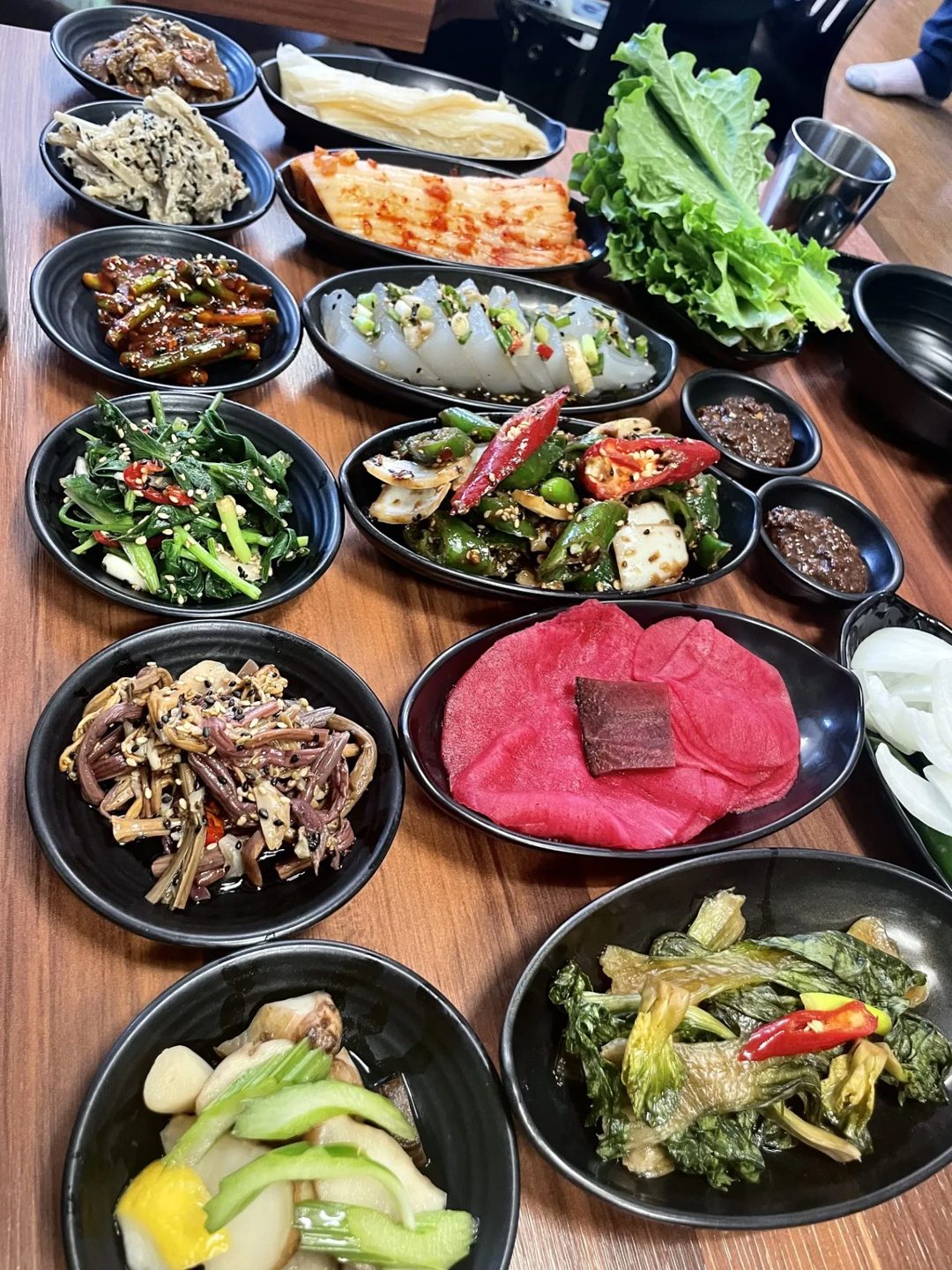
Knowing how to order food in Korea saves you a lot of awkward pointing and waiting. Most Korean restaurants use one of four systems: a call bell, a tablet on the table, a kiosk by the door or a counter. Tipping is not expected, basic side dishes are usually free, and you often pay at the counter on your way out. This guide walks through each ordering system, how to read the menu, how to pay, and the small etiquette points that trip up first-time visitors.
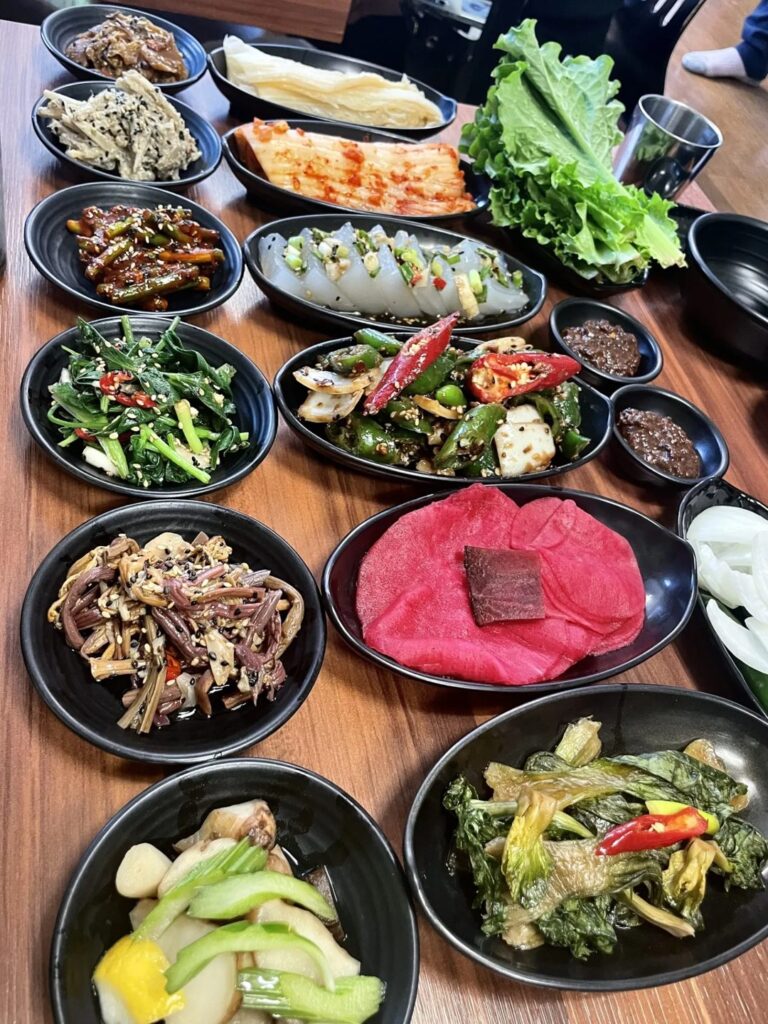
How to Order Food in Korea at a Glance
- Ordering: press the call bell or say “Yeogiyo!” (여기요), use the table tablet, use the kiosk at the entrance, or order at the counter.
- Paying: usually at the counter when you leave. Kiosks charge you before you eat.
- Tipping: not required or expected.
- Water and side dishes: generally free, and often self-service.
- Cards: widely used, but some kiosks reject foreign cards, so carry a backup such as a WOWPASS card or some cash.
How to Order Food in Korea: The 4 Ordering Systems
Before you order food in Korea, look at your table and the entrance. The setup tells you which system the restaurant uses.
1. Call bell and staff
Many tables have a small call button. Press it when you are ready to order or need something, and a server will come over. VisitKorea warns that the sound can be louder than you expect. If there is no bell, however, raise your hand and say “Yeogiyo!” (여기요), which works like “excuse me.” To order, point at the menu and say “Igeo juseyo” (이거 주세요, “this one, please”).
2. Tablet on the table
Casual restaurants, bars and barbecue places often have a tablet fixed to the table. Look for a language button on the first screen. Many tablets have English, but not all. After that, your order goes straight to the kitchen, and you usually pay at the counter at the end unless the screen asks for payment.
3. Kiosk at the entrance
Kiosks are now one of the most common ways to order food in Korea, especially at fast food chains, ramen shops, cafes and newer restaurants. First you order and pay, then you sit down and wait for your number to be called or shown on a screen. These are the Korean buttons you will see most often:
| Korean | Pronunciation | Meaning |
|---|---|---|
| 주문하기 | jumun-hagi | Order |
| 매장 식사 | maejang siksa | Eat in |
| 포장 | pojang | Takeaway |
| 결제하기 | gyeolje-hagi | Pay |
| 카드 / 현금 | kadeu / hyeongeum | Card / cash |
| 취소 | chwiso | Cancel |
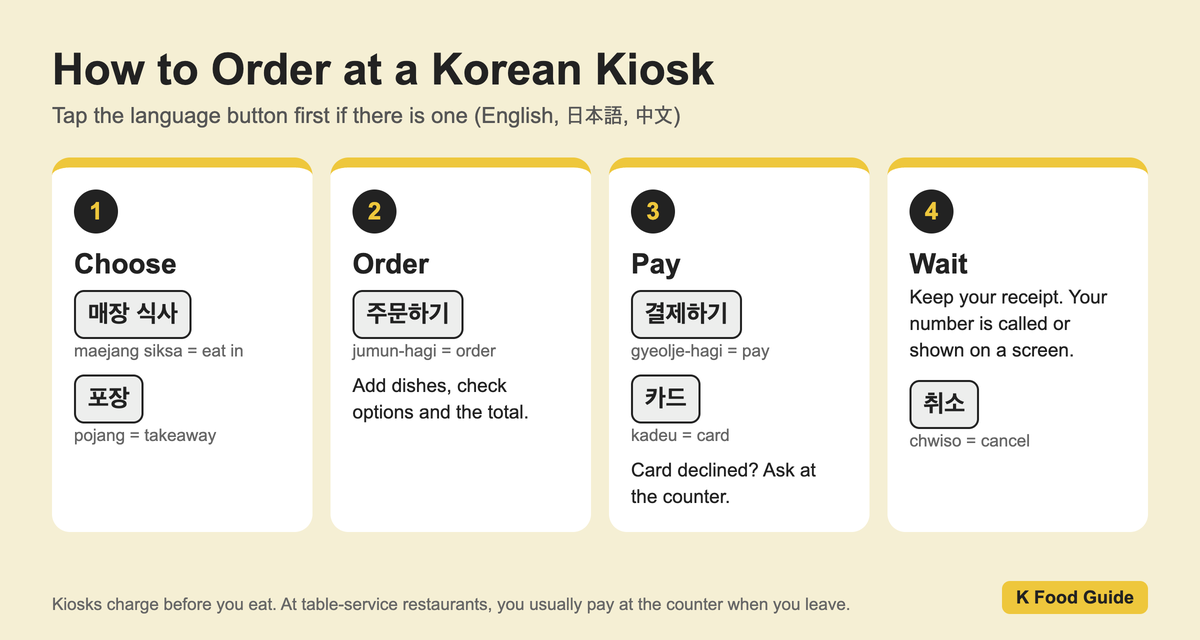
If the kiosk rejects your foreign card, do not keep trying. Instead, walk to the counter and ask the staff, who can often take the payment at the register.
4. Counter ordering
Coffee shops, food courts, bakeries and many market stalls work like counters anywhere: order, pay, and wait for your food or a buzzer. At traditional markets you usually sit at the stall and order directly from the cook. Our Gwangjang Market food guide shows how that works in practice.
Reading the Menu When You Order Food in Korea
Many menus in tourist areas have photos or English. However, plenty do not. The camera mode in a translation app such as Papago turns a Korean menu into something readable in a few seconds. Even so, a few words are still worth learning, because they change what you will actually pay.
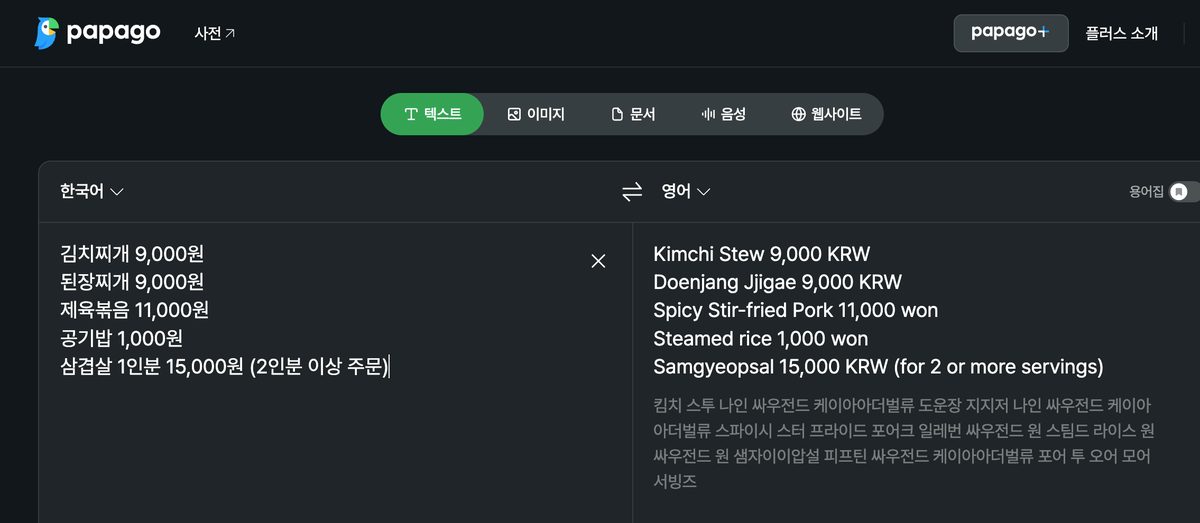
| On the menu | Meaning | What it means for you |
|---|---|---|
| 1인분 | One serving | A price per person, not always the minimum order |
| 2인분 이상 | Two servings or more | You must order at least two portions |
| 1인 1메뉴 | One menu item per person | Each diner orders a dish |
| 대 / 중 / 소 | Large / medium / small | Sizes for shared dishes |
| 사리 | Add-on noodles or toppings | Extra charge, common in stews and hot pots |
| 추가 | Extra | Added items cost more |
| 공기밥 | Bowl of rice | Often ordered separately with stews and barbecue |
Korean barbecue, dakgalbi, hot pots and some stews often require a minimum of two portions, even if you eat alone. In other words, this is a menu rule, not a judgment about you. Solo travelers do well with dishes made in the kitchen, such as bibimbap, gukbap (rice soup), kalguksu (knife-cut noodles), naengmyeon (cold noodles) and gimbap.
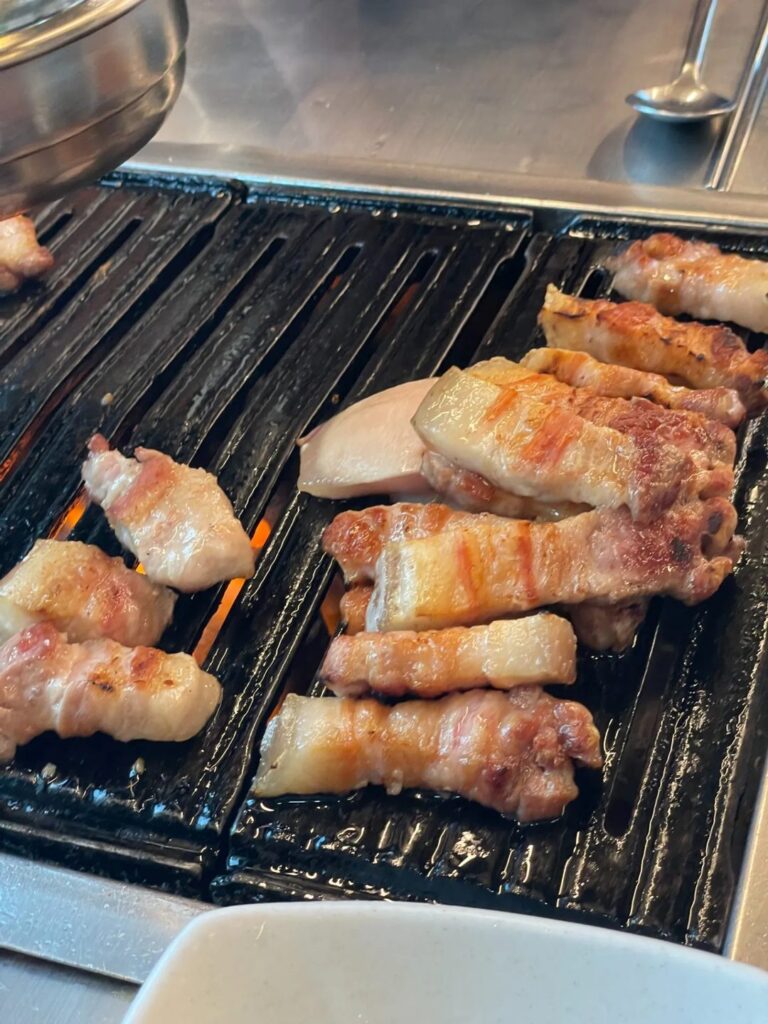
A few word endings help you guess a dish even without a translation: 구이 (gui) means grilled, 찌개 (jjigae) is a stew, 탕 (tang) or 국 (guk) is a soup, 볶음 (bokkeum) is stir-fried, 전 (jeon) is a savory pancake, and 비빔 (bibim) means mixed.
How to Pay After You Order Food in Korea
At most sit-down restaurants you pay at the counter as you leave. If staff left a bill or order slip on your table, bring it with you. Say “Gyesanhalgeyo” (계산할게요, “I’d like to pay”) if you need to.
- Credit and debit cards are the default way to pay, including at small places. Some small shops and market stalls still prefer cash.
- Kiosks are where foreign cards fail most often. A domestic-style prepaid card avoids the problem.
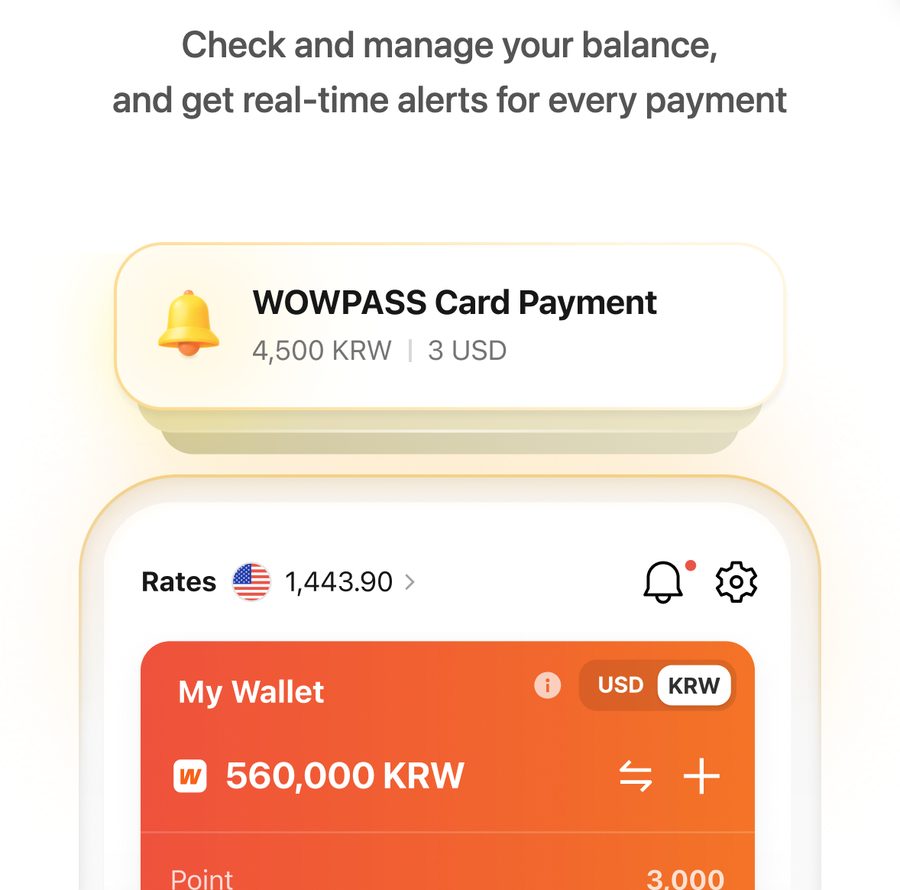
- WOWPASS is a prepaid card for travelers. You top it up with cash in 16 currencies or with an international card in the app, and it works at stores that accept Korean cards. It also works as a transport card. Details at wowpass.io.
- T-money is mainly a transport card. It is accepted at participating convenience stores (GS25, CU, 7-Eleven, Emart24) and some cafes and bakeries, but do not count on it at restaurants.
- Splitting the bill: ask before the staff start the payment. “Ttaro gyesanhalgeyo” (따로 계산할게요) means “we will pay separately.”
Tipping in Korea
You do not need to tip in Korea. VisitKorea says tipping is not required at Korean restaurants, and asking for extra water or side dishes costs nothing. Since a 2013 revision of the Food Sanitation Act, menu prices must include tax and service charges, so the number on the menu is what you pay.
In 2025 a few cafes and restaurants tried tip jars or tip buttons on kiosks, and the Korea Times reported strong pushback from customers. Still, those tips are voluntary, and you can simply skip the button. Similarly, delivery riders do not expect tips. Our food delivery app guide for Korea covers ordering to your hotel.
Korean Restaurant Etiquette Worth Knowing
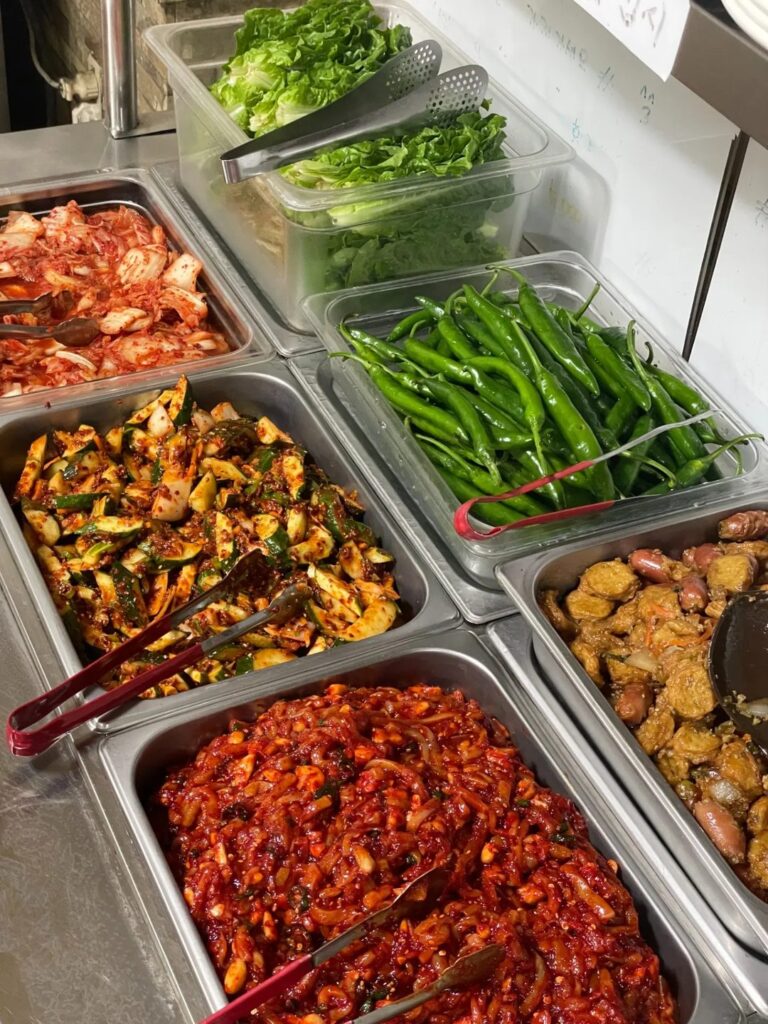
- Side dishes (banchan): small dishes such as kimchi and seasoned vegetables come free with the meal, and refills of the basic ones are usually free too. Items that are really separate dishes, such as egg dishes, fish, pancakes or extra meat, may cost extra. Ask with “Banchan jom deo juseyo” (반찬 좀 더 주세요).
- Self-service: many places have a self bar (셀프바) for side dishes, sauces and water. Use a clean plate, and then put the tongs back in the same tray.
- Utensils: spoons, chopsticks, napkins and cups are often in a drawer at the side of the table.
- Say how many people you are when you walk in: “Han myeong-ieyo” (한 명이에요) for one, “Du myeong-ieyo” (두 명이에요) for two.
- Sharing is normal. Korean meals are often shared from the middle of the table. As a result, ordering several dishes for the group is common.
Useful Phrases to Order Food in Korea
| Korean | Pronunciation | Meaning |
|---|---|---|
| 여기요 | yeogiyo | Excuse me (to call staff) |
| 이거 주세요 | igeo juseyo | This one, please |
| 메뉴판 주세요 | menyupan juseyo | The menu, please |
| 영어 메뉴 있어요? | yeongeo menyu isseoyo? | Do you have an English menu? |
| 안 맵게 해 주세요 | an maepge hae juseyo | Not spicy, please |
| 물 좀 주세요 | mul jom juseyo | Some water, please |
| 포장해 주세요 | pojanghae juseyo | To go, please |
| 계산할게요 | gyesanhalgeyo | I would like to pay |
Before You Order Food in Korea: Find and Book
However, knowing how to order food in Korea is only half the job. Google Maps is limited in Korea, so most locals check hours, menus and reviews on Naver Map. Our Naver Map English guide shows how to use it. For popular restaurants that take reservations, see our CatchTable guide. For a night in, the delivery app guide has you covered. When you are ready to eat out, start with our best Korean restaurants in Seoul or the Korean BBQ guide.
FAQ
Do you tip at restaurants in Korea?
No. Tipping is not required or expected, and menu prices already include tax and service. So if you see a tip jar or a tip button on a kiosk, it is optional.
Can I eat Korean BBQ alone?
Sometimes. Many barbecue restaurants require at least two portions per table, and some do not seat solo diners at busy times. Check the menu for 2인분 이상 or ask at the door before you sit down.
Do Korean restaurants accept foreign credit cards?
Most sit-down restaurants do at the counter. Self-order kiosks are less reliable with foreign cards, so carry a backup like a WOWPASS card or some cash, and ask staff to take payment at the register if a kiosk declines your card.
Is it hard to order food in Korea without speaking Korean?
Not really. Most places have a call bell, a tablet with an English option, or a kiosk with a language button, and pointing at the menu works everywhere. In addition, a camera translation app handles the rest. Simply learn “igeo juseyo” (this one, please) and “gyesanhalgeyo” (I would like to pay).
How do I ask for the bill in Korea?
In most places you do not ask for it at the table. Go to the counter when you are finished and say “Gyesanhalgeyo” (계산할게요). If a bill was left on your table, take it with you.
We checked app features and prices in November 2026, and they can change.