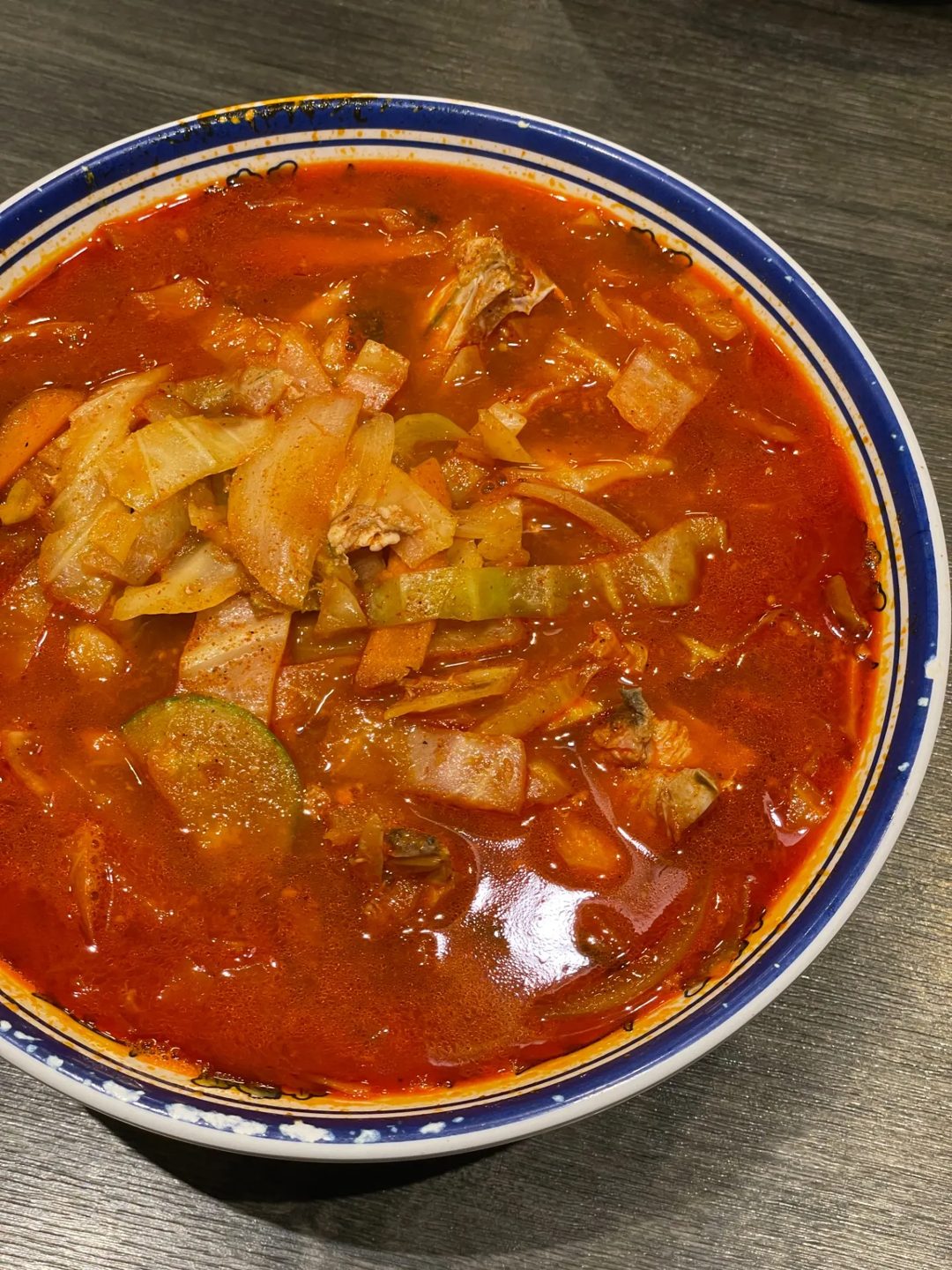
Jjamppong, the fiery red seafood noodle soup of Korean-Chinese restaurants, might not be on your Jeju list. Most visitors come for black pork, galchi and gogi guksu. Still, Jeju has a few old Chinese restaurants that locals swear by, and some of them are worth a lunch stop between the beaches.
The picks below are adapted from visits by Revitguide reviewer 호미식 (Homisik), who rated each 3.5 out of 5. They are good, honest bowls rather than destination meals, and each section links to the original Korean review.
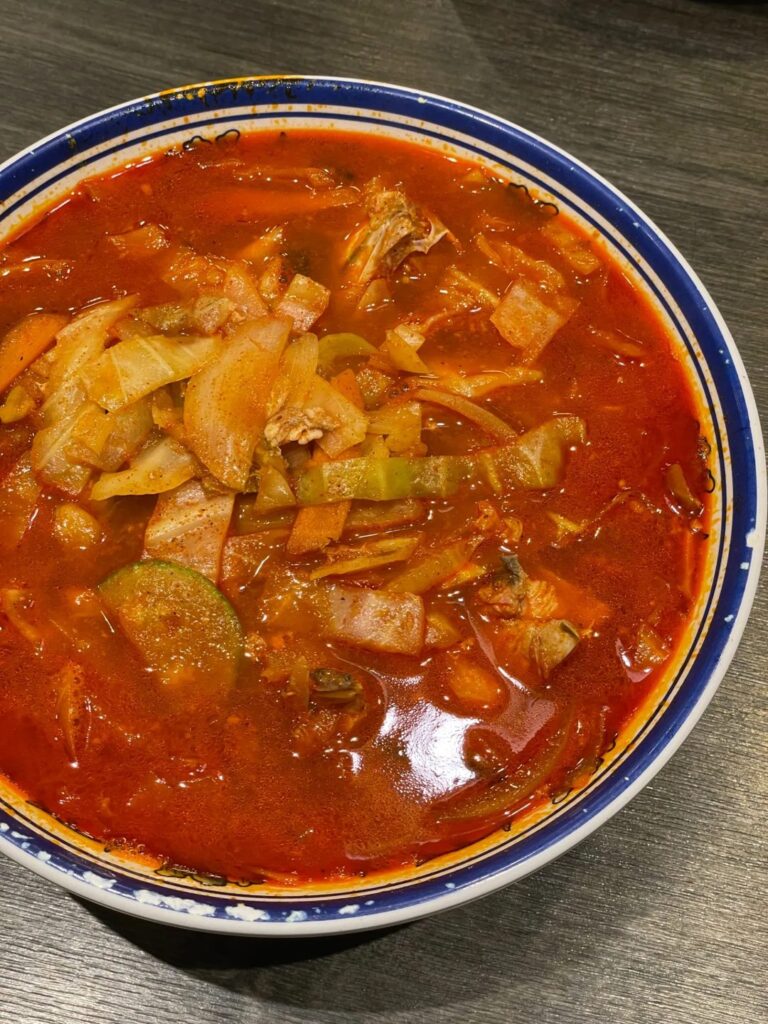
What Is Jjamppong? A Quick Guide to Korean-Chinese Food
Korean-Chinese food (junghwa yori, 중화요리) grew out of the Chinese communities that settled in Korea, and it is now its own cuisine. You will find the same core menu almost everywhere:
- Jjamppong (짬뽕): noodles in a spicy, chili-red broth with seafood, vegetables and often pork. Many shops have a signature version, such as crab or extra seafood.
- Jjajangmyeon (짜장면): noodles with a glossy black bean sauce (chunjang), onions and pork. Mild, savory and slightly sweet.
- Gan-jjajang (간짜장): a “dry” jjajang where the sauce is stir-fried to order and served on the side, so it tastes fresher and smokier.
- Gan-jjamppong (간짬뽕): the dry, stir-fried version of jjamppong, with no soup.
- Tangsuyuk (탕수육): crispy fried pork with sweet and sour sauce, usually shared.
A bowl of noodles usually costs around ₩9,000 to ₩13,000 in Jeju, and “곱빼기” means a large portion for a little more. Most places are walk-in. Order one noodle dish per person, then add tangsuyuk if you are a group.
Jjamppong in Jeju at a Glance
| Place | Area | What to order | Price paid | Good for |
|---|---|---|---|---|
| Deokseongwon (덕성원) | Seogwipo (+ Jungmun branch) | Crab jjamppong, seafood gochu gan-jjajang | ₩10,500 to ₩11,500 per bowl | A classic since 1945 |
| Byeol Jjamppong (별짬뽕) | Sinchon, Jocheon | Jjajangmyeon | ₩20,000 (bill) | Fans of nutty, smoky jjajang |
| Boyeong (보영) | Hallim | Gan-jjajang, gan-jjamppong | ₩11,000 | West coast lunch near Hyeopjae |
| Soriwon (소리원) | Yeon-dong, Jeju City | Samseon gan-jjajang | ₩19,000 (bill) | An easy neighborhood bowl |
| Cheommilmil Yangkkochi (첨밀밀양꼬치) | Hamdeok area, Jocheon | Lamb skewers | ₩30,000 (bill) | Drinks and skewers at night |
1. Deokseongwon (덕성원), Seogwipo
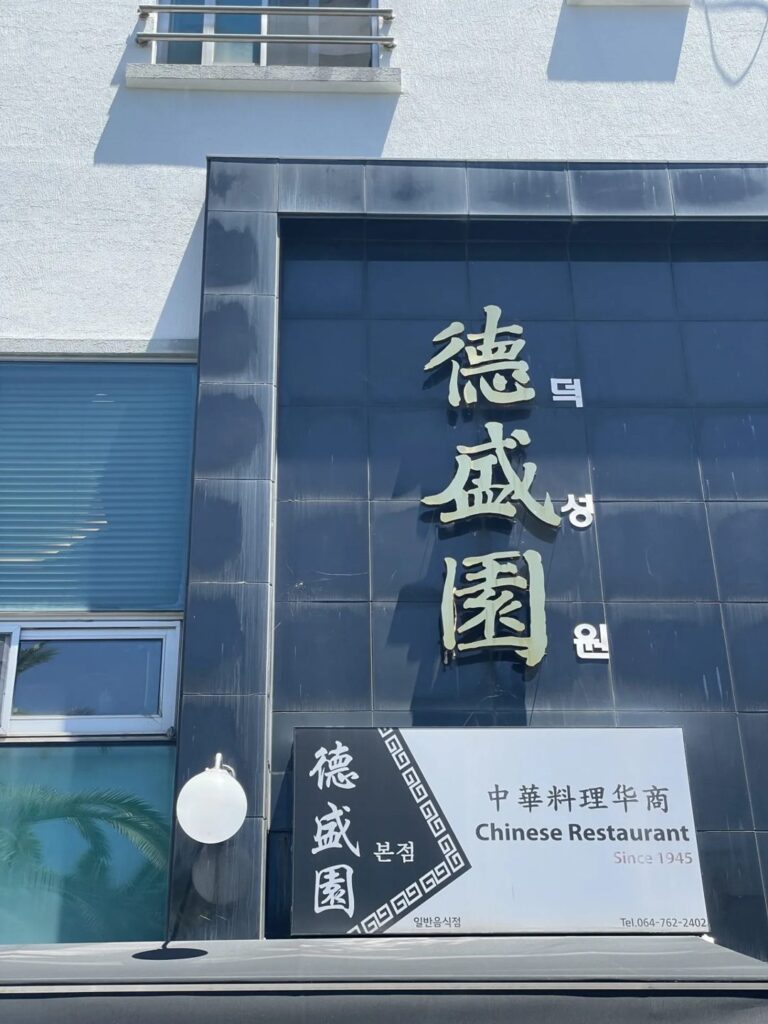
Deokseongwon is the name most people mention when you ask about Chinese food in Seogwipo. It opened in 1945 and is said to be the first Chinese restaurant in Seogwipo, now run by the third generation. Its signature is crab jjamppong (꽃게짬뽕).
First visit: the crab jjamppong
There is so much to eat in Jeju (gogi guksu, galchi, momguk, seafood) that at first I wondered why I would go to a Chinese restaurant at all. But I had heard Deokseongwon’s name so often that I got curious, and after the visit I understood why it has been loved for so long. The dining room was much bigger than I expected, so even with people coming in nonstop it never felt crowded.
Usually fried rice is my first order at a Chinese restaurant, but here the crab jjamppong and the gochu samseon jjajang are the famous dishes, so I went with the jjamppong. It was a very satisfying choice. The broth clearly tasted of crab: it had the usual spicy kick, but also a clean, savory depth from the crab. One spoonful tells you why it is called crab jjamppong. The noodles were cooked just right, neither soggy nor underdone. I normally leave the soup, but that day I nearly finished it.
I liked how it works a Jeju ingredient into Chinese food so naturally. You rarely go out of your way for a Chinese restaurant on a Jeju trip, but Deokseongwon is worth a visit because it is Deokseongwon.
Second visit: seafood gochu gan-jjajang
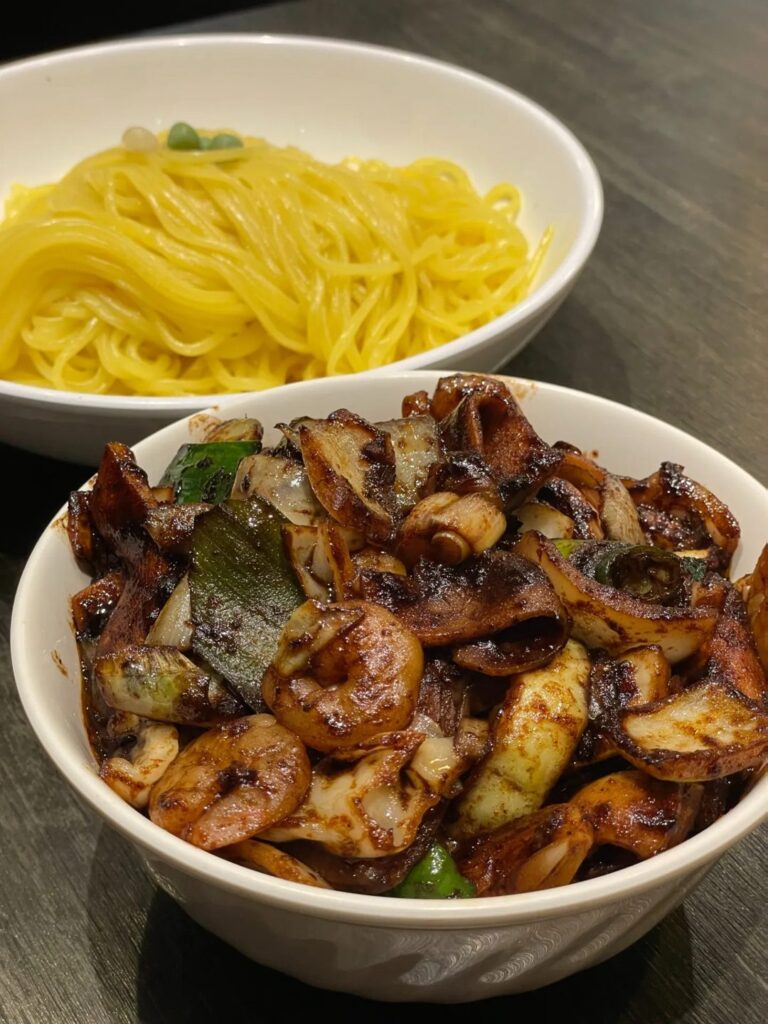
I came back for the samseon gochu gan-jjajang (₩11,500). When I think of Chinese food in Jeju, Byeol Jjamppong usually comes to mind first, but after this bowl I thought Deokseongwon could easily compete for the top spot. With that much seafood, it was good value too.
After a little over five minutes, the sauce arrived full of wok smoke and chili aroma, with big pieces of shrimp and squid, plus plenty of onion and peppers. It was slightly redder than normal jjajang, as if chili flakes had gone into the black bean paste. The pieces were so big that I asked for an apron before mixing. My first bite made me think: why does this gan-jjajang taste like jjamppong? It sat somewhere between gan-jjajang and gan-jjamppong, almost like a properly upgraded jjapaguri.
The sauce was a little wet, maybe from the onions and seafood, so it was not the thick, oily classic style. I would have liked it stir-fried a bit harder, but that was a small point, and the moist sauce did help the noodles and toppings come together. Next time in Seogwipo I want to come with friends for tangsuyuk.
- Main branch: 4 Taepyeong-ro 401beon-gil, Seogwipo (제주 서귀포시 태평로401번길 4), near Lee Jung-seop Street. Open in Naver Map
- Jungmun branch: in the Jungmun area (서귀포시 중문동 2446-1). Open in Naver Map
- Menu (Siksin, October 2026): crab jjamppong ₩11,500 (large ₩13,500), samseon gochu gan-jjajang ₩10,500, jjamppong ₩9,500.
- Hours: listings show about 11:00 to 21:00. Revitguide lists the main branch closed on the 2nd Tuesday of the month and the Jungmun branch closed on Mondays; check before you go.
- Original review on Revitguide (crab jjamppong) and Original review on Revitguide (gan-jjajang)
2. Byeol Jjamppong (별짬뽕), Jocheon
Byeol Jjamppong already appears in our Jeju food guide to everyday local spots, from an earlier visit. This was my second time, with a friend.
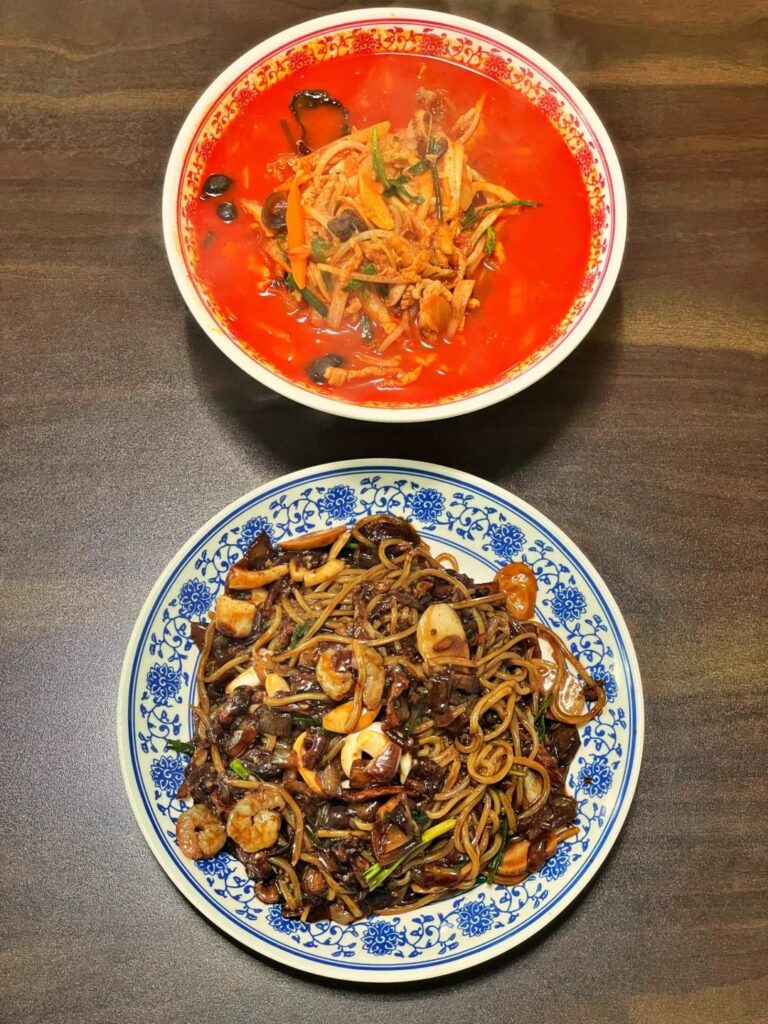
The place was as busy as ever. We were told the wait would be about an hour, but we got in after 20 to 30 minutes. It was still tasty. And just like last time, despite the name, I personally liked the jjajang more. You could almost call it Byeol Jjajang.
The jjajang is nutty at its base, with a gentle smoky aroma. Seafood in the sauce cuts some of the usual greasiness, so it stays lighter than you expect to the last bite. Plenty of tables around us were eating jjamppong, so it may just be a matter of taste. Two visits, same thought both times: next time I will probably order the jjajang again.
- Address: 109 Sinbuk-ro, Jocheon-eup, Jeju City (제주 제주시 조천읍 신북로 109). Open in Naver Map
- Hours: 11:00 to 20:00 with a break from 14:30 to 17:00, closed Mondays (as listed in our earlier check). Expect a wait at lunch.
- Original review on Revitguide
3. Boyeong (보영), Hallim
Boyeong is an old Chinese restaurant in Hallim on the west coast, run by an ethnic Chinese (hwagyo) family since 1967 and now in its third generation. It is best known for gan-jjamppong, a stir-fried jjamppong without soup, which makes it an easy lunch stop near Hallim Port and Hyeopjae Beach.
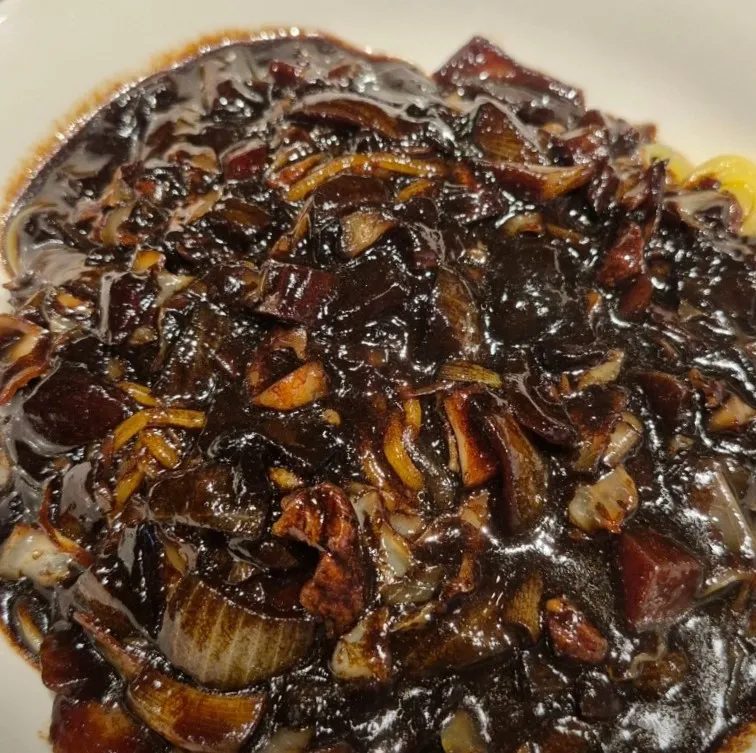
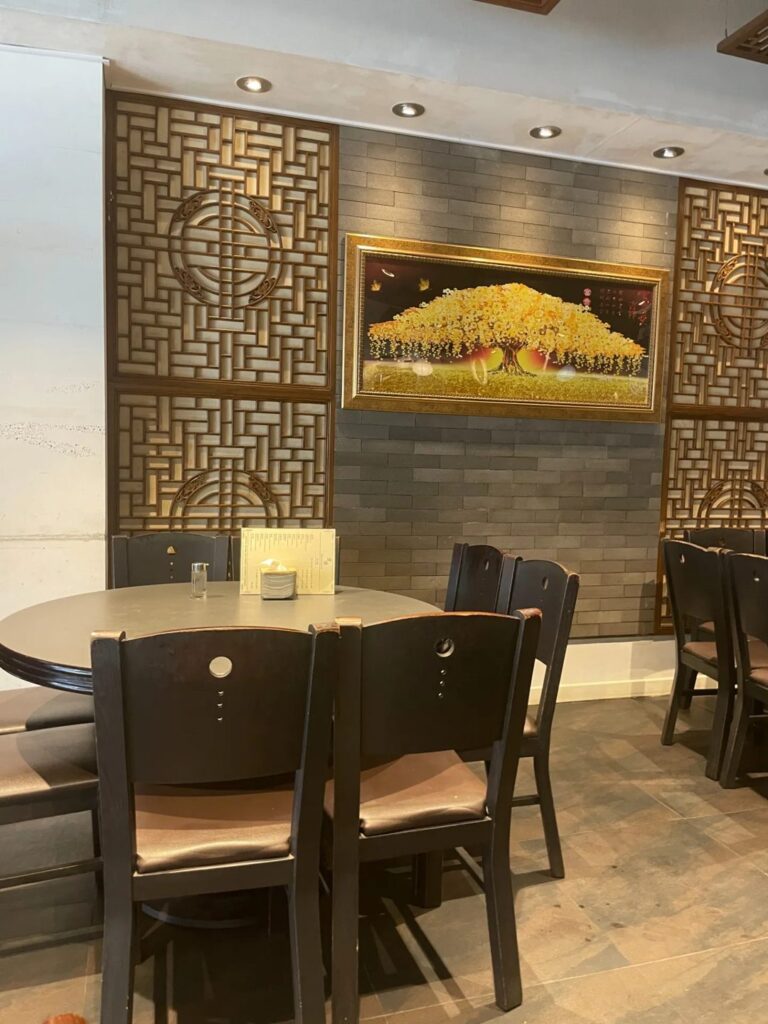
In Jeju I naturally look for black pork and seafood first, so when a friend suggested Boyeong, my first thought was: a Chinese restaurant, in Jeju? One plate later, I understood why it has been loved for so long. More than its age, what struck me was a menu with character you don’t easily find elsewhere.
The gan-jjajang came with freshly stir-fried sauce, plenty of meat, and thin noodles that went with it really well. It made me think you don’t have to eat only “Jeju food” in Jeju. A bowl that locals have come back to for decades is Jeju food too. When you want a break from Korean food and seafood on your trip, Boyeong is worth the stop.
- Address: 692-1 Hallim-ro, Hallim-eup, Jeju City (제주 제주시 한림읍 한림로 692-1), about a 10-minute drive from Hyeopjae Beach. Open in Naver Map
- Hours: listings show about 11:00 to 19:30 or 20:00. Closed days differ by source (Revitguide lists the 2nd and 4th Thursdays), so check first. No dedicated parking; use nearby public lots.
- Original review on Revitguide
4. Soriwon (소리원), Jeju City
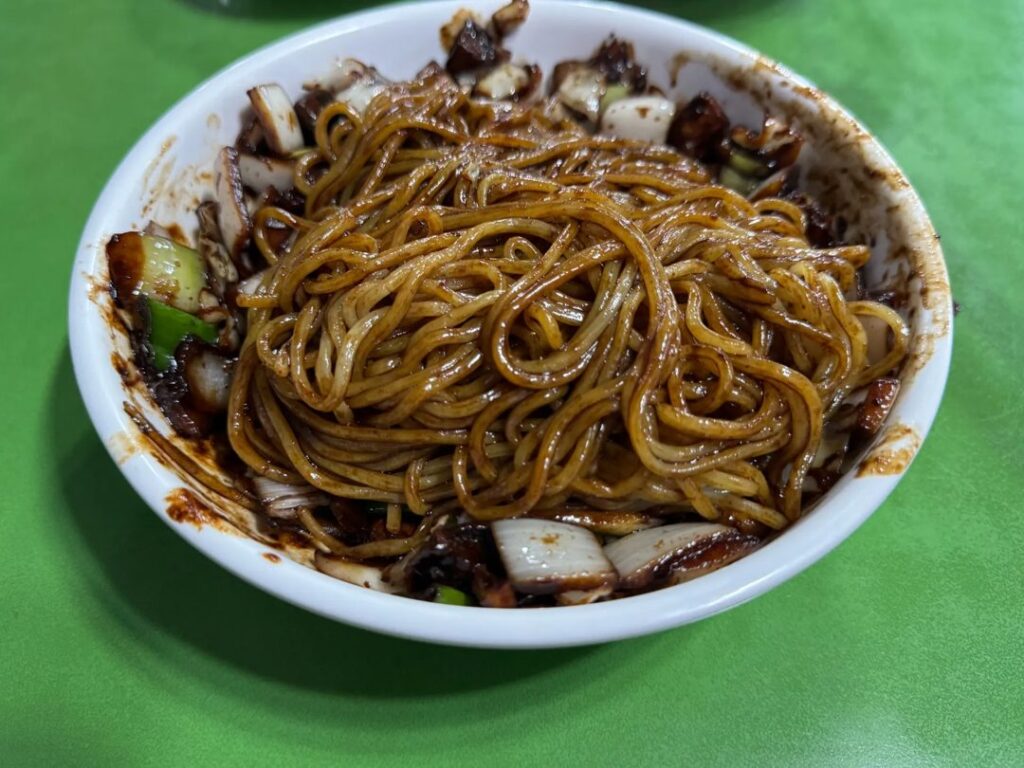
I ordered the samseon gan-jjajang. It leans sweet, so if you expect a salty sauce it may go in a different direction. The seafood stays fairly quiet, which keeps the focus on the gan-jjajang itself. With the kkakdugi and kimchi on the side, the sweetness balances out and the bowl goes down easily. A place with the comfort of a neighborhood Chinese restaurant.
- Address: 37 Yeondong 12-gil, Jeju City (제주 제주시 연동12길 37), in Yeon-dong near the airport side of the city. Open in Naver Map
- Hours: not verified; check Naver Map.
- Original review on Revitguide
5. Cheommilmil Yangkkochi (첨밀밀양꼬치), near Hamdeok
Not jjamppong, but the same craving: Chinese-style lamb skewers (yang-kkochi), grilled on a little rotating charcoal grill at your table.
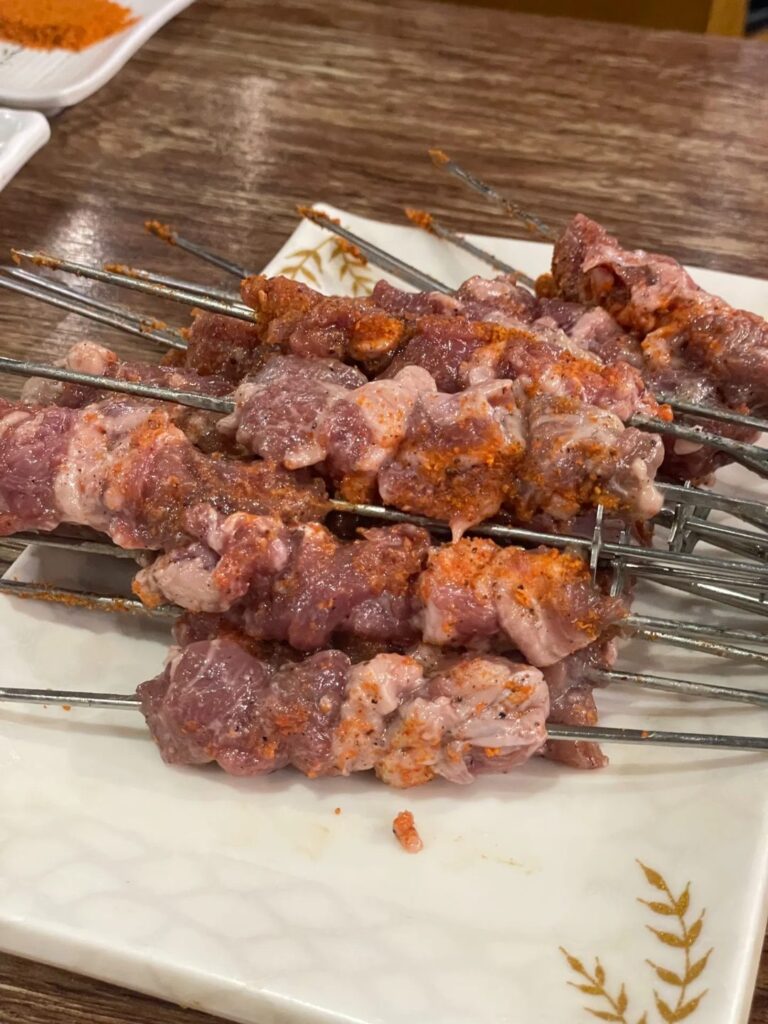
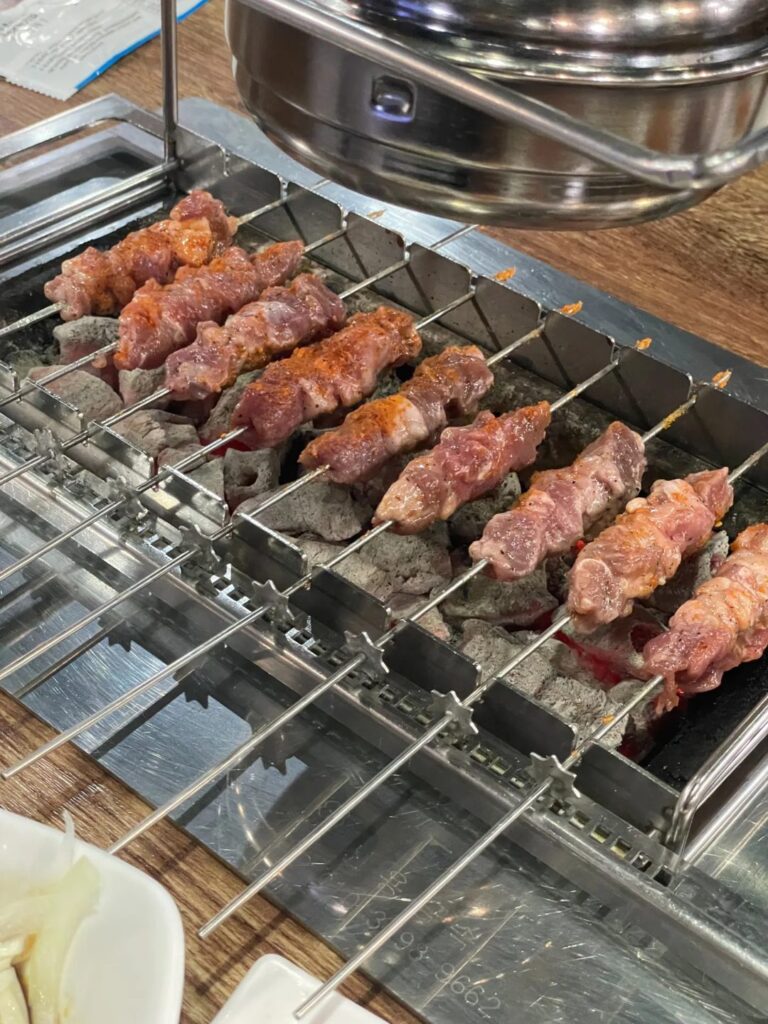
How often do you go out for lamb skewers in Jeju? But once I tried this place, I was quite satisfied. The best part was that the lamb had almost no gamey smell. The meat was chewy yet tender, with a good balance of fat and lean, and as each skewer cooked I kept picking them off faster than I expected. The skewers themselves are done very cleanly.
The owner seems to be Chinese, and the atmosphere and other dishes on the menu feel closer to a local Chinese style than a heavily Koreanized skewer bar. If you widen the search to Seoul, a place this good isn’t that hard to find. But this is Jeju. When you are eating black pork, galchi and mackerel sashimi and suddenly want proper lamb skewers, there aren’t many options. For clean, unfussy skewers with a few Chinese dishes and a drink, it’s worth remembering.
- Address: 544 Sinbuk-ro, Jocheon-eup, Jeju City (제주 제주시 조천읍 신북로 544), close to Hamdeok Beach. Open in Naver Map
- Hours: Naver Map shows it opening at 14:00 and running late into the night; check closing time before you go. Visitors often add fried eggplant or fried rice.
- Original review on Revitguide
Tips for Eating Jjamppong in Jeju
- Go at lunch. Most of these places are busiest from 12:00 to 13:00, and some close in the early evening.
- Order the house signature: crab jjamppong at Deokseongwon, gan-jjamppong at Boyeong.
- Gan-jjajang sauce is cooked to order, so it takes a few extra minutes. Mix it into the noodles yourself.
- Wear dark clothes or ask for an apron (앞치마). Red broth and black sauce splash.
- Pair it with a Jeju route: Deokseongwon with Seogwipo’s Lee Jung-seop Street, Boyeong with Hyeopjae Beach, Byeol Jjamppong and Cheommilmil with Hamdeok.
More Jeju Food Guides
Planning more meals on the island? See our guides to gogi guksu and Jeju noodles, galchi in Jeju, Jeju black pork, haejangguk, Jeju seafood and everyday local eats, or browse all Jeju posts.
FAQ
What is the difference between jjamppong and jjajangmyeon?
Jjamppong is a spicy red noodle soup with seafood and vegetables. Jjajangmyeon is noodles with a mild black bean sauce. Many Koreans can never decide, which is why some shops sell half-and-half bowls.
Is jjamppong very spicy?
It has a real chili kick, but most versions are manageable for people who like mild to medium heat. If you can’t handle spice, order jjajangmyeon or gan-jjajang instead.
Where can I eat crab jjamppong in Jeju?
Deokseongwon in Seogwipo is known for crab jjamppong (꽃게짬뽕), and it also has a branch in Jungmun.
Do I need a reservation for these Chinese restaurants?
No. They are walk-in, but expect a wait at popular places such as Byeol Jjamppong at lunch.
We checked prices and hours in November 2026, and they can change. Check Naver Map before you go.