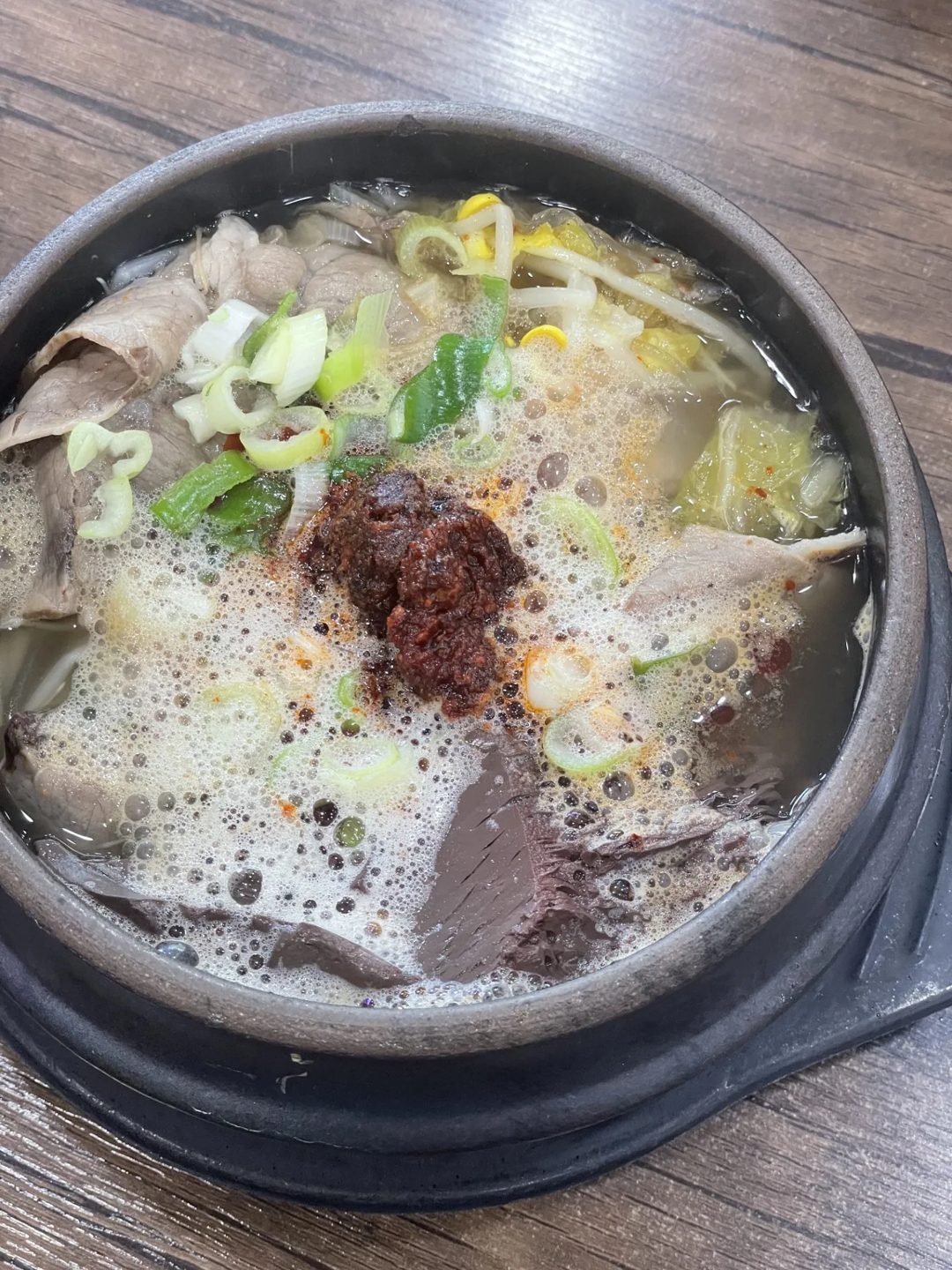
Haejangguk (해장국), Korea’s “hangover soup,” is one of the best ways to start a day in Jeju, hangover or not. On the island it usually means a steaming earthenware bowl of beef broth with bean sprouts, dried cabbage leaves and congealed ox blood, topped with a spoonful of chili paste. Below are four Jeju soup spots: two classic haejangguk houses, a Seogwipo shop known for a rare crab soup, and a Jeju City institution that serves momguk until 4 a.m.
The picks below are adapted from visits by Revitguide reviewer 호미식 (Homisik), who rated each 4 out of 5. Each section links to the original Korean review.
What Is Haejangguk? A Quick Guide to Jeju Hangover Soup
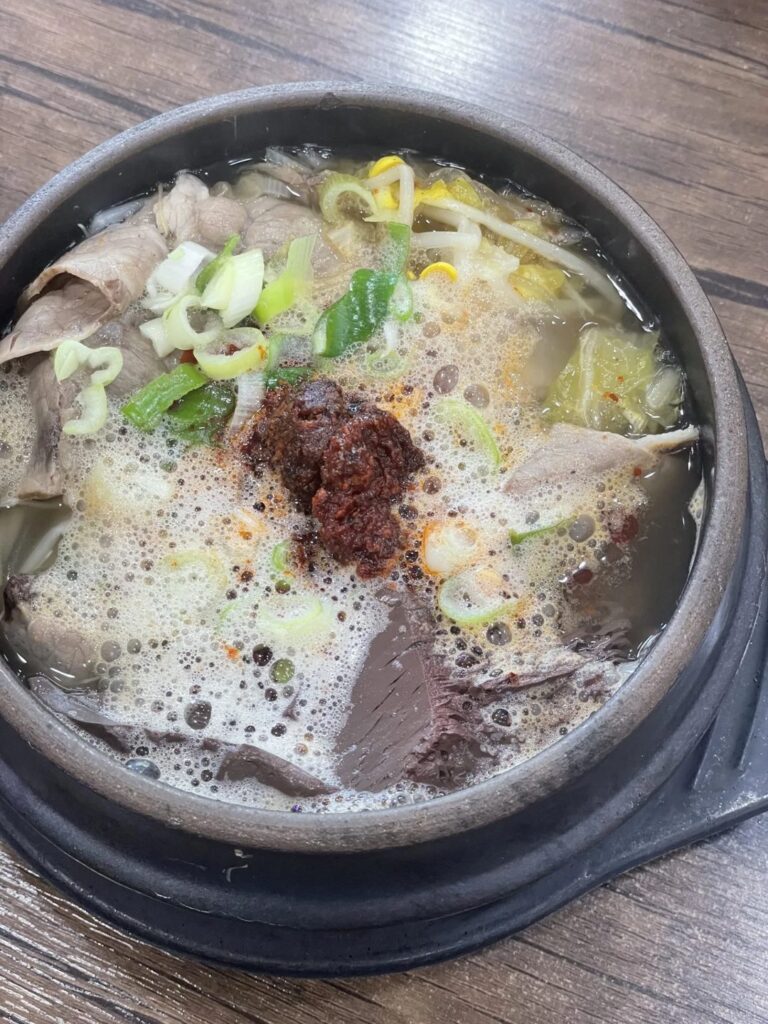
The name says it all. Haejang means easing a hangover, and guk means soup. You will find haejangguk all over Korea, but Jeju has its own popular style. Judging by the menu boards at the two specialists below, a Jeju bowl comes in two main versions:
- Haejangguk (해장국): beef, bean sprouts, ugeoji (dried cabbage leaves) and seonji (congealed ox blood) in a beef broth.
- Naejangtang (내장탕): the same kind of broth, but with beef offal such as tripe (yang) and intestines, plus radish.
Both arrive with a mound of red chili paste on top. You stir it in yourself, so you can keep the bowl mild or make it spicy. In 2026 both of the haejangguk specialists in this guide charged ₩11,000 for haejangguk and ₩12,000 for naejangtang.
Momguk and gaeng-i guk: two more Jeju soups
Jeju also has local soups you will not easily find on the mainland. Momguk (몸국) is a thick pork broth cooked with mojaban seaweed (Sargassum fulvellum). In fact, the name comes from the Jeju word for that seaweed. It is said to come from the broth left over after boiling pork for village feasts. Gaeng-i guk (갱이국) is made with small crabs, which locals call gaeng-i, and seaweed. Both often turn up on the same menus as haejangguk.
How to order and when to go
- Go early. Many haejangguk houses are breakfast and lunch places. Daechun opens at 6:00 and Hamdeok Golmok at 7:00, and both stop serving in the early afternoon.
- One bowl per person. Hamdeok Golmok’s menu board asks for one dish per person, and you cannot change your order once it is placed.
- No blood, please. If you do not eat seonji, tell the staff when you order, or choose naejangtang instead.
- Plan transport. Jeju has no subway, so most visitors arrive by rental car, taxi or bus. Check parking notes below.
Haejangguk in Jeju at a Glance
| Restaurant | Area | What to order | Price paid | Best for |
|---|---|---|---|---|
| Hamdeok Golmok (함덕골목) | Jocheon, northeast Jeju | Naejangtang | ₩12,000 | A big breakfast before the east coast |
| Daechun Haejangguk (대춘해장국) | Jeju City (Yeonbuk-ro) | Haejangguk | ₩11,000 | A rounder, gentler bowl |
| Mendorong Haejangguk (맨도롱해장국) | Seogwipo | Gaeng-i guk (crab soup) | ₩10,000 | Trying a rare Jeju soup |
| Sinseol Oreum (신설오름) | Jeju City (Ildo-dong) | Momguk, mulhoe | ₩10,000 (momguk) | Late nights and momguk |
1. Hamdeok Golmok (함덕골목)
Personally, Hamdeok Golmok is the first place that comes to mind when someone says Jeju haejangguk. Despite the name, the original branch is in Jocheon-eup, near Jocheon Manse Hill, a short drive west of Hamdeok Beach. Original review on Revitguide (2025) and second review (2026).
First visit: the boss of the neighborhood
I was looking for a brunch spot during a Jeju trip and ended up at the Hamdeok Golmok main branch. The menu has just two items: haejangguk and naejangtang. To be honest, I do not go out of my way for naejangtang. Still, in Jeju there are moments when you crave a hearty bowl like this.
The opening hours are unusual. It runs only from 7 a.m. to 1:30 p.m. and closes every Thursday. Ingredients run out fast, so you may miss out if you come late. That day I was lucky and got in as the very last customer. There is some parking in front, but I used the large public lot nearby.
Inside, it was bigger and cleaner than I expected. Instead of the busy feel of a tourist hotspot, it felt more like a local restaurant where people from the neighborhood drop in for a meal.
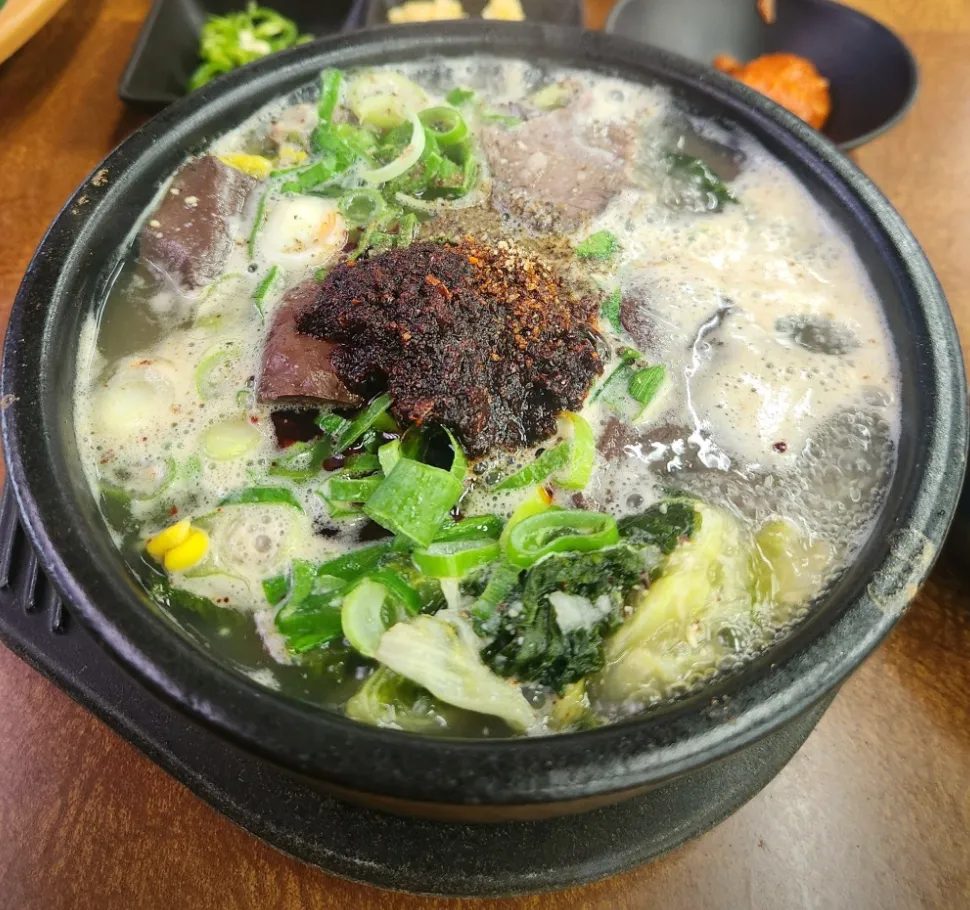
I ordered the naejangtang. The side dishes are kkakdugi (radish kimchi) and perilla leaves. At first I wondered why perilla leaves came with naejangtang. Then I fished out some of the meat from the soup and wrapped it in a leaf, and the combination worked surprisingly well.
The naejangtang had almost no off smell, and the offal was not chewy, so it was easy to eat. Rather than pushing strong flavors, the broth leaned clean and mild. Because of the word “haejangguk,” you might expect something punchy. Instead it was a comfortable, filling bowl. The portion was generous too, so one bowl left me full. Above all, wrapping naejangtang in perilla leaves felt a little different and stayed with me.
If you are looking for a clean haejangguk or naejangtang near Hamdeok or Jocheon, it is worth a visit. However, the hours are short and ingredients can sell out, so do not come too late.
Second visit: back again
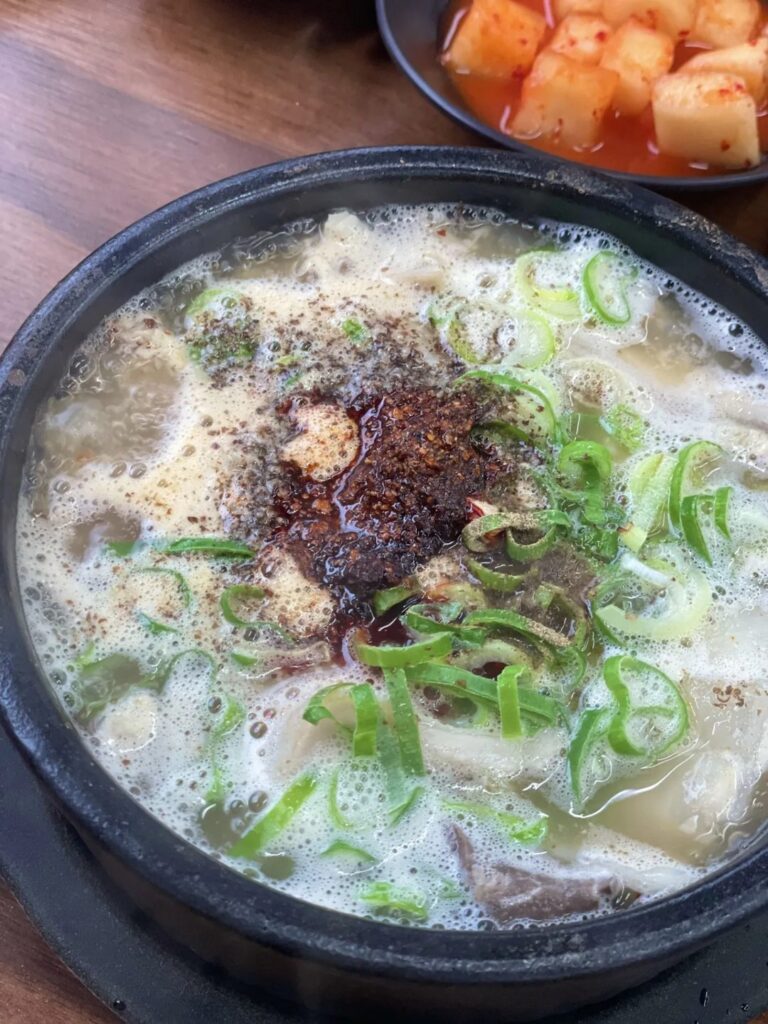
The two dishes share almost the same broth. The difference is really whether you get seonji or offal. I do not mind seonji, but I love the texture of the offal, so I ordered naejangtang again. Even in the off-season there was a wait, so I imagine it is even harder to get in during peak season.
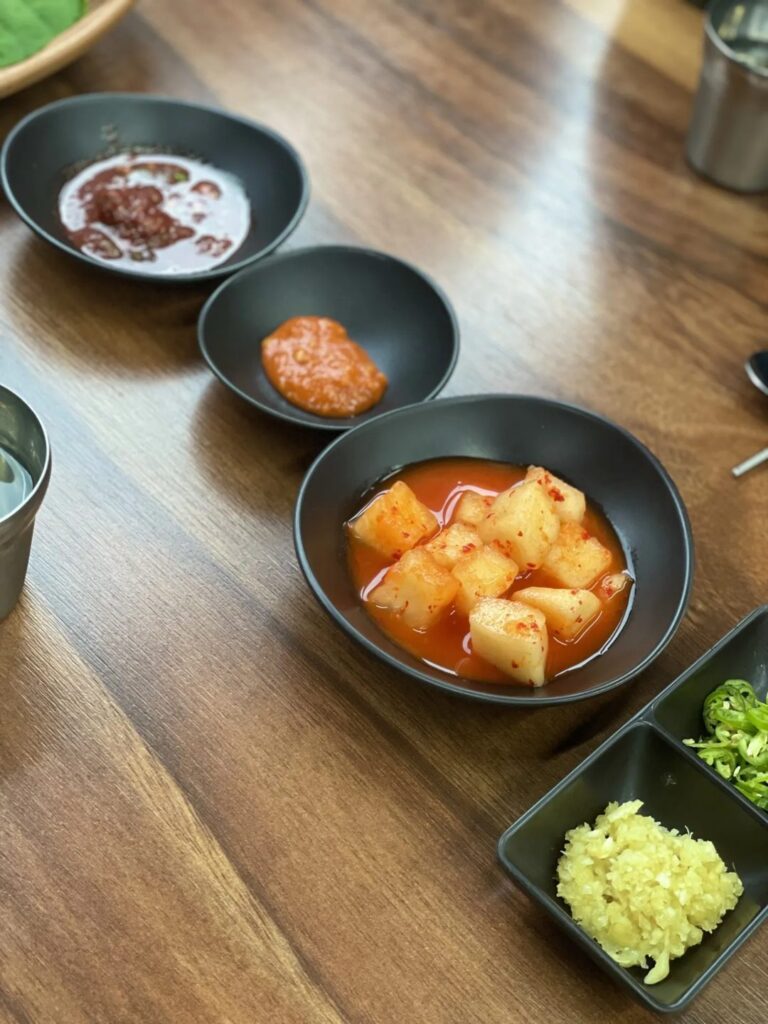
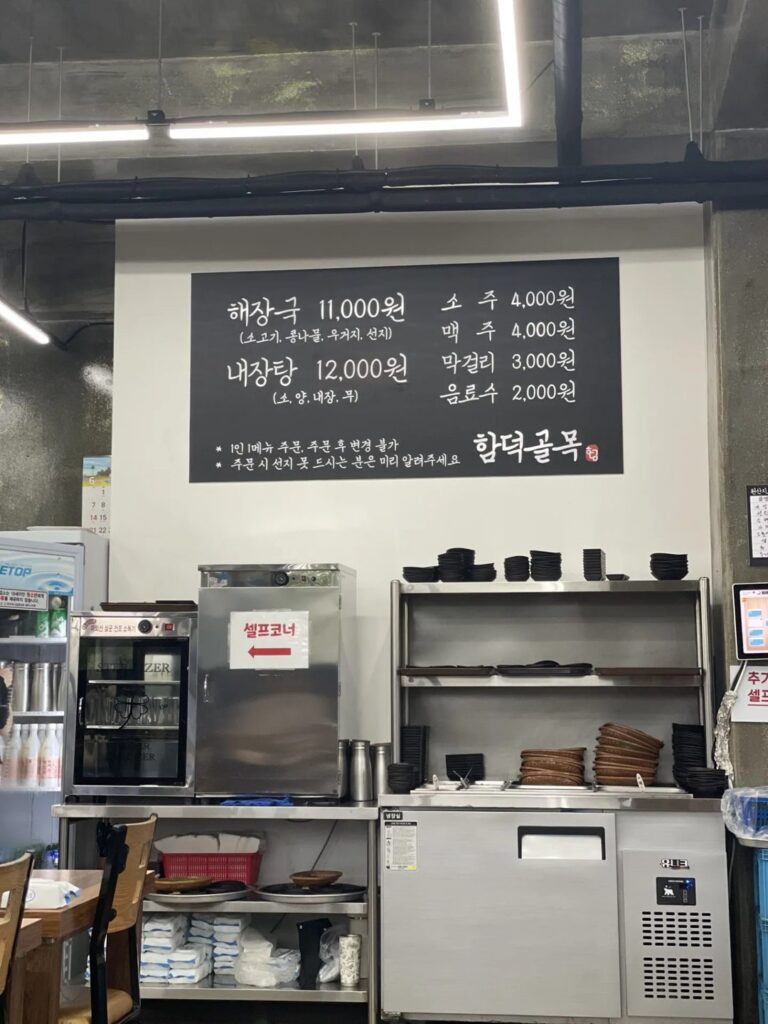
- Address: 62 Jocheonbuk 6-gil, Jocheon-eup, Jeju-si (제주 제주시 조천읍 조천북6길 62)
- Hours: 07:00 to 13:30, closed Thursdays. It may close early when ingredients sell out.
- Prices (2026 menu board): haejangguk ₩11,000, naejangtang ₩12,000
- Waiting: CatchTable waitlist, according to 2026 visitor blogs
- Parking: a small lot next to the restaurant, plus free public lots nearby such as Jocheon Manse Hill
- Map: Open in Naver Map
Several 2026 visitor blogs also mention that singer Sung Si-kyung featured it on his YouTube food show, which helps explain the lines.
2. Daechun Haejangguk (대춘해장국)
Daechun is the other big name in Jeju haejangguk. A photo wall inside the main branch traces its history from a small restaurant in 1991 to the current Yeonbuk-ro building in 2016, with more branches opening since then. Original review on Revitguide.
For a long time, Hamdeok Golmok was my number one for Jeju haejangguk. But I kept hearing “you have to try Daechun,” so this time I went to the main branch.
It was a little past lunchtime, yet the place was full. I saw more locals eating casually than tourists, which told me this is a local favorite that people have loved for years.
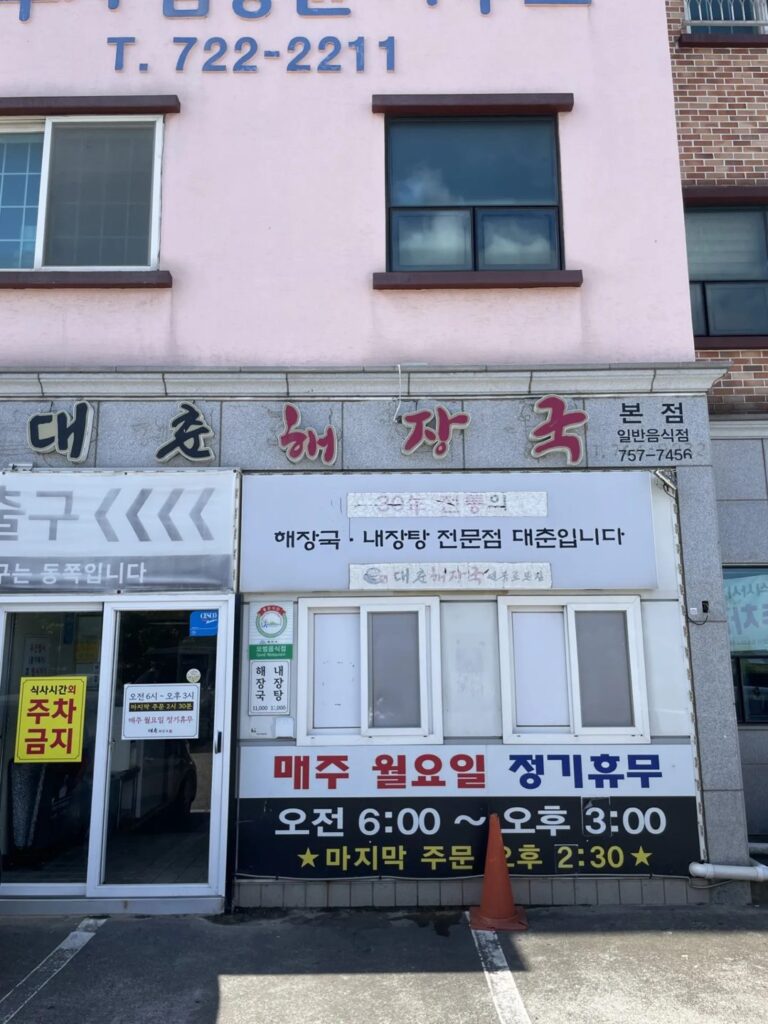
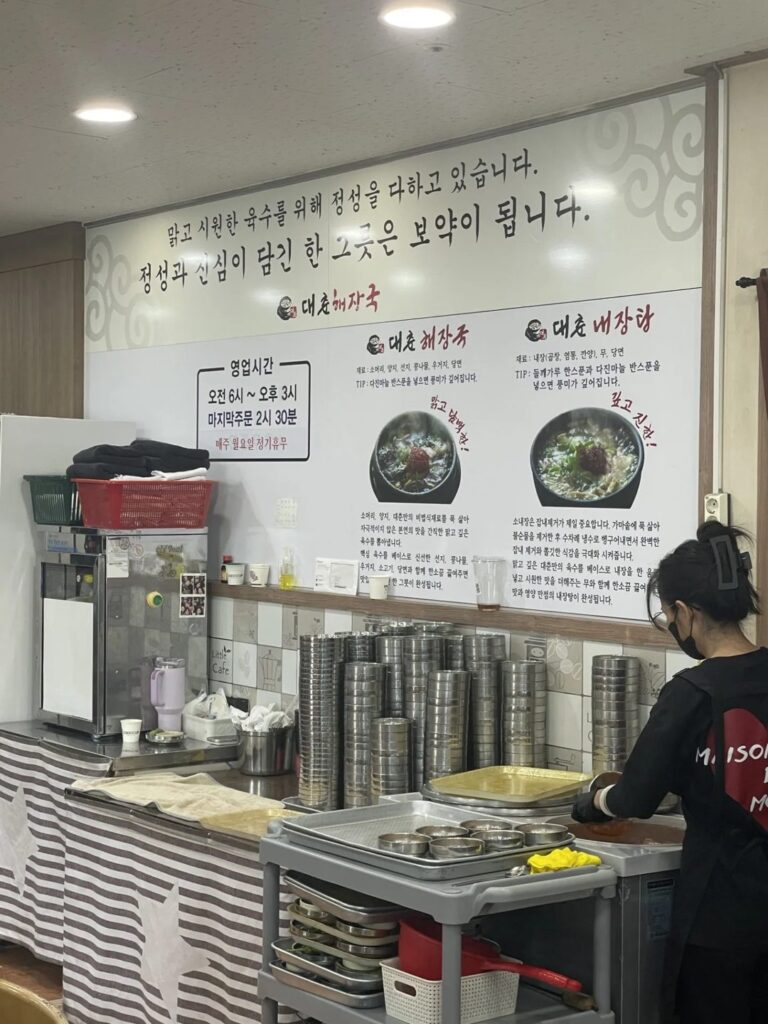
A gentler style of Jeju haejangguk
I ordered the basic haejangguk. As soon as the earthenware bowl arrived, a rich aroma rose first. My first spoonful of broth surprised me, though. If Hamdeok Golmok is a direct flavor that hits you all at once, Daechun is much softer and rounder than it looks. It was rich but never rough, and the ingredients blended naturally to build depth.
It also felt great for settling the stomach. The heat is not overdone, so you can eat it to the end without strain, and the broth keeps you reaching for another spoonful. There was plenty of meat and vegetables too, so one bowl was very filling.
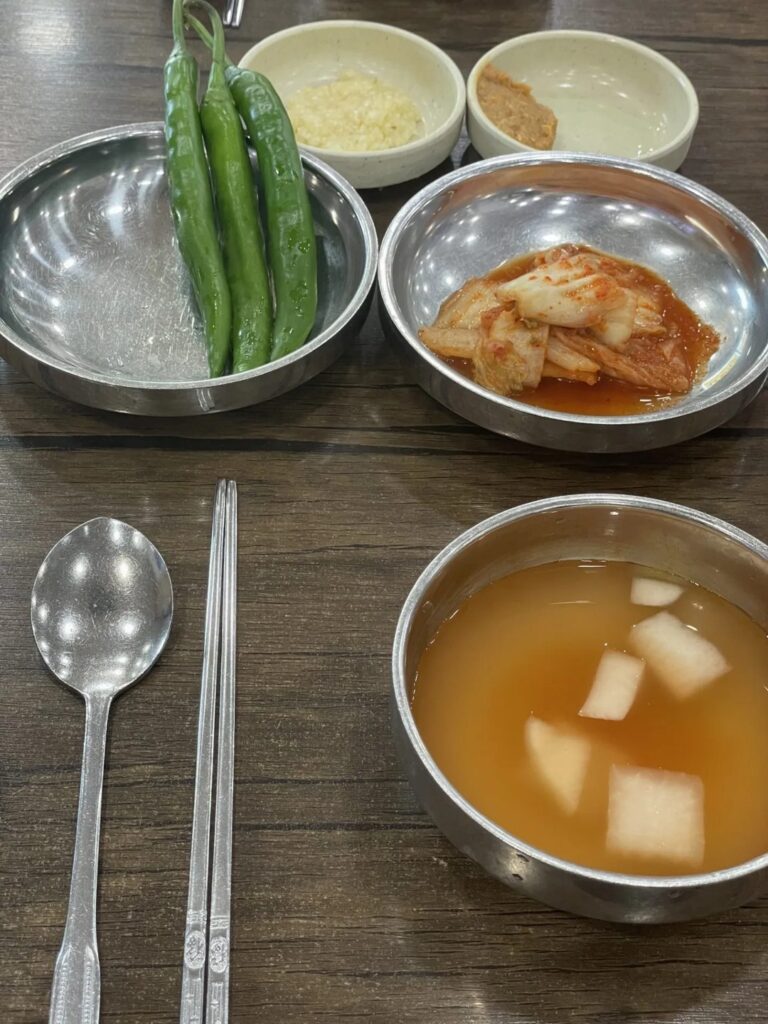
Daechun or Hamdeok Golmok?
While eating, I naturally compared it with Hamdeok Golmok. It is hard to say which is better. Just as everyone has a different favorite Naju gomtang house, Jeju haejangguk comes down to taste in the end. If you love Jeju haejangguk, I recommend trying both and comparing. Some people will call Hamdeok Golmok the best, and others will say Daechun. That is how firmly Daechun stands as one of the two pillars of Jeju haejangguk. Next time I want to come back for the naejangtang.
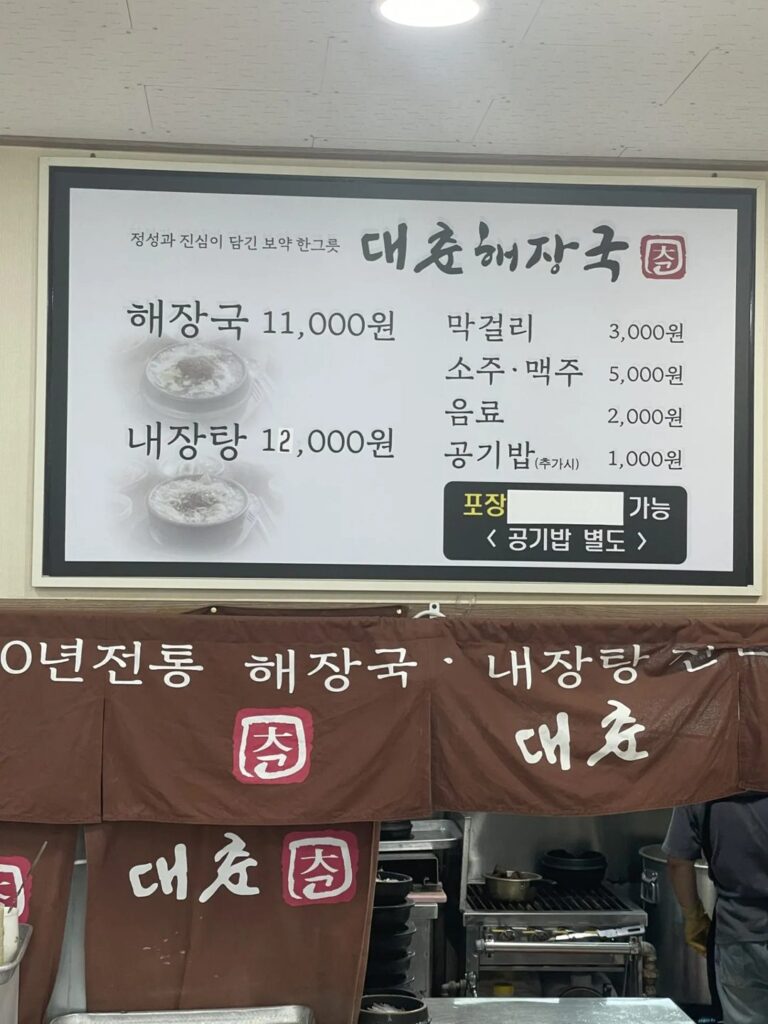
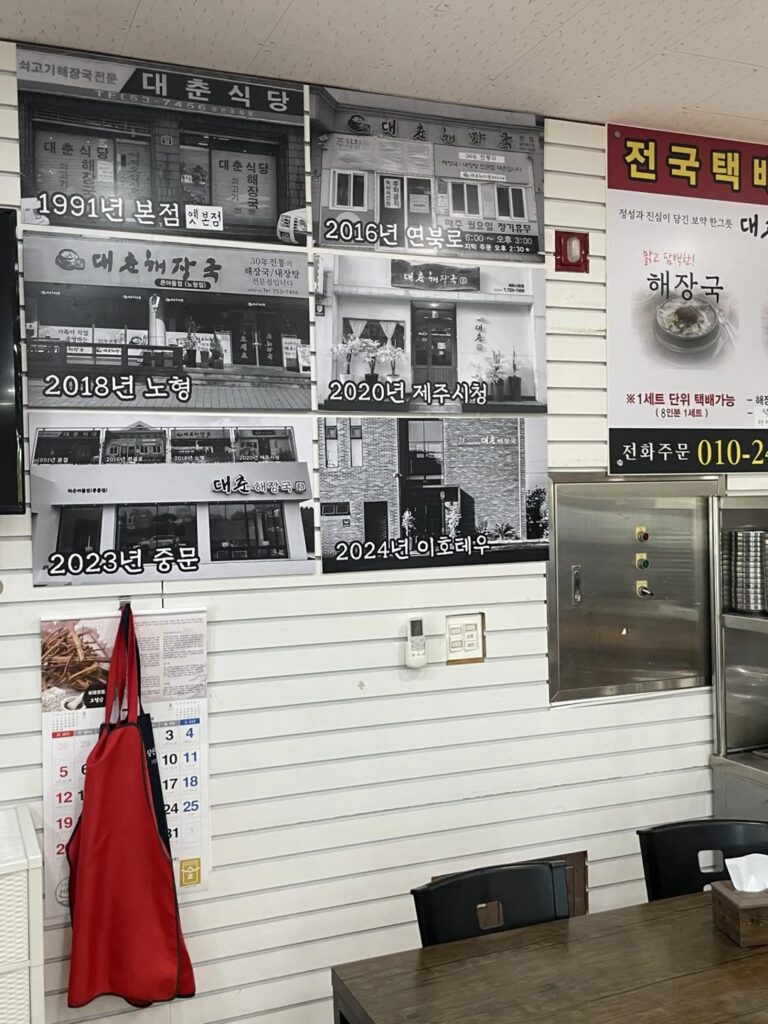
- Address: 398 Yeonbuk-ro, Jeju-si (제주 제주시 연북로 398)
- Hours: 06:00 to 15:00, last order 14:30, closed Mondays (sign at the restaurant, June 2026)
- Prices (2026 menu board): haejangguk ₩11,000, naejangtang ₩12,000, extra rice ₩1,000
- Parking: a lot in front of the restaurant
- Takeout: available, and the shop also ships sets within Korea
- Map: Open in Naver Map
3. Mendorong Haejangguk (맨도롱해장국)
Mendorong is a small breakfast shop in downtown Seogwipo. It sells haejangguk, but the dish to try here is gaeng-i guk. Original review on Revitguide.
At Mendorong Haejangguk in Seogwipo, I ordered the gaeng-i guk. I was told gaeng-i is Jeju dialect for crab. Since the name was unfamiliar, I could not easily imagine how it would taste.
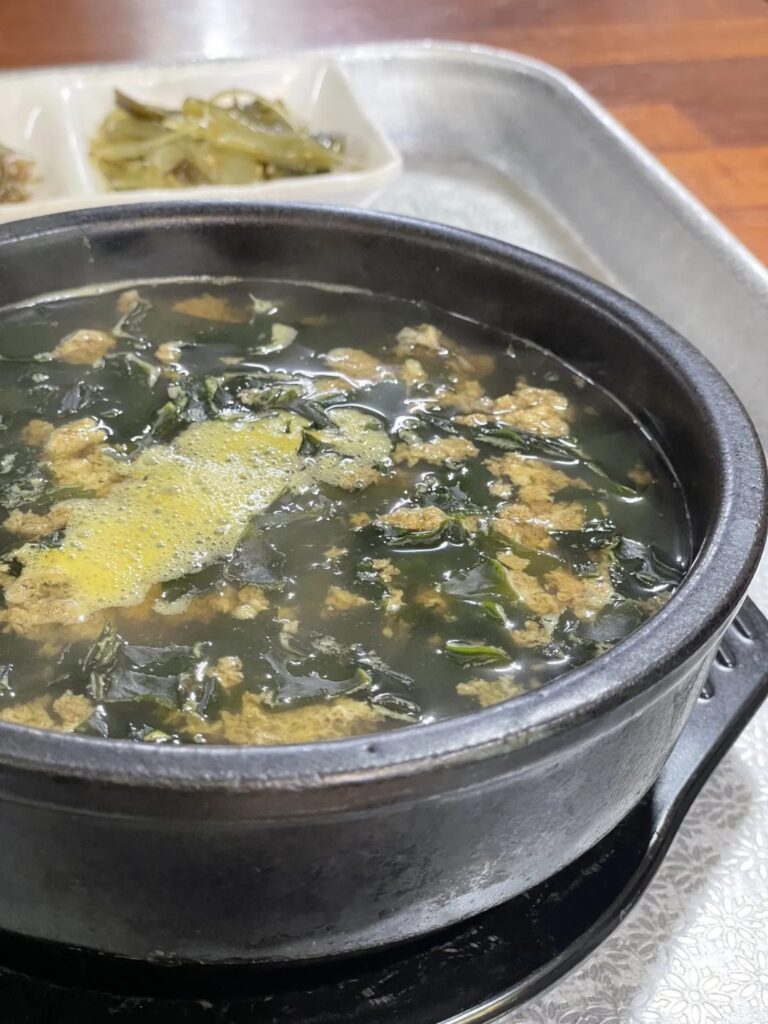
A crab soup you only find in Jeju
In the earthenware bowl, crab meat was broken into fine pieces. I could not tell whether it was blue crab or a smaller crab. With each spoonful you get the broth and bits of crab together. The rich flavor of shellfish spread through the whole broth, and the finely shredded crab gave it a clear bite.
The aroma was quite strong too. Rather than a light, clear hangover soup, it tasted deep, as if the crab had been simmered for a long time. Even so, it was not heavy. As I ate the hot broth, I felt my stomach settle even though I had not been drinking. It truly lived up to the name haejangguk.
I have tried many local Jeju soups, but this was my first gaeng-i guk. It tasted delicious before it tasted strange. I was impressed that I could enjoy an unfamiliar dish to the last spoonful without needing to adjust. If you are curious about a soup you can only find in Jeju, it is worth a try. Next time, I will probably spend a long time choosing between gaeng-i guk and another soup.
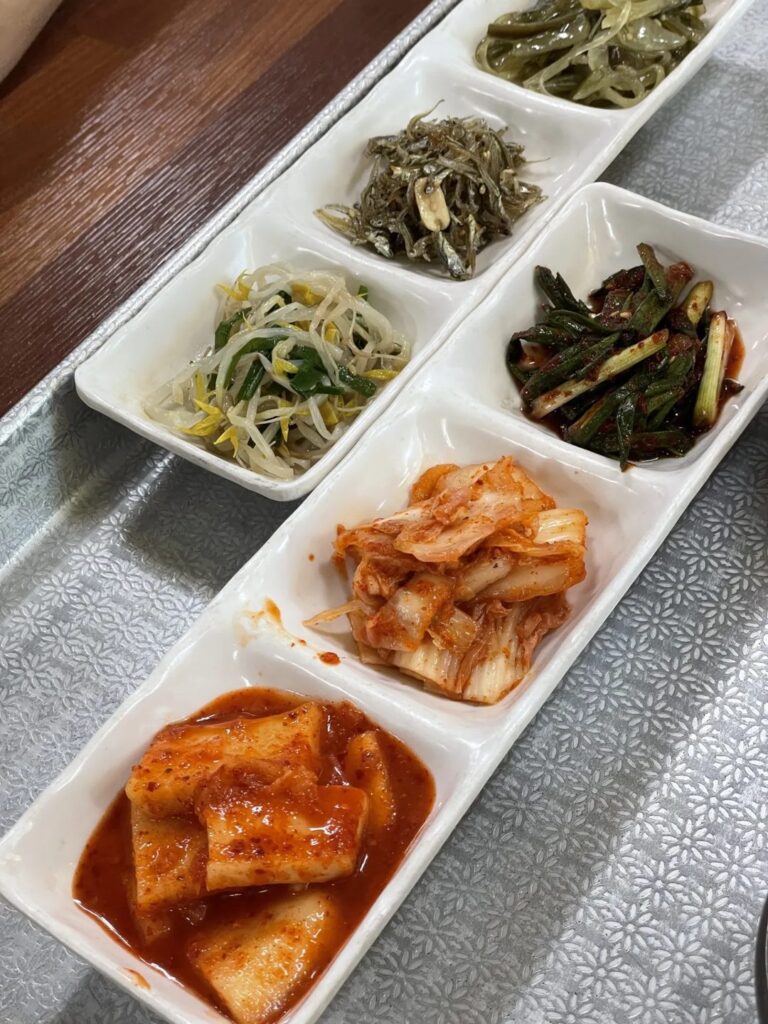
- Address: 11 Taepyeong-ro 353beon-gil, Seogwipo-si (제주 서귀포시 태평로353번길 11)
- Hours: around 07:00 to 14:00, closed Tuesdays, according to 2025 and 2026 visitor blogs. Hours can change, so check before you go.
- Price: gaeng-i guk about ₩10,000. Visitor blogs also list momguk, boma (sea snail) soup and boma kalguksu.
- Parking: no dedicated lot
- Map: Open in Naver Map
4. Sinseol Oreum (신설오름)
Sinseol Oreum is a Jeju City restaurant that has been open since 1992. It is best known for momguk, and it stays open into the early morning. I have been twice, once by day and once late at night. Original review on Revitguide (day visit) and night visit.
The momguk that suits me best
I have eaten momguk many times in Jeju, and so far Sinseol Oreum is the closest to my taste. That said, the broth is fairly oily, so opinions may be split. Personally, I like it.
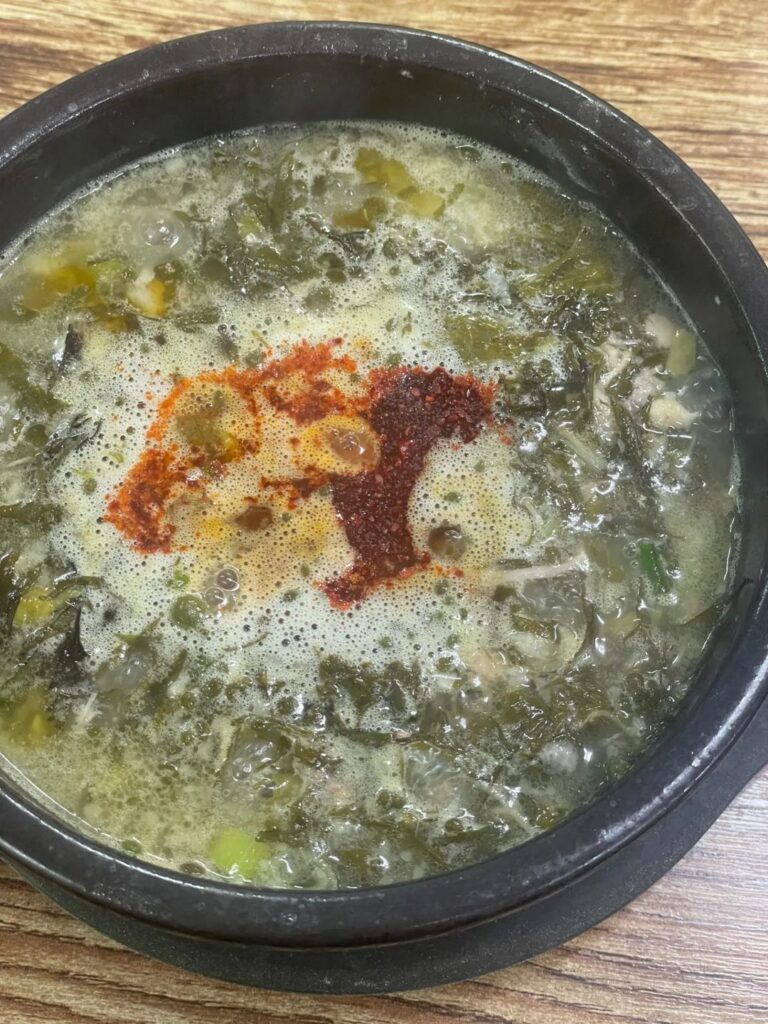
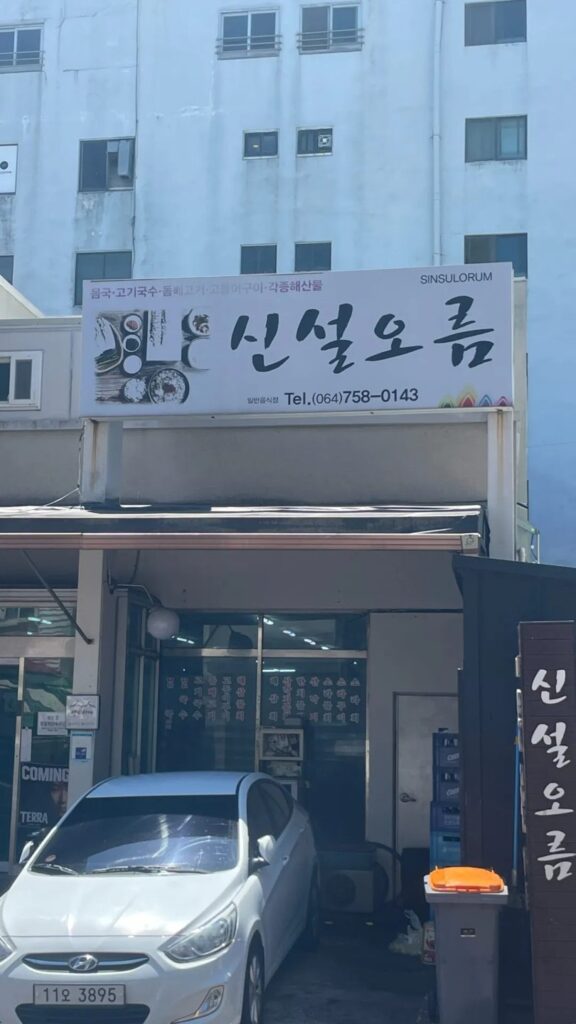
When the bowl arrives, the first thing you notice is the red seasoning piled in the middle. At first I thought it was chili paste. When I stirred it in, the broth turned red in an instant, so I expected it to be quite spicy or salty. In reality, it is a bit different. Rather than a sharp, spicy hit, it is surprisingly smooth and nutty.
The seaweed blends naturally with the rich pork broth. The red seasoning adds to the overall flavor more than it adds heat. In particular, there was plenty of ground pork to chew on. The broth is not just thick, because you keep feeling the meat, which makes every spoonful fun.
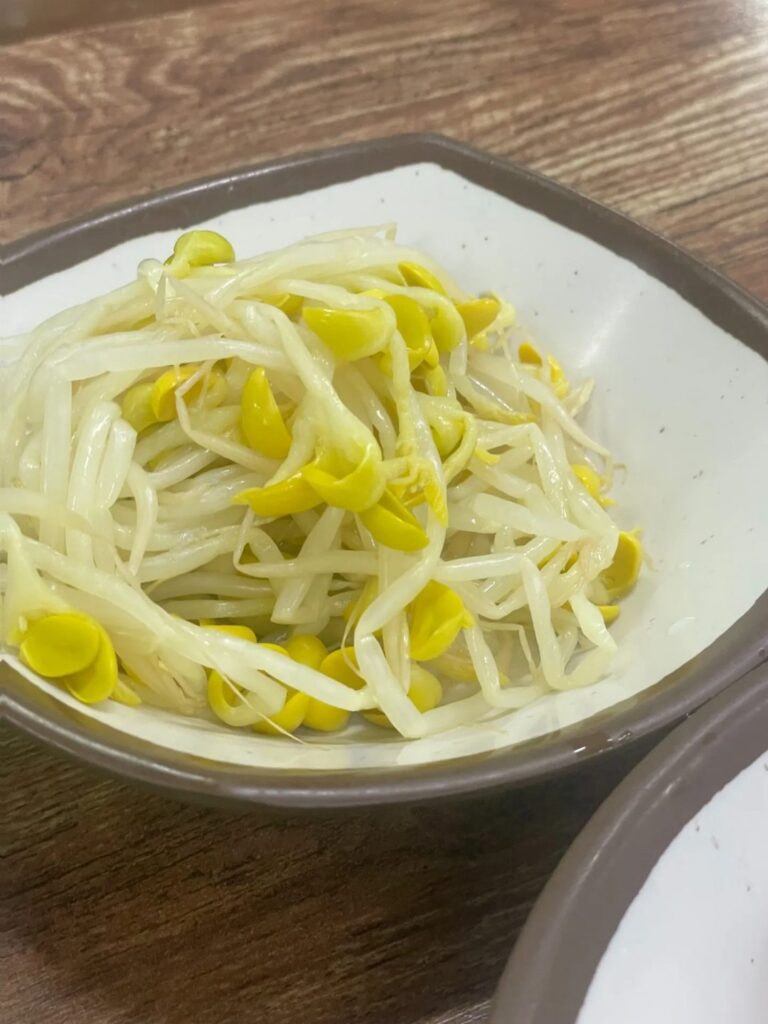
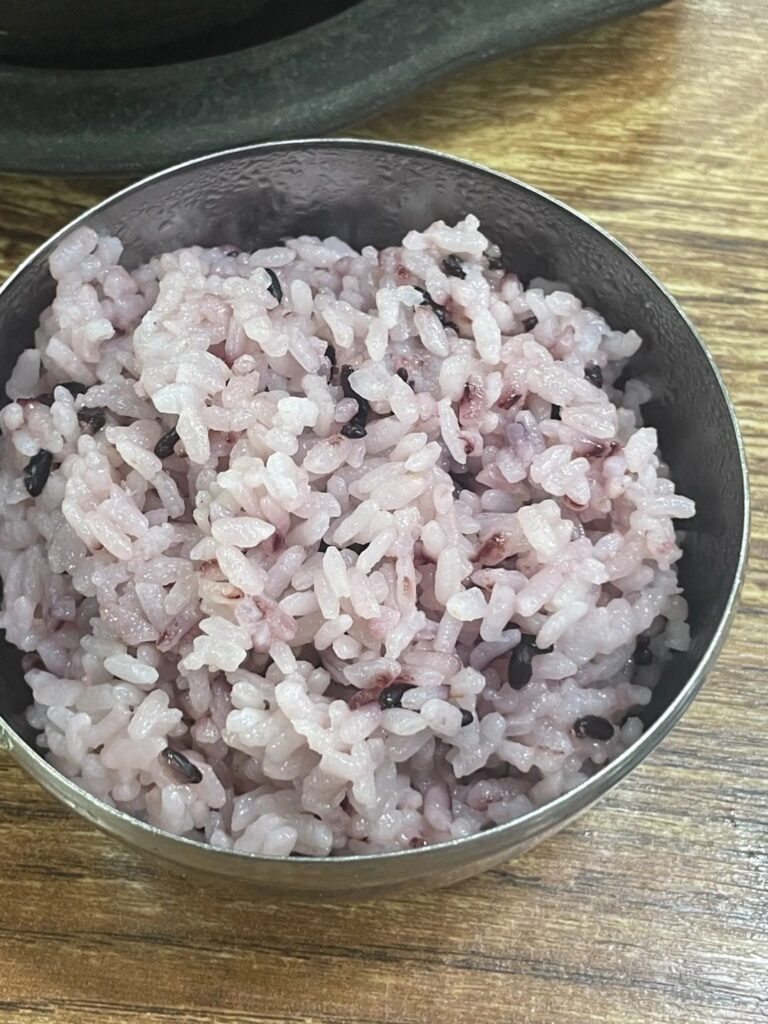
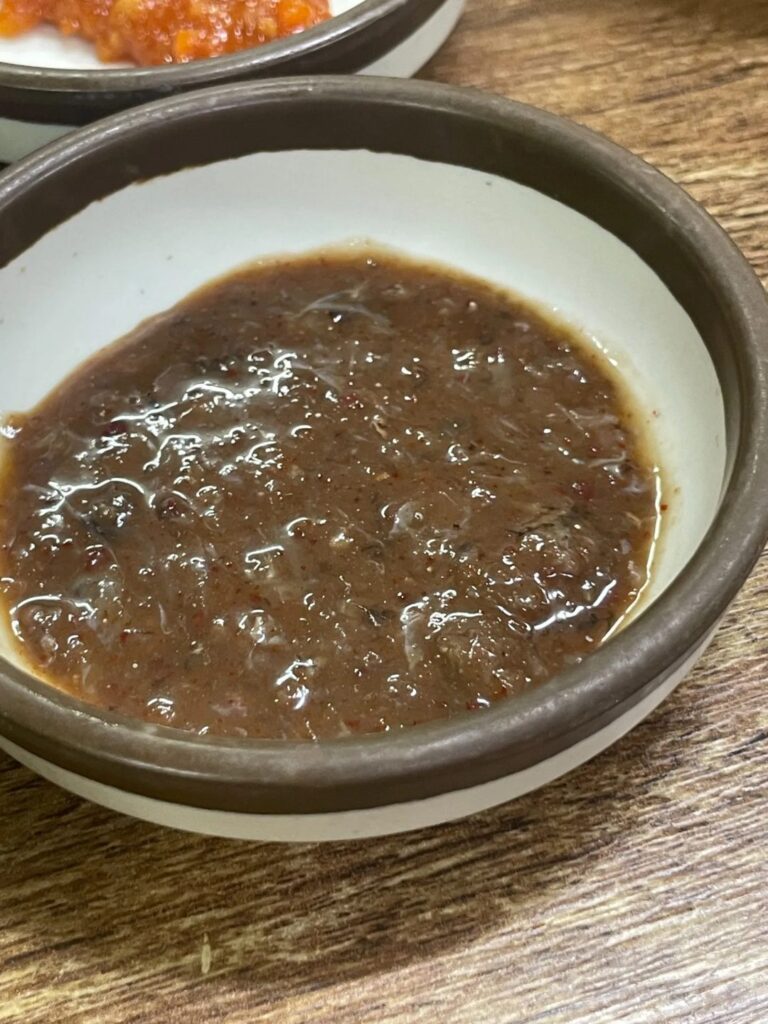
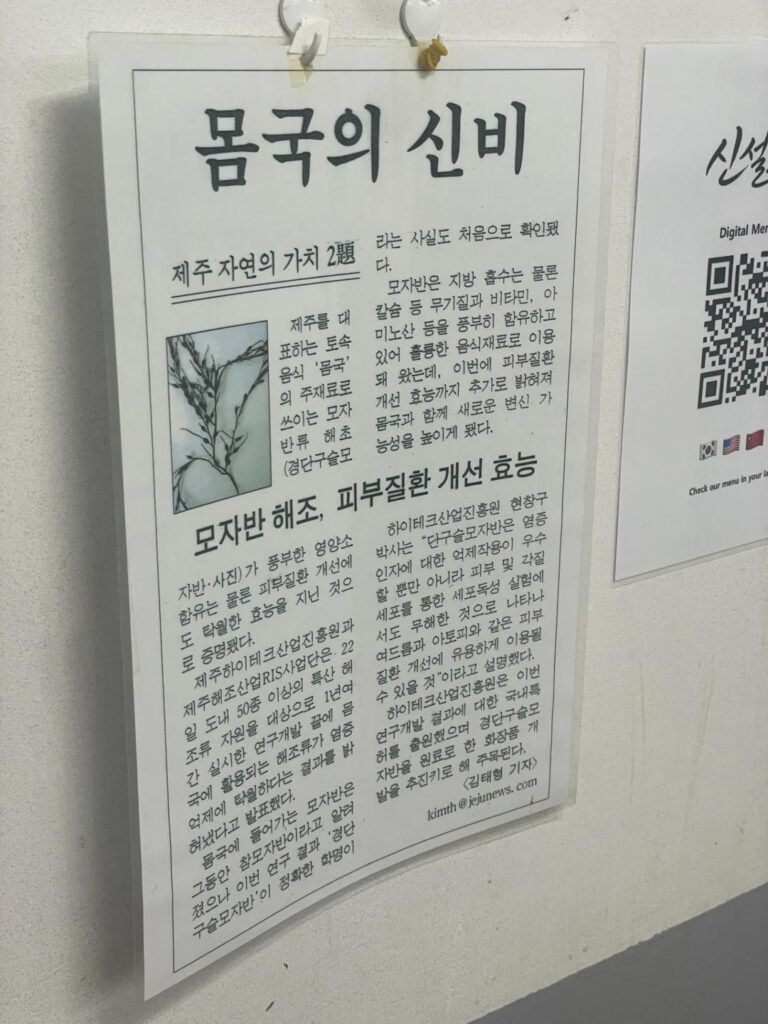
Oily pork broth followed by the sea aroma of seaweed can feel unfamiliar at first. Still, Sinseol Oreum’s momguk handles that unfamiliar flavor in a fairly soft, nutty way. I also liked that it felt less like a local food experience for tourists and more like an everyday meal for Jeju people. If you wonder what momguk is, it is worth trying once. If you have eaten momguk many times, it is fun to see whether this rich, oily style suits you. For me, it was the most memorable bowl of momguk I have had so far.
A packed house at night, with mulhoe
Sinseol Oreum has been in business since 1992, about 34 years. On the way there, I chatted with my taxi driver, who has lived in Jeju a long time. He also remembered it as a place that has been around forever. It really is a long-time fixture of Jeju. What impressed me more is that such an old place still leaves good memories for newcomers like me exploring Jeju.
This was my second visit. Last time I came in daylight for momguk. This time I came back late at night and ordered momguk and mulhoe. The momguk was as good as ever, and this time the mulhoe surprised me again.
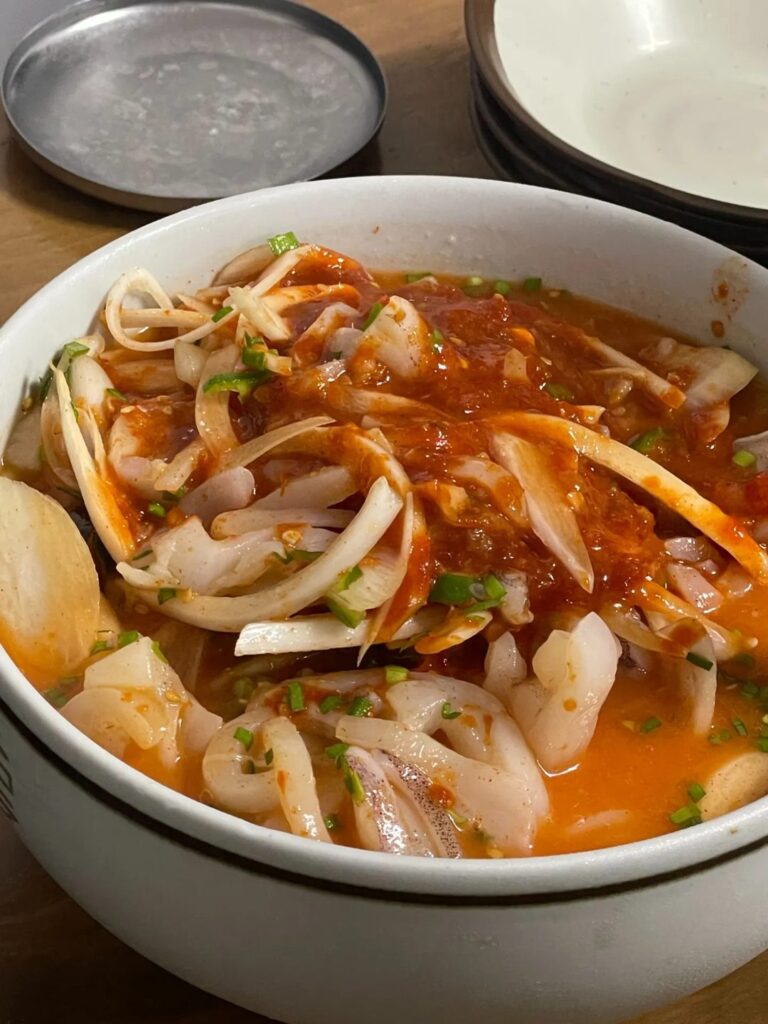
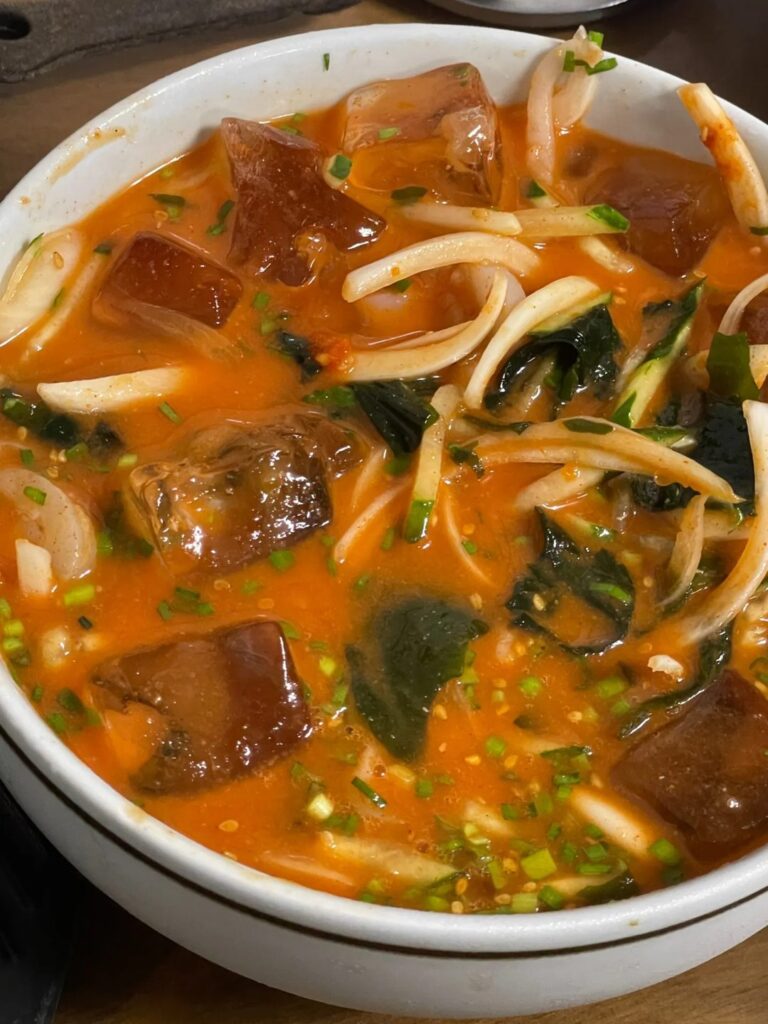
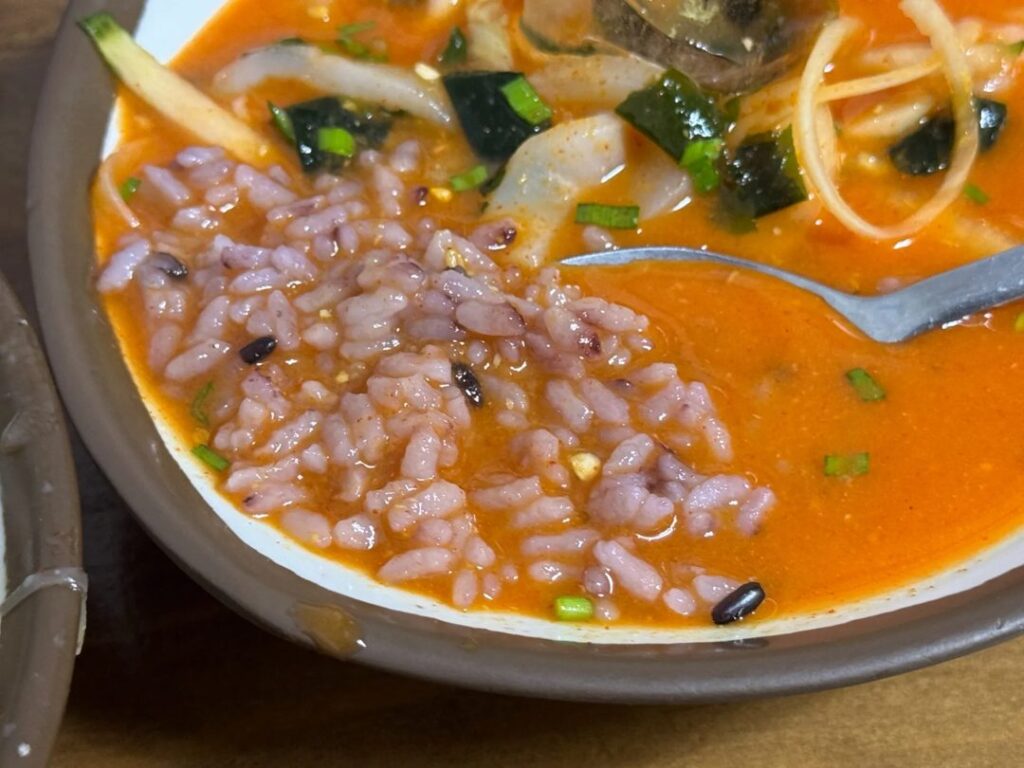
Doenjang mulhoe and purple rice
Jeju-style mulhoe uses doenjang (soybean paste) as its base rather than chogochujang. At Sinseol Oreum, the doenjang does not jump out. Instead, a gentle nuttiness sits underneath and brings out the raw fish and vegetables. It is tangy without being harsh, so I kept going back for more.
And then there was this purple rice. When you order a bowl of rice, it comes packed with multigrain rice. The moment I mixed the rice into the mulhoe, my rating was decided. I really like this style of mulhoe.
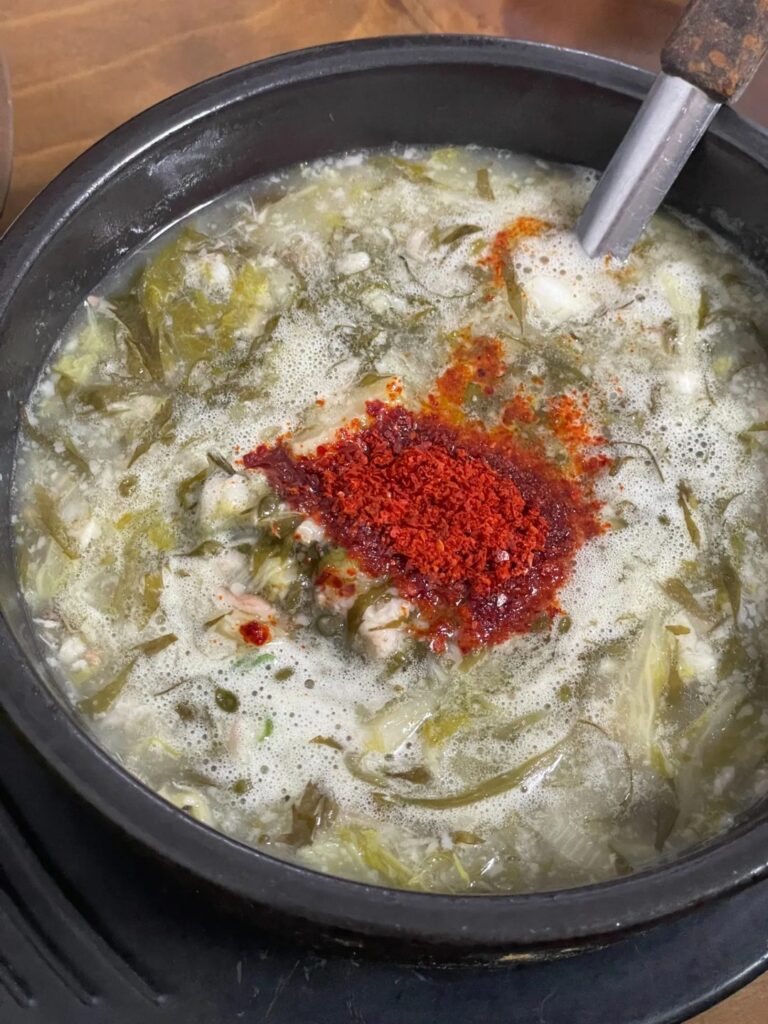
Locals and travelers at 34 years old
Even at that late hour, the restaurant was still loud and lively. Looking around, I would guess the ratio was about seven locals to three tourists. Travelers mixed easily with customers who looked like longtime regulars, and the scene suited the place. I think there is a reason it has stayed in the same spot for 34 years. A spoonful of momguk, a spoonful of mulhoe and some drinks made for a long night. The drinks went down very easily at Sinseol Oreum.
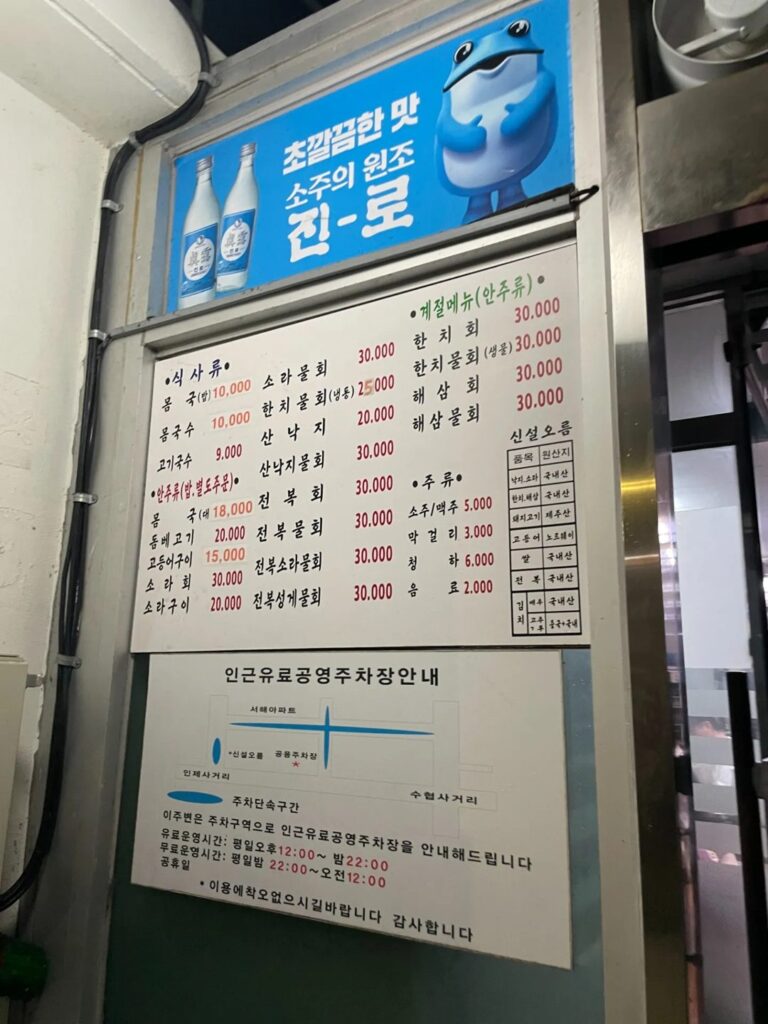
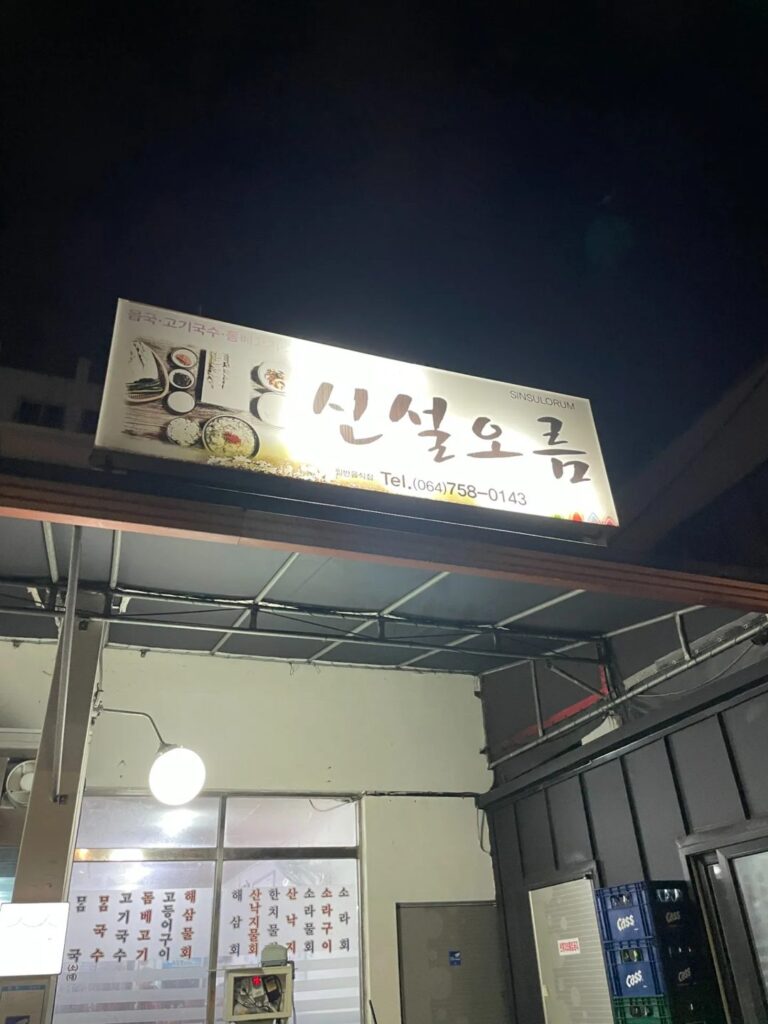
- Address: 2 Goma-ro 17-gil, Jeju-si (제주 제주시 고마로17길 2), in Ildo-2-dong
- Hours: 08:00 to 04:00 the next morning, last order around 03:00, closed Mondays (2025 and 2026 listings)
- Prices (menu board in the reviewer’s photo): momguk with rice ₩10,000, large momguk to share ₩18,000, dombe-gogi (boiled pork) ₩20,000, grilled mackerel ₩15,000, mulhoe ₩25,000 to ₩30,000
- Parking: very limited, so use a nearby public lot or come by taxi
- Map: Open in Naver Map
More Haejangguk in Jeju Worth a Stop
These extra picks are adapted from visits by Revitguide reviewer 호미식 (Homisik), who rated each 3.5 out of 5. They are solid bowls and grills if you are nearby rather than reasons to cross the island.
Woojin (우진해장국): The Gosari Haejangguk Classic
My very first gosari (bracken) haejangguk was here, and the surprise of that bowl still stays with me. It was never quite my personal style, so I did not come often, and when I did I usually took it to go because the wait is always long. Coming back after a few years to eat inside, the sign and the line out front were the same, with maybe a slightly shorter queue.
The bracken is simmered until it shreds finely and melts into the thick, porridge-like broth, yet the seasoning is easy enough for first-timers, and the price makes sense. Many places in Jeju now serve gosari haejangguk, but this is the one that taught people the dish, and it has grown from the main building into an annex. Back after years, it still had its form. Original review (2026) and earlier review (2025).
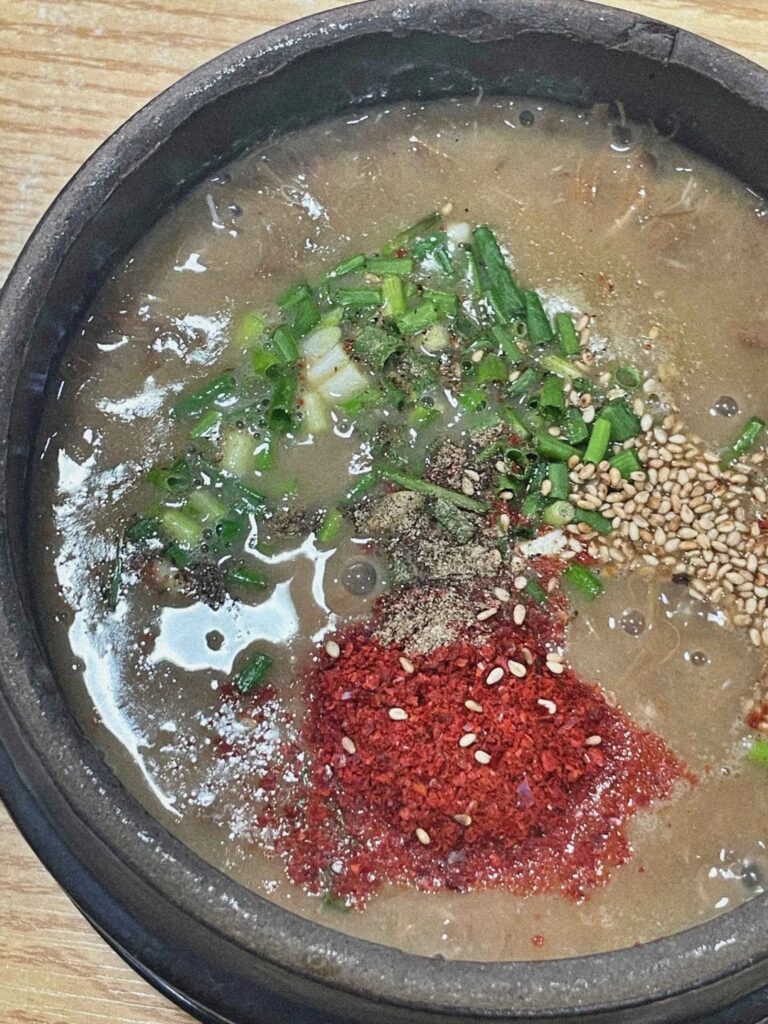
Good to know: Jeju City, 11 Seosa-ro (서사로 11). Expect a line at peak times; takeout is an option. Naver Map.
Sanji Haejangguk (산지해장국): Seongsan and Sehwa Branches
People say every Sanji branch tastes a little different, and after trying several I agree. At the Seongsan branch I ordered naejangtang. The chewy yet tender offal was the same as at other branches, but the broth carried a stronger, funkier offal aroma, so it felt heavier and more like true naejangtang. If you enjoy that aroma, this branch may suit you best. Original review on Revitguide.
At the Sehwa branch I had haejangguk. Bean sprouts and vegetables stood out more, so the broth felt lighter and cleaner than the bowl I remembered from the Hamdeok branch. Neither is simply better; comparing branches is part of the fun. Original review (Sehwa).
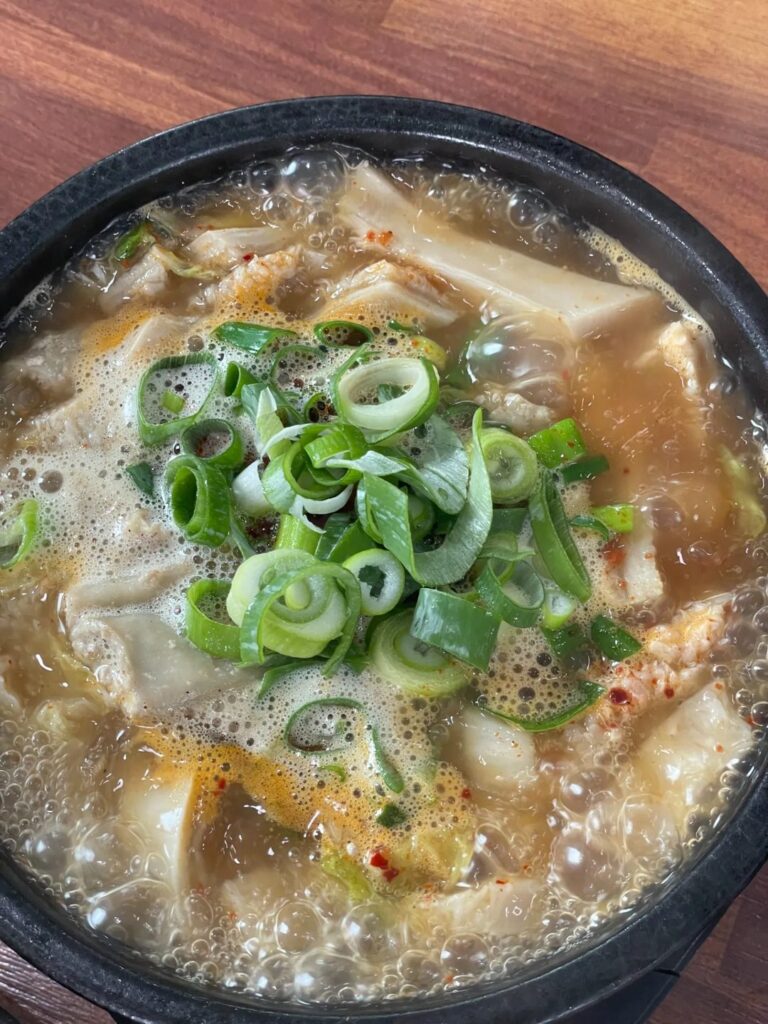
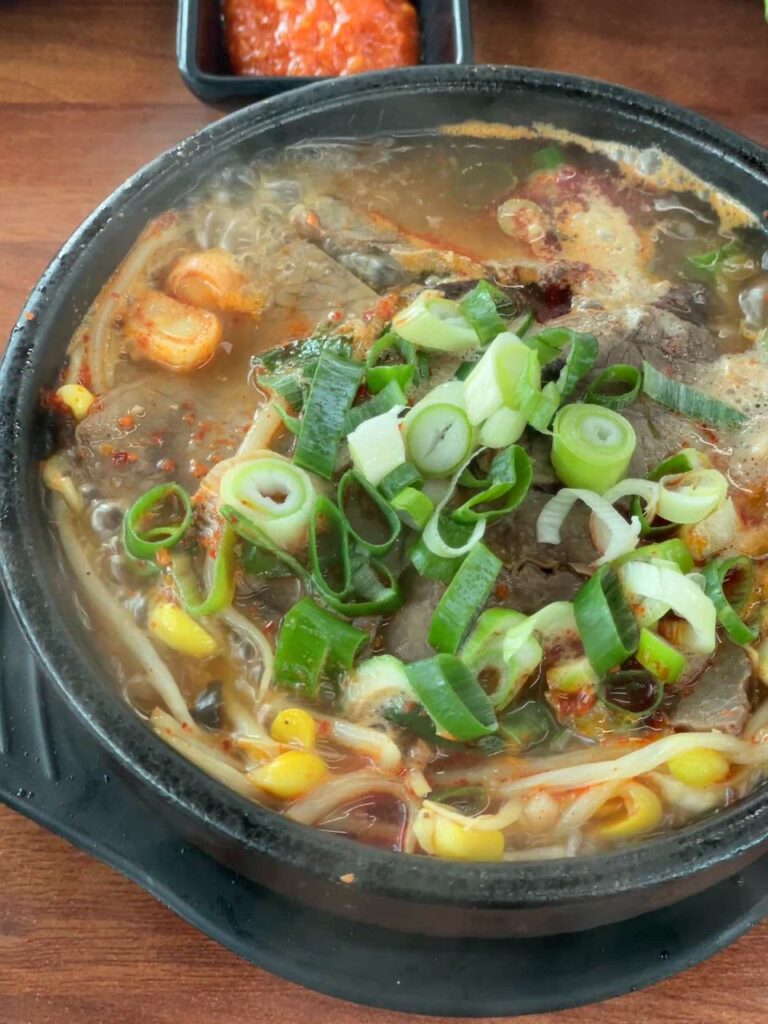
Good to know: Seongsan branch: 30-4 Seongsanjungang-ro, Seongsan-eup (성산중앙로 30-4). Sehwa branch: Pyeongdae-ri, Gujwa-eup. Naver Map.
Moise (모이세해장국): A Clean Bowl with Stone Pot Rice
You see this name all over Jeju, and it was cleaner and tastier than I expected. The broth is not overly strong, the seasoning is balanced and there is no off smell, so it is easy even first thing in the morning. It costs ₩1,000 to ₩2,000 more than many haejangguk places, but it comes with freshly cooked stone pot rice; pour water into the pot at the end and you get nurungji. The soup arrives bubbling, and a raw egg makes it softer and nuttier. Not a dramatic bowl, just a well-organized one. Original review on Revitguide.
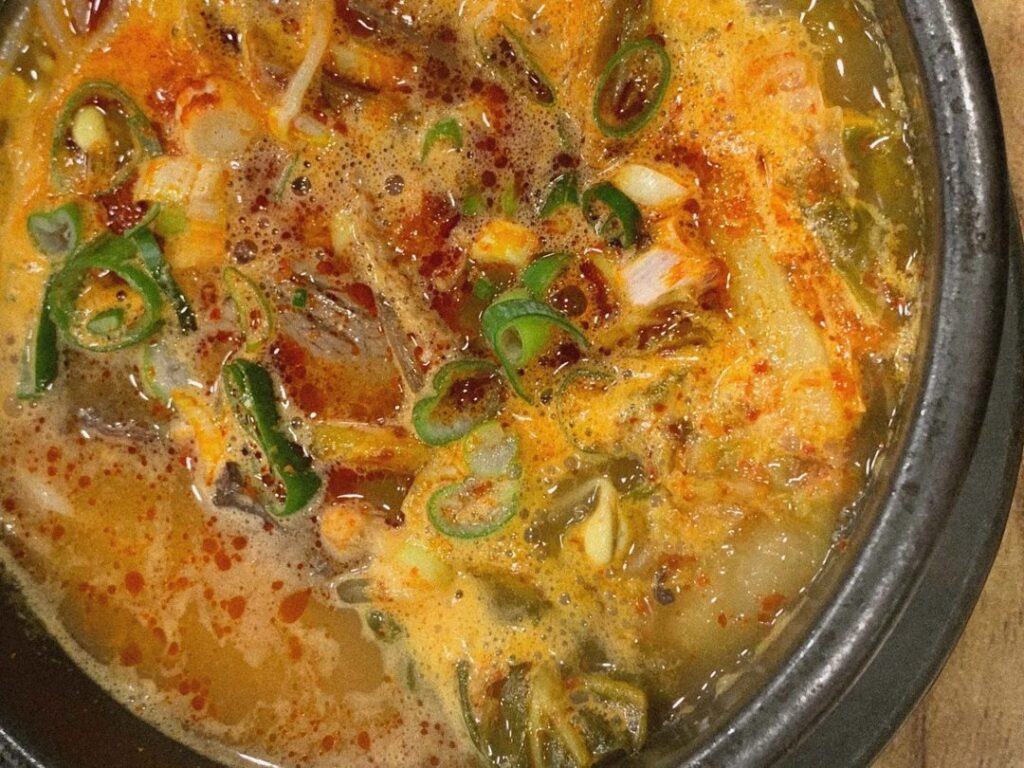
Good to know: Main branch, 15 Samu-ro 1-gil, Jeju City (삼무로1길 15). Naver Map.
Baekseongwon (백성원해장국): Milder Than It Looks
Near Jeju City Hall, this place opens early (I was told from 6 a.m.), so people come from breakfast through lunch. I walked in at weekend lunchtime with no wait. The red broth with dadaegi on top looked salty and spicy, but it was gentle and closer to mild, with plenty of seonji, meat and offal. I prefer a stronger, spicier bowl, so it felt a bit plain to me. A fun touch: ganjang gejang (soy-marinated crab) comes as a side dish. Original review on Revitguide.
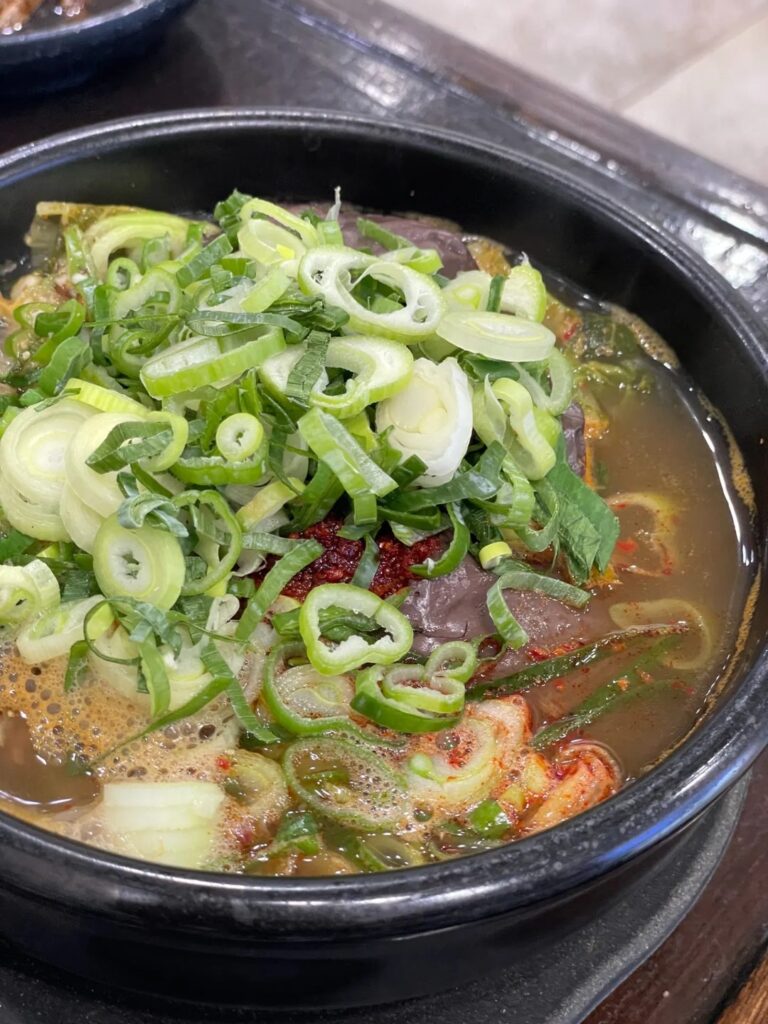
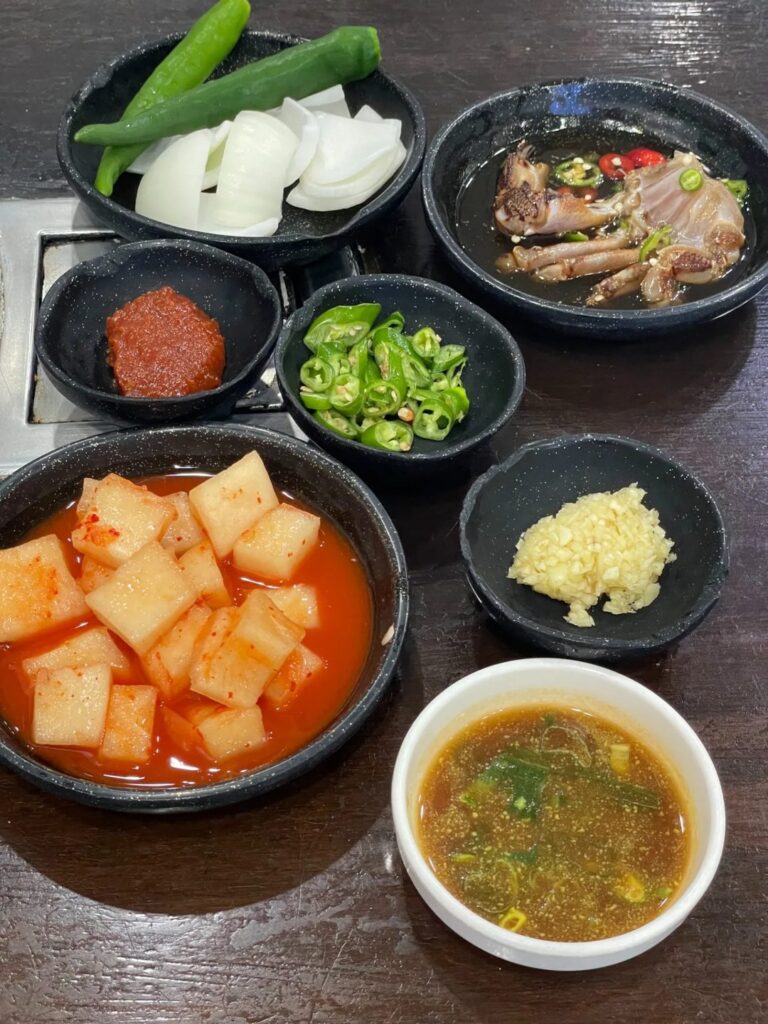
Good to know: Ido-dong, near Jeju City Hall (이도이동). Naver Map.
Matjangteo (맛장터해장국): Savory Naejangtang
The naejangtang broth has a quietly savory depth and is not harsh, so it sits well as a first meal of the day. Adding rice a little at a time brings out the broth. The bean sprouts were cooked a bit too long and soft, but it is still a bowl that does its job. Original review on Revitguide.
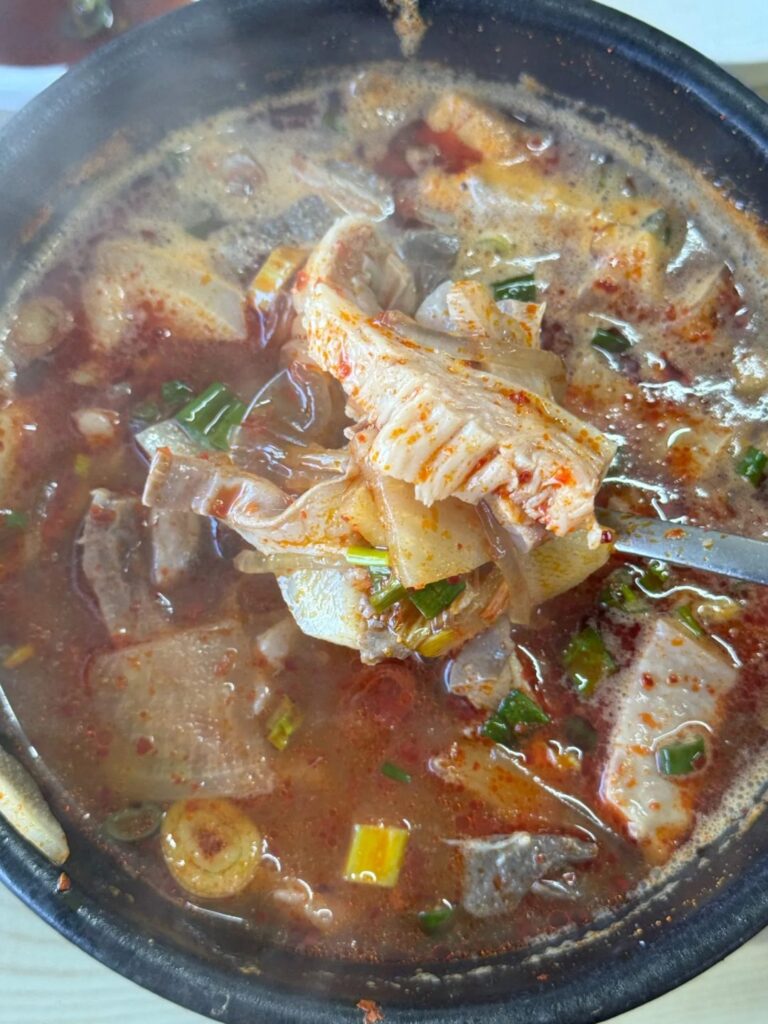
Good to know: Yeon-dong, Jeju City, 10 Sindae-ro 13-gil (신대로13길 10). Naver Map.
Nangpun Bapsang (낭푼밥상): Momguk the Traditional Way
I have had momguk many times in Jeju, and this one was clearly good. The restaurant presents Jeju dishes in the traditional way under Kim Ji-sun, who is described as Jeju’s first designated master of local cuisine, and she stopped by while I was eating. The momguk is not salty or harsh, yet the broth is deep, and the soft seaweed blends right into it. The walls explain momguk and other Jeju dishes for first-time visitors. If you want to try a proper bowl of momguk, I would point you here. Original review on Revitguide.
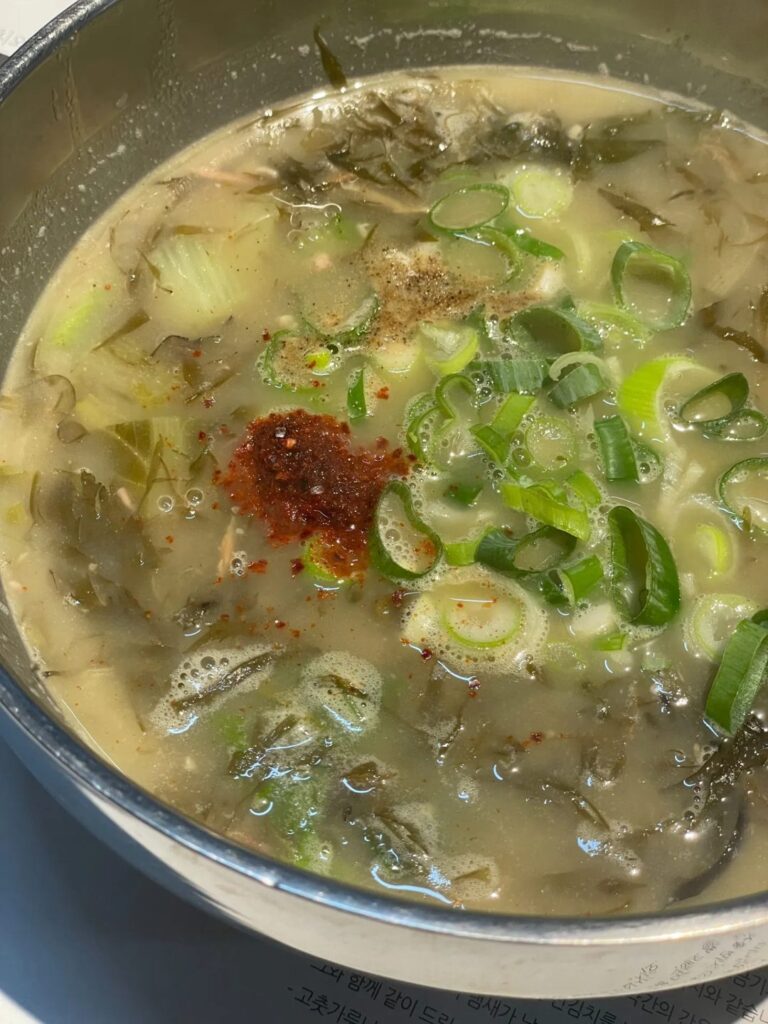
Good to know: Nohyeong area, Jeju City, 23 Jeongjon 11-gil (정존11길 23). Naver Map.
Yongdune (용두네해장국): Gosari Haejangguk Near Hamdeok
Gosari haejangguk in Jeju gets compared with Woojin, and I felt the difference from the first spoon. Overall it was above average, thick and hearty. The bracken and meat felt a little drier and more separate than at Woojin, and the seasoning hit a bit sharp up front. Fine for a warm Jeju-style bowl around Hamdeok, just not Woojin-level softness. Original review on Revitguide.
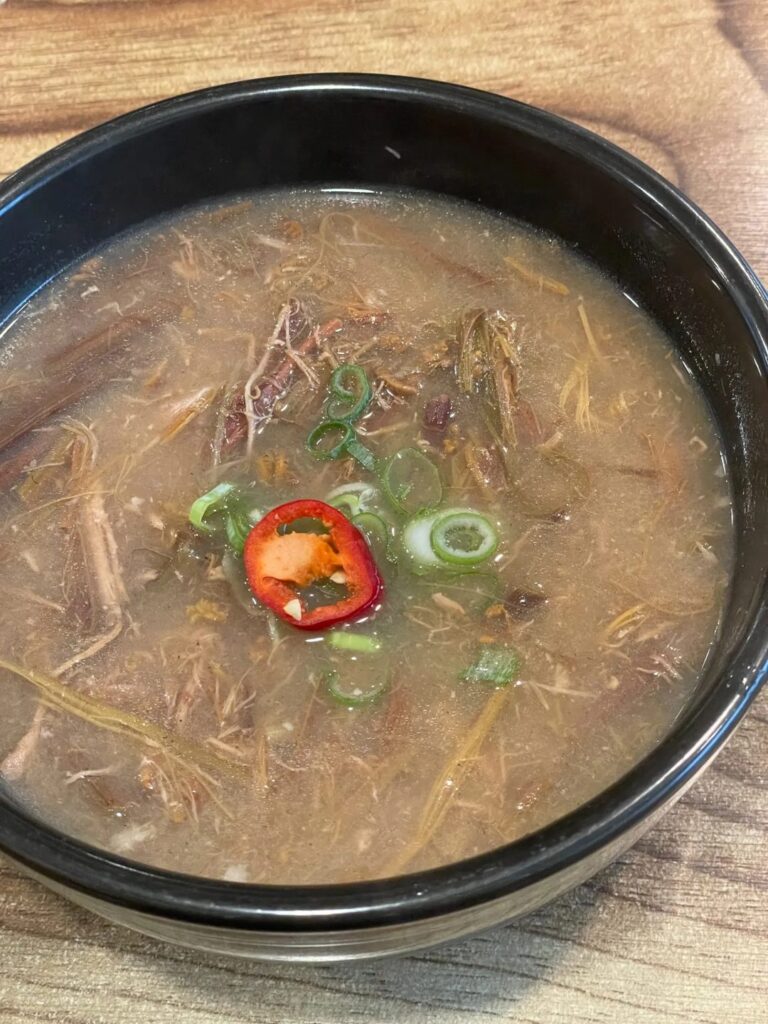
Good to know: The reviewer visited the Hamdeok shop, while Revitguide lists 456-4 Seohaean-ro; check the branch on Naver Map. Naver Map.
Seonyeong-ine Bapsang (선영이네 밥상): Jeju Hanwoo Gomtang in Jungmun
Jungmun has haejangguk places well known to tourists, so I tried one that seemed more local. The menu offers a clear gomtang made with 100% Jeju Hanwoo, “Jeju style”. It tasted more familiar than I expected: fine for a morning or a hangover, but there is some fat in the broth, so it may feel heavy if you like clean gomtang. I did not find a big difference from the Jeju Hanwoo label; think of it as a reliable meal. Original review on Revitguide.
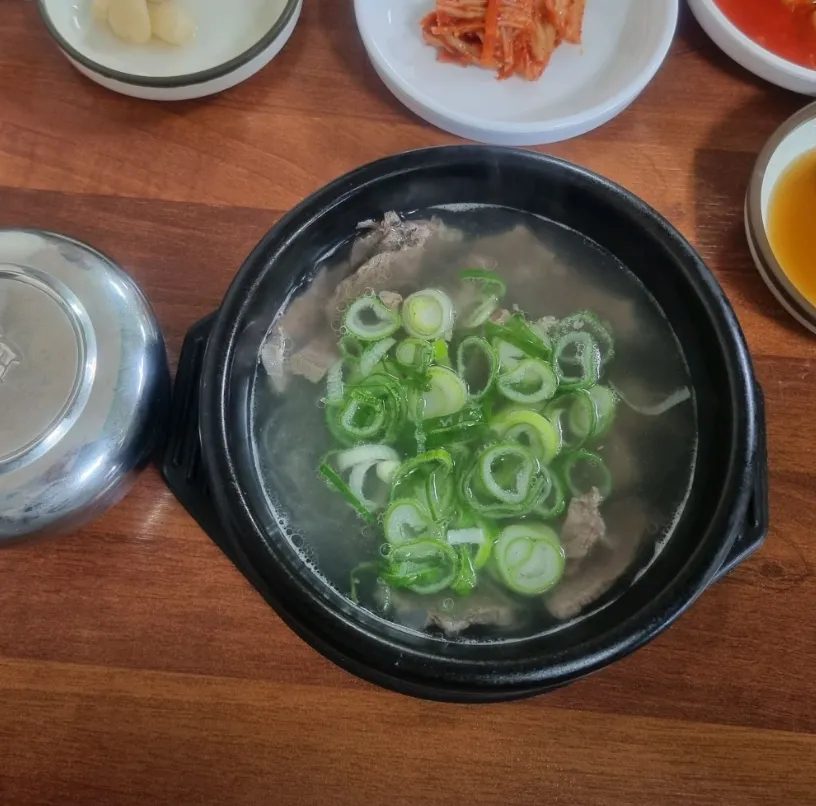
Good to know: Jungmun, 40 Jungmunsang-ro (중문상로 40). Naver Map.
Tips for Eating Haejangguk in Jeju
- Make it breakfast. Hamdeok Golmok and Daechun both stop serving by mid-afternoon, so they work best as an early meal.
- Compare the two classics. Hamdeok Golmok sits near the east coast route, while Daechun’s main branch is in Jeju City. You can try one on arrival and the other on another morning.
- Stir in the chili paste slowly. Taste the broth first, then add the seasoning a little at a time.
- Late arrival? Sinseol Oreum in Jeju City stays open until 4 a.m. (closed Mondays).
- Check closing days. Hamdeok Golmok closes on Thursdays, Daechun on Mondays, Mendorong on Tuesdays and Sinseol Oreum on Mondays.
Planning more meals on the island? Browse our Jeju food guides. If your trip also includes Seoul, see our picks for the best Korean restaurants in Seoul, where you will find more soups like samgyetang and dakhanmari. For the mainland coast, our Busan food guide covers Busan’s own pork soup.
FAQ
What is haejangguk?
Haejangguk is Korean “hangover soup.” In Jeju it is usually a beef broth with bean sprouts, dried cabbage leaves, beef and seonji (congealed ox blood), finished with chili paste that you stir in yourself.
What is the difference between haejangguk and naejangtang?
At Jeju specialists like Hamdeok Golmok and Daechun, the two share a similar broth. Haejangguk comes with seonji, while naejangtang comes with beef offal such as tripe and intestines. Naejangtang usually costs about ₩1,000 more.
How much does haejangguk cost in Jeju?
In 2026, a bowl cost about ₩10,000 to ₩12,000 at the places in this guide.
What is momguk?
Momguk is a Jeju soup of rich pork broth cooked with mojaban seaweed. It is thick, slightly oily and very filling. Sinseol Oreum in Jeju City is a good place to try it, even late at night.
What time do Jeju haejangguk restaurants open?
Many open very early. Daechun opens at 6:00 and Hamdeok Golmok at 7:00, and both close in the early afternoon. Sinseol Oreum is the exception, running from 8:00 until 4:00 the next morning.
We checked prices and hours in November 2026, and they can change. Check Naver Map before you go.