Gogi guksu (고기국수), Jeju’s pork noodle soup, is the bowl most visitors look for on the island, and it was my starting point for this list. However, Jeju’s noodle scene goes further than one dish. Below are four noodle stops from my trips around the island in summer 2026: a spicy gogi guksu in Jeju City, a light anchovy noodle soup at the end of Guksu Street, a seasonal black bean noodle house in Jocheon, and a raw fish noodle bowl by the sea in Gujwa.
The picks below are adapted from visits by Revitguide reviewer 호미식 (Homisik), who rated each 4 out of 5. Each section links to the original Korean review.
What Is Gogi Guksu?
Gogi guksu literally means “meat noodles.” According to the Encyclopedia of Korean Culture, it is made by pouring a broth simmered from pork over boiled dried wheat noodles and topping the bowl with sliced pork. Jeju people also call it dwaeji guksu (pork noodles), and in the Jeju language it is 돗괴기국수.
The dish is fairly young. The same encyclopedia explains that dried wheat noodles spread on Jeju after the Korean War, helped by American wheat aid and a government campaign that promoted flour foods until the mid-1970s. Jeju already had a custom of serving pork and pork broth at weddings and funerals, and noodles in that broth gradually replaced rice at these feasts. Then, in the mid-1980s, tourism and pig farming grew quickly, pork became plentiful, and the restaurant bowl topped with a few slices of pork took the shape we know today.
Other Jeju noodles you will see on menus
- Myeolchi guksu (멸치국수): noodles in a clear anchovy broth, lighter than gogi guksu and usually cheaper.
- Bibim guksu (비빔국수): noodles mixed with a sweet and spicy sauce, with no broth.
- Kongguksu (콩국수): cold noodles in thick ground soybean milk, a summer dish across Korea.
- Hoe guksu (회국수): noodles mixed with sliced raw fish, vegetables and a sweet, sour and spicy chili sauce. Seaside restaurants in Jeju often serve it.
Guksu Street: Jeju City’s Gogi Guksu Hub
If you want gogi guksu in Jeju City, the obvious place to start is Guksu Munhwa Geori (국수문화거리), often called Noodle Culture Street. It follows Sinsan-ro and Samseong-ro around Sinsan Park in Ildo 2-dong, a short ride from Jeju Airport. Local reporting by Jeju Sori explains that the noodle shops here grew from a couple of small eateries into a cluster, and that in 2009 the shop owners formed an association while Jeju City designated the area as Noodle Culture Street. The same 2024 report also noted that some well-known shops have since left the street, so the lineup changes over time.
Two of the places below sit in this neighborhood. Darangsi is at the Sinsan Park end of the street, and Cheonhajeil Orabang is a few blocks away, across from Samseonghyeol shrine.
How to Order and What It Costs
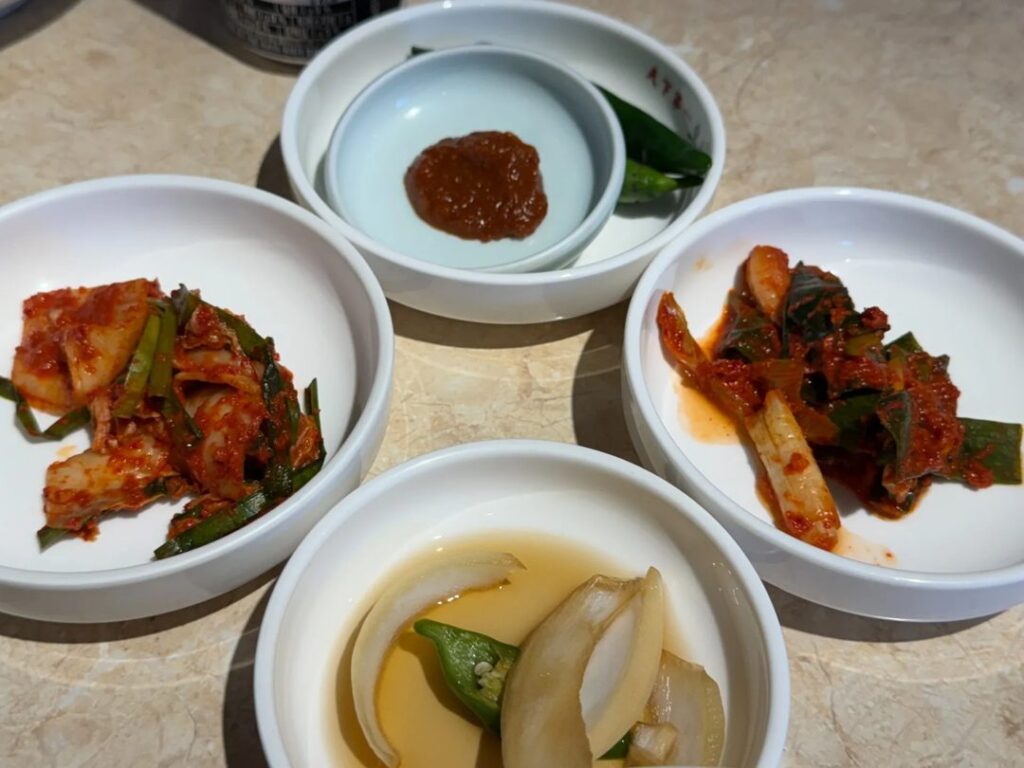
Most noodle houses in Jeju are simple, fast places. You either order at the table, on a tablet or at a kiosk, and side dishes such as kimchi and kkakdugi (cubed radish kimchi) come free. In 2026, a bowl of gogi guksu cost roughly ₩7,000 to ₩11,000 at the places below, while anchovy noodles cost less. Many shops also sell dombe gogi, boiled pork sliced on a wooden board, if you want more meat to share.
| Place | Area | What to order | My bill | Best for |
|---|---|---|---|---|
| Cheonhajeil Orabang | Jeju City (near Guksu Street) | Ppeolgeon gogi guksu (spicy) | ₩19,000 | A spicy take on gogi guksu |
| Darangsi | Jeju City (Guksu Street) | Myeolchi guksu | ₩19,000 | A light bowl, late at night |
| Tongil Garden | Jocheon (northeast) | Black bean kongguksu | ₩13,000 | Summer only, cold noodles |
| Gommak | Gujwa (east coast) | Hoe guksu | ₩13,000 | Raw fish noodles with a sea view |
1. Cheonhajeil Orabang (천하제일 오라방): Spicy Gogi Guksu
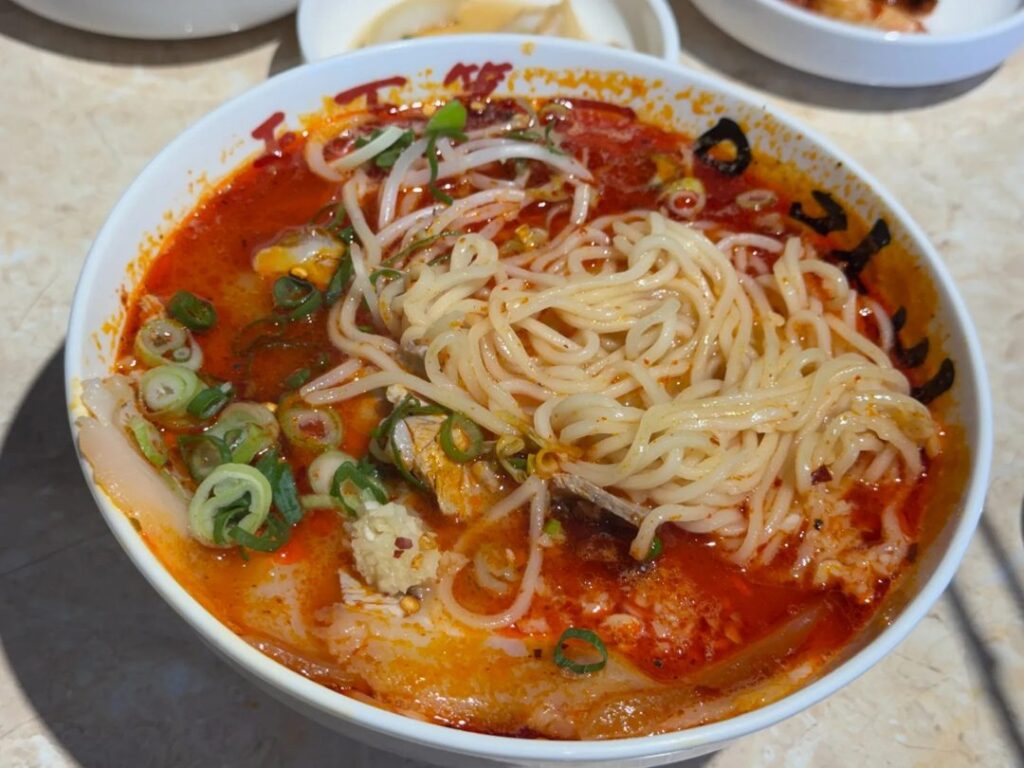
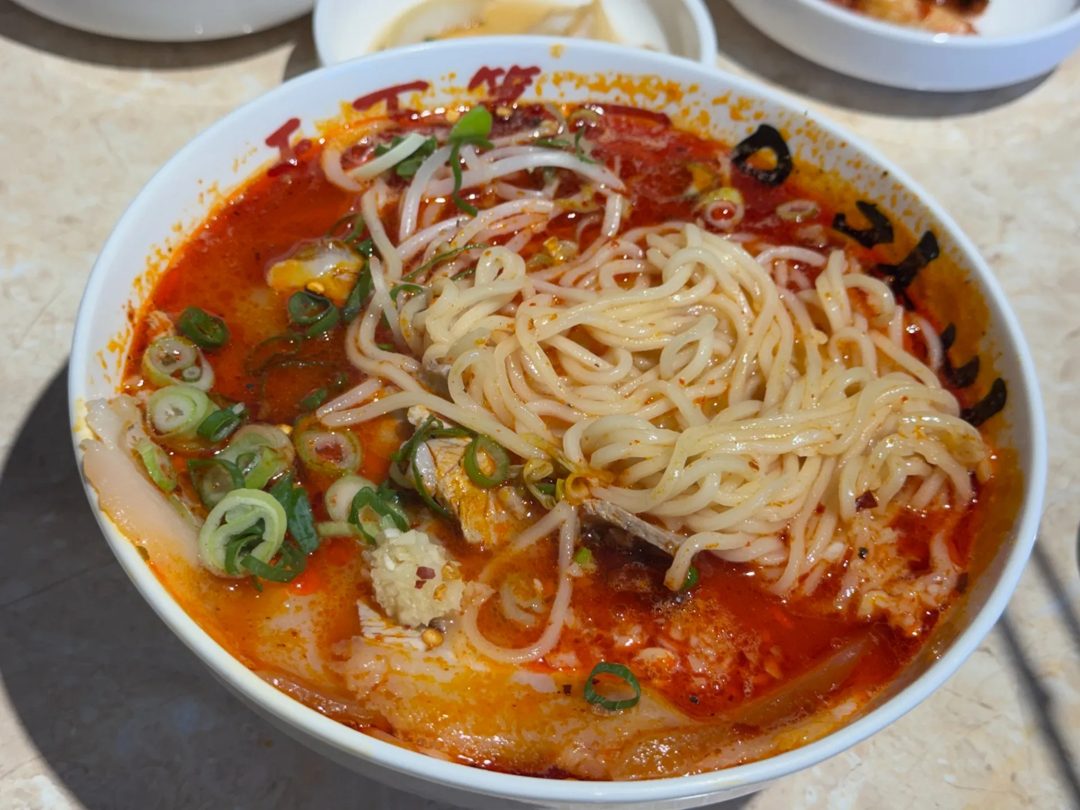
I ordered the ppeolgeon gogi guksu, the “red” version. It is spicy and nutty at the same time, so one spoonful gives you two flavors at once. There was almost no gamey smell from the pork broth, so the soup tasted clean and well put together.
It leans spicy and a little sweet, but the depth of the broth stays clear underneath, and it works well even if you add rice to the bowl. This is a place that serves an impressive bowl by giving Jeju gogi guksu a spicy twist.
Good to know
- Address: 1F, 2 Ohyeon-gil, Jeju City (제주 제주시 오현길 2 1층), across from Samseonghyeol
- Menu (Tabling listing): gogi guksu ₩10,000, ppeolgeon gogi guksu ₩11,000, bibim guksu ₩10,000, plate of boiled pork from ₩13,000
- Hours: listings disagree. The restaurant’s Instagram (@zzangorabang) recently showed 10:30 to 16:00 “for now,” while older listings show lunch and dinner service until about 22:00. Check Instagram or Naver Map before you go.
- Parking: no dedicated lot, so street or nearby paid parking
- Map: Open in Naver Map
- Original review on Revitguide
2. Darangsi (다랑시): Light Anchovy Noodles on Guksu Street
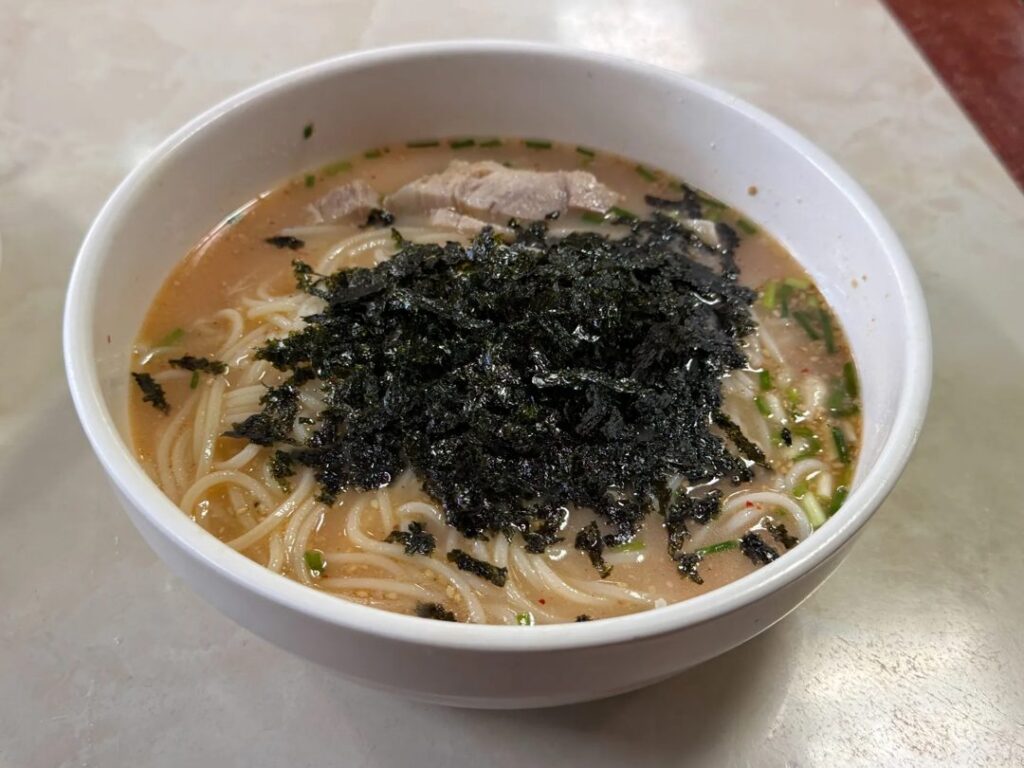
The broth of the myeolchi guksu is lightly seasoned and refreshing. It has nothing harsh in it and goes down easily, so you can finish a whole bowl without feeling weighed down.
Eaten together with kkakdugi, the mild broth gets just the right accent. It is a modest place where you get a simple bowl of noodles with solid basics.
Good to know
- Address: 52 Sinsan-ro, Jeju City (제주 제주시 신산로 52), at the Sinsan Park end of Guksu Street
- Hours: visitor blogs describe it as a late-night noodle house that opens in the evening (around 17:00 to 17:30) and stays open until about 5:00 the next morning. It closes on Wednesdays, and Revitguide also lists Thursdays as a closing day.
- Menu: Tabling lists gogi guksu at ₩7,000. Visitors reported anchovy noodles at ₩5,000 to ₩6,000, so expect a cheaper bowl than in tourist areas.
- Parking: none at the shop. Use nearby public parking.
- Map: Open in Naver Map
- Original review on Revitguide
3. Tongil Garden (통일가든): Black Bean Kongguksu, Summer Only
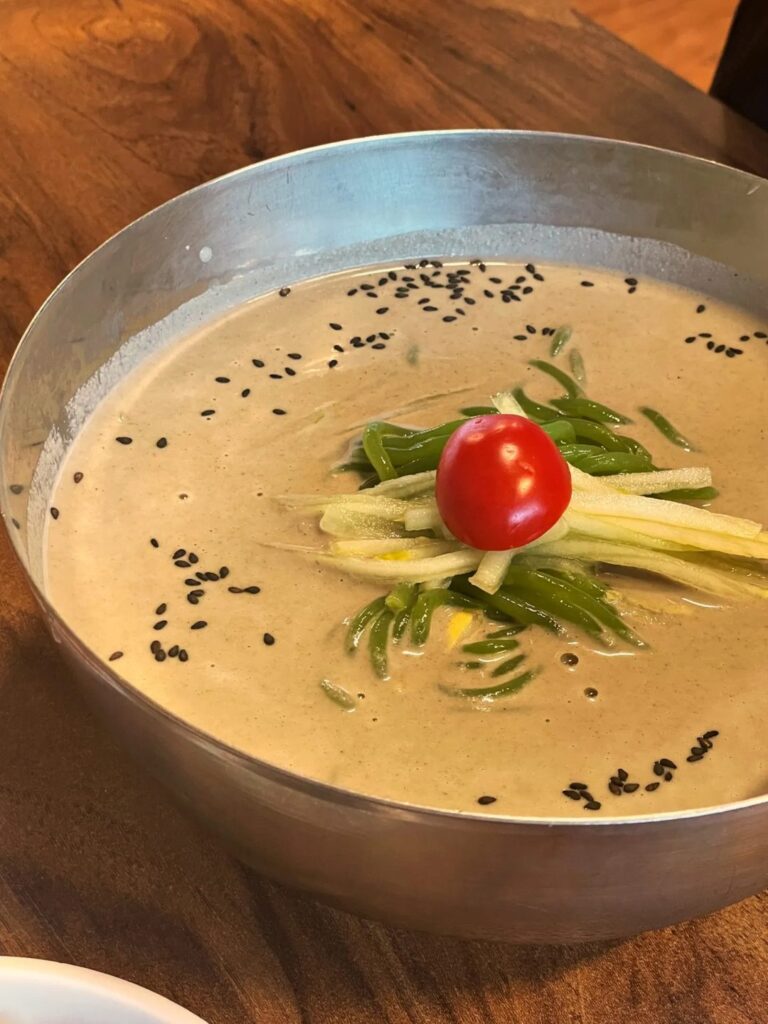
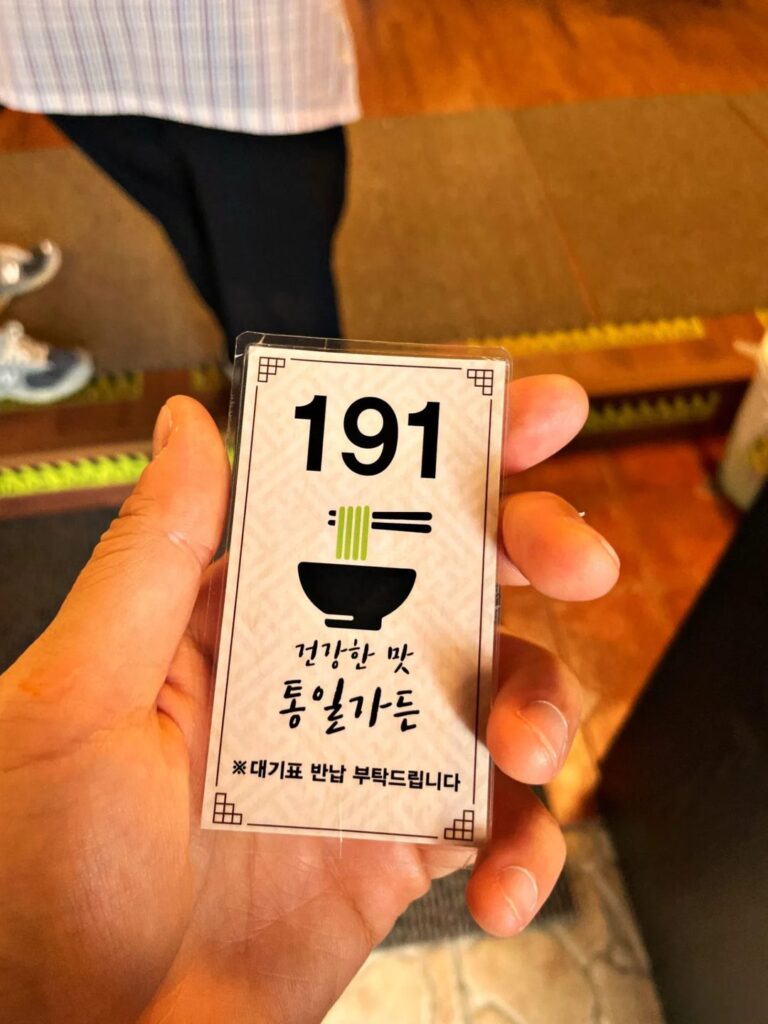
Tongil Garden is quite famous in Jeju for its kongguksu. Not only tourists but also many Jeju locals come here, so in summer it is best to plan for some waiting.
The signature dish is black bean kongguksu. Black sesame seeds go on top of soy milk made from ground black beans, and the first bite is very rich and nutty. Rather than adding sweetness or strong seasoning, the style brings out the flavor of the beans themselves, so after eating it I even felt like I had had a healthy meal.
The green broccoli noodles
Personally, though, what impressed me as much as the soy milk was the noodles. They use green noodles made with broccoli. The color alone is unusual, and above all the texture is very chewy. The restaurant also sells the bean milk on its own, but I felt that you need these noodles to complete Tongil Garden’s black bean kongguksu.
Cherry tomatoes and shredded cucumber add freshness now and then. That is why, even if you drink the rich bean milk to the last drop, it gets less heavy than you might expect. The side dishes that come with it are good too, especially the seasoned eggplant and the young radish kimchi, which go well between bites of noodles. The staff also brought more kimchi when we ran low, which left an impression.
In summer, waiting is almost a must, but if you like kongguksu, it is worth the wait at least once. The rich black bean milk is great, but for some reason it is that chewy green noodle that stays in my memory.
Good to know
- Address: 14 Jowa-ro, Jocheon-eup, Jeju City (제주 제주시 조천읍 조와로 14)
- Season: it opens only from spring to autumn. The restaurant’s Naver notice set the last day of the 2026 season as 18 October, with a break from 19 October to 12 April. So if you visit Jeju in winter, it will be closed.
- Hours in season: 10:30 to 15:00, closed Mondays (2026 visitor blogs and Tabling). It can close early when ingredients run out.
- Menu (2026): black bean kongguksu ₩13,000, yeolmu guksu (young radish kimchi noodles) ₩11,000, mul milmyeon ₩11,000, and 1.5 L of black bean milk to take away for ₩22,000
- Waiting: take a numbered ticket at the door. Visitors mention a public parking lot right next to the restaurant.
- Map: Open in Naver Map
- Original review on Revitguide
4. Gommak (곰막식당): Hoe Guksu by the Sea
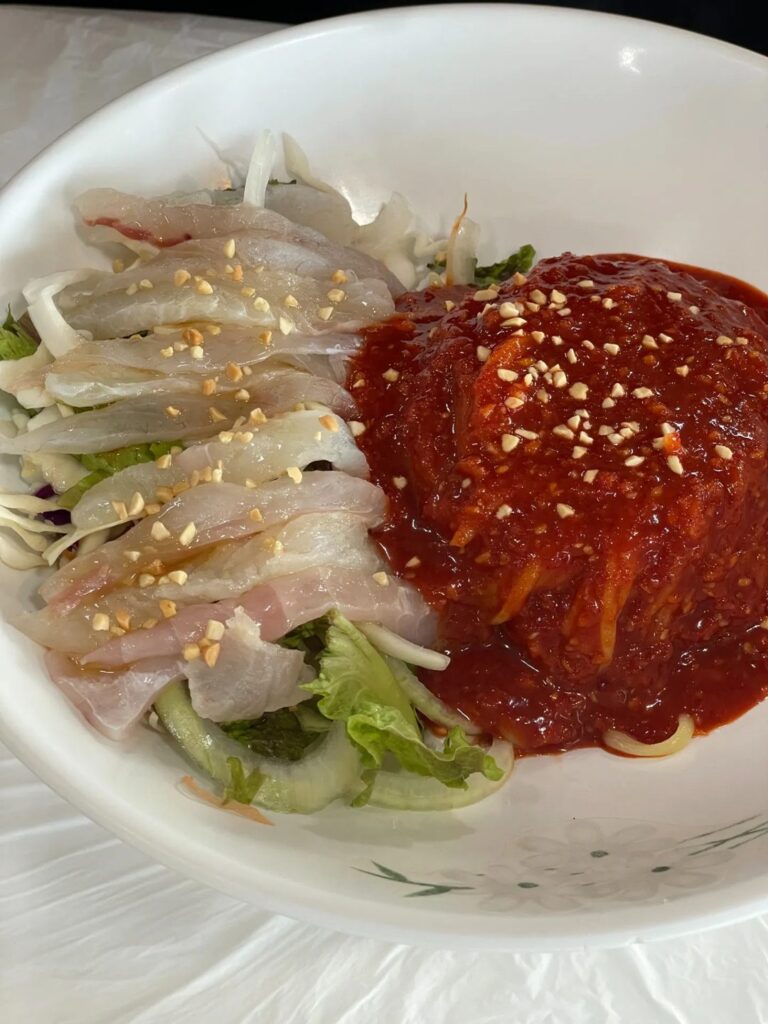
At Gommak I ordered the hoe guksu. After one bite I thought right away: this place is good.
With hoe guksu, if the chojang (vinegared chili sauce) is too strong, it can easily drown out both the fish and the noodles. At Gommak the seasoning was well balanced. The aroma of nutty sesame oil came through the sweet and sour sauce, and when I mixed the fish and noodles together, nothing stood out too much.
What I liked most was the noodles. They were springy and chewy, and they did not go soft quickly even after being mixed with the sauce. With hoe guksu your eyes usually go to the fish first, but as I kept eating I thought, “this is a place that makes good noodles.”
I have eaten gogi guksu at a lot of places while traveling around Jeju. Some of them were disappointing compared with their fame. Rather than eating a bowl like that, I would much rather recommend the hoe guksu at Gommak.
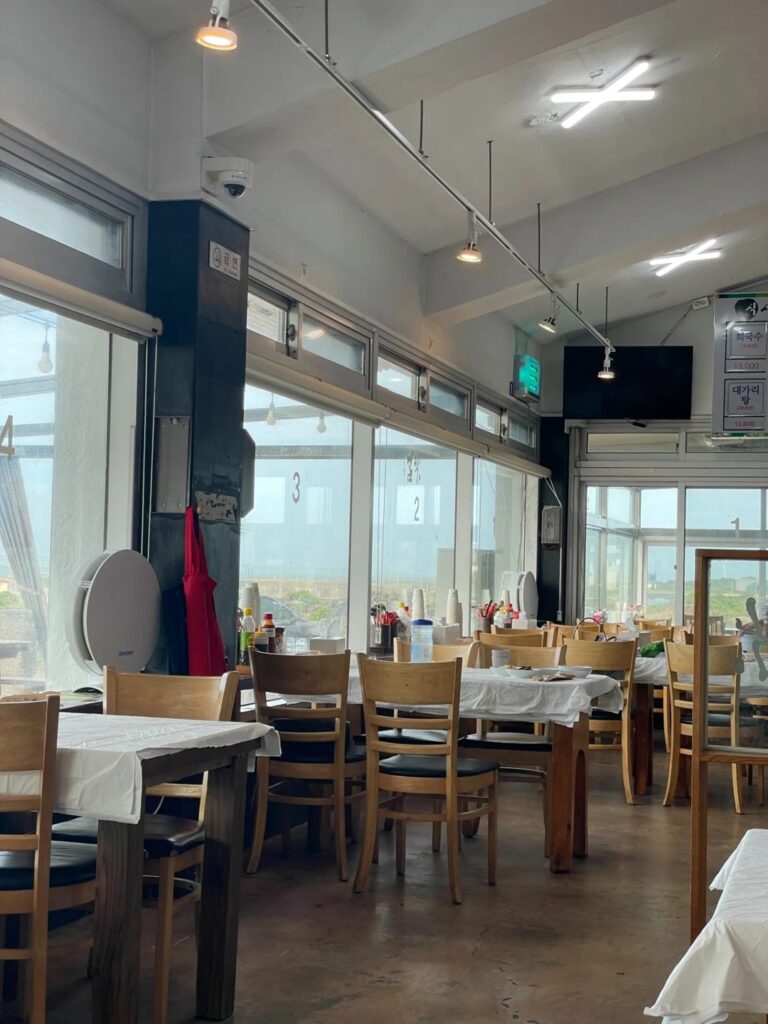
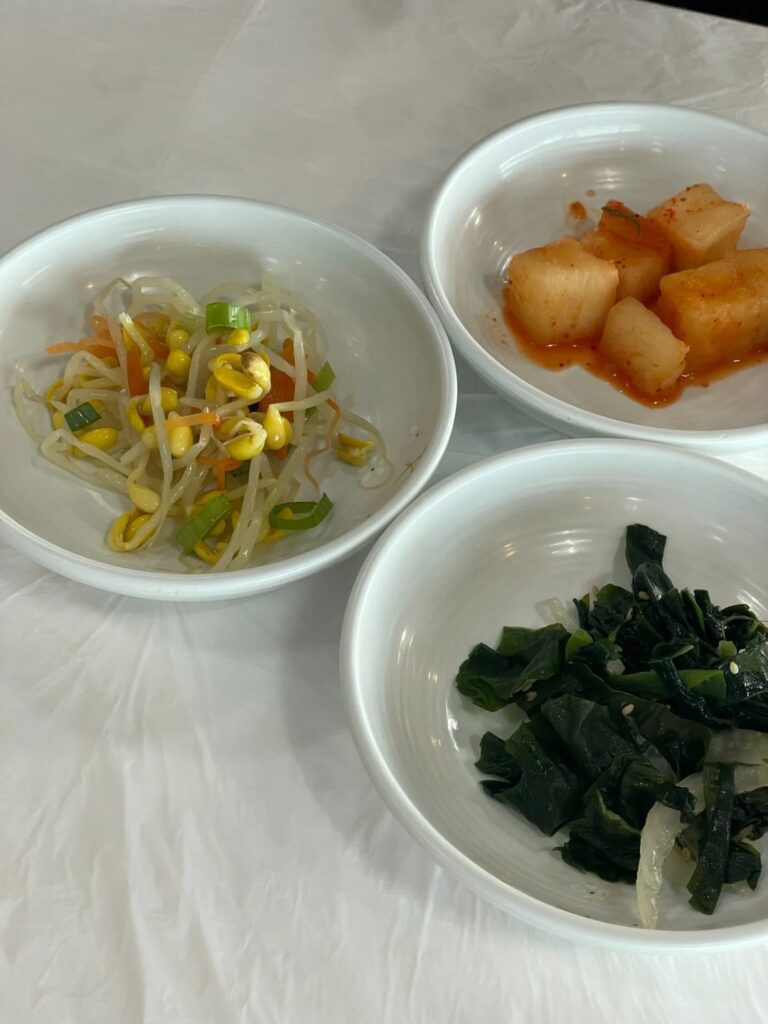
If you judge it by the space alone, it does not have the full old-school feel. You order at a kiosk and there are plenty of promotional posters on the walls, so if you expect the rough charm of an old local restaurant, it may feel a bit different. But when a noodle house with the sea outside its windows serves hoe guksu this good, that changes the story.
Among the places I ate in the Gujwa area on this trip, it was the most memorable after Eutteumi. If my standard is whether I want to eat it again, rather than fame or the space, the answer is clear. If I come back to Gujwa, Gommak’s hoe guksu is a bowl I want to eat once more.
Good to know
- Address: 64 Gujwahaean-ro, Gujwa-eup, Jeju City (제주 제주시 구좌읍 구좌해안로 64), in Dongbok-ri on the northeast coast
- Hours: opens at 9:30. Listings give a closing time between 20:00 and 21:00 with a short afternoon break, and closing days (often the 2nd and 4th Thursdays) change, so check Naver Map first.
- Menu (October 2026 visitor blog): hoe guksu ₩13,000, seongge guksu (sea urchin noodle soup) ₩18,000. The menu also covers abalone porridge, raw fish and grilled fish.
- How it works: waiting tickets at busy times, kiosk ordering and a self-service corner for drinks and extra side dishes. There is a large free parking lot.
- Map: Open in Naver Map
- Original review on Revitguide
More Gogi Guksu and Jeju Noodles Rated 3.5
These extra picks are adapted from visits by Revitguide reviewer 호미식 (Homisik), who rated each 3.5 out of 5. They are solid bowls and grills if you are nearby rather than reasons to cross the island.
Jeju Midam (제주미담): Rich, Pork-Heavy Gogi Guksu
At weekend lunch there were 15 groups waiting outside in the summer heat, though it turned fast. Gogi guksu styles vary: Olle Guksu is clear and gomtang-like, while Midam’s broth is heavy enough to recall tonkotsu ramen. For this style it is near the top for me. Thick pork almost covers the bowl, portions are big, and the makchang sundae on the side was worth ordering. Original review on Revitguide.
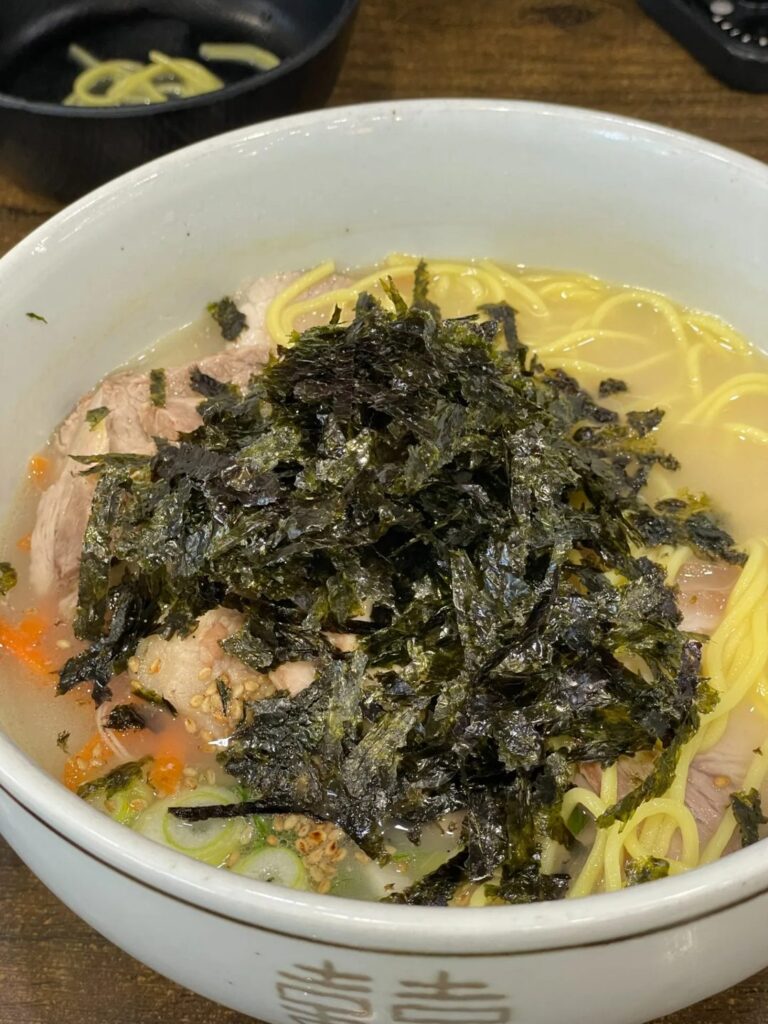
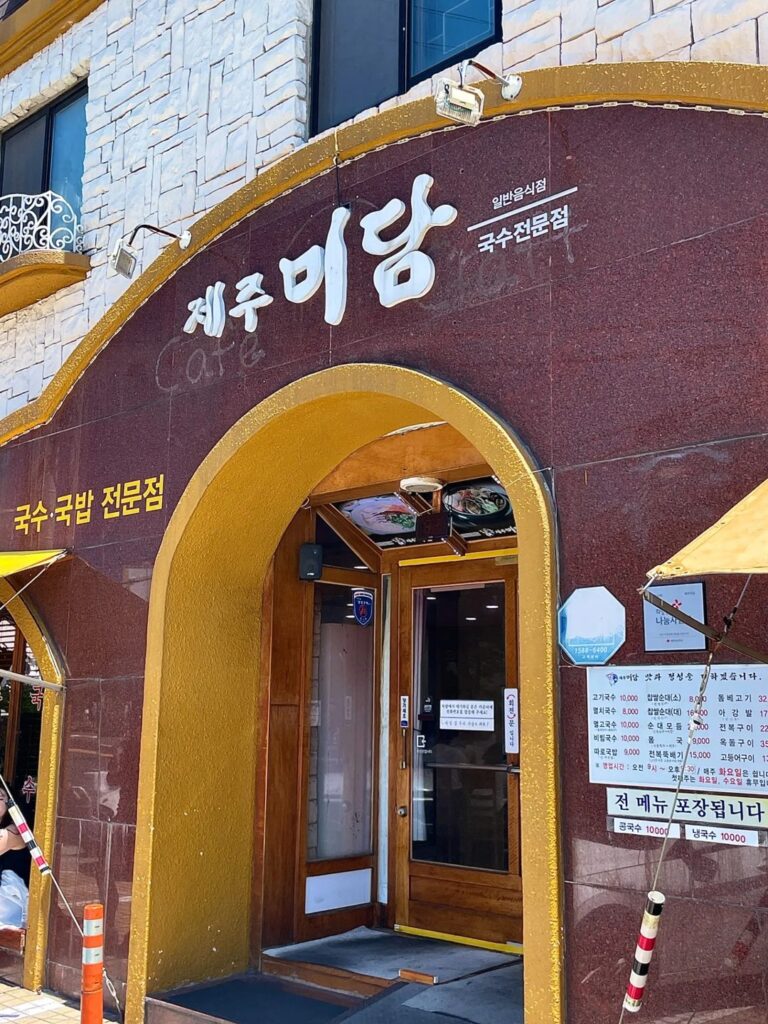
Good to know: Jeju City, 19 Garyeong-ro (가령로 19). Naver Map.
Olle Guksu (올래국수): Clean and Classic Near the Airport
One of the most-named gogi guksu shops, close to the airport, so many people eat here on their first or last day. It was full and kept filling. The broth is clean and nutty, closer to gomtang, with plenty of pork, green onion and sesame. Basics are solid and the seasoning gentle; for my taste it was a little bland, but it is a fair introduction to Jeju gogi guksu. Original review on Revitguide.
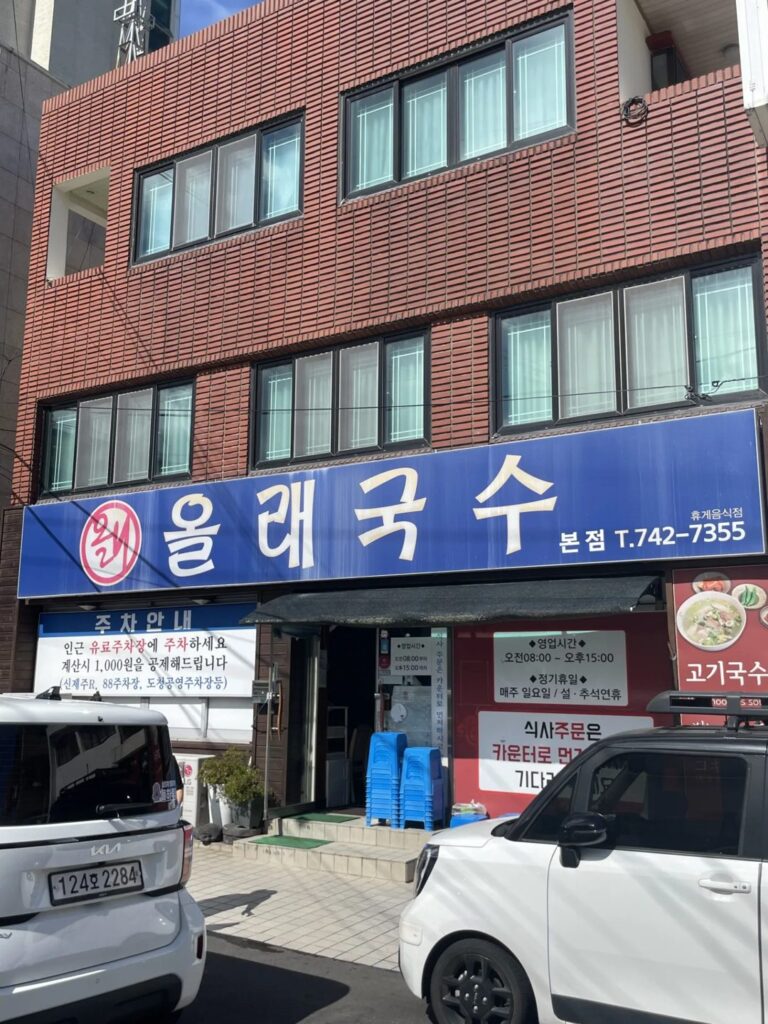
Good to know: Yeon-dong, Jeju City (연동 301-19). See our Jeju airport restaurants guide. Naver Map.
Golmak Sikdang (골막식당): Big Pork, Soft Noodles
A famous gogi guksu shop, almost full at lunch but no wait. The thick pork was tender with no gaminess, and the pork broth was rich with a clean finish. The noodles were a little overcooked that day, which took away from it for me. Portions are huge, and there is parking right next door. Next time I would try the bibim guksu with suyuk. Original review on Revitguide.
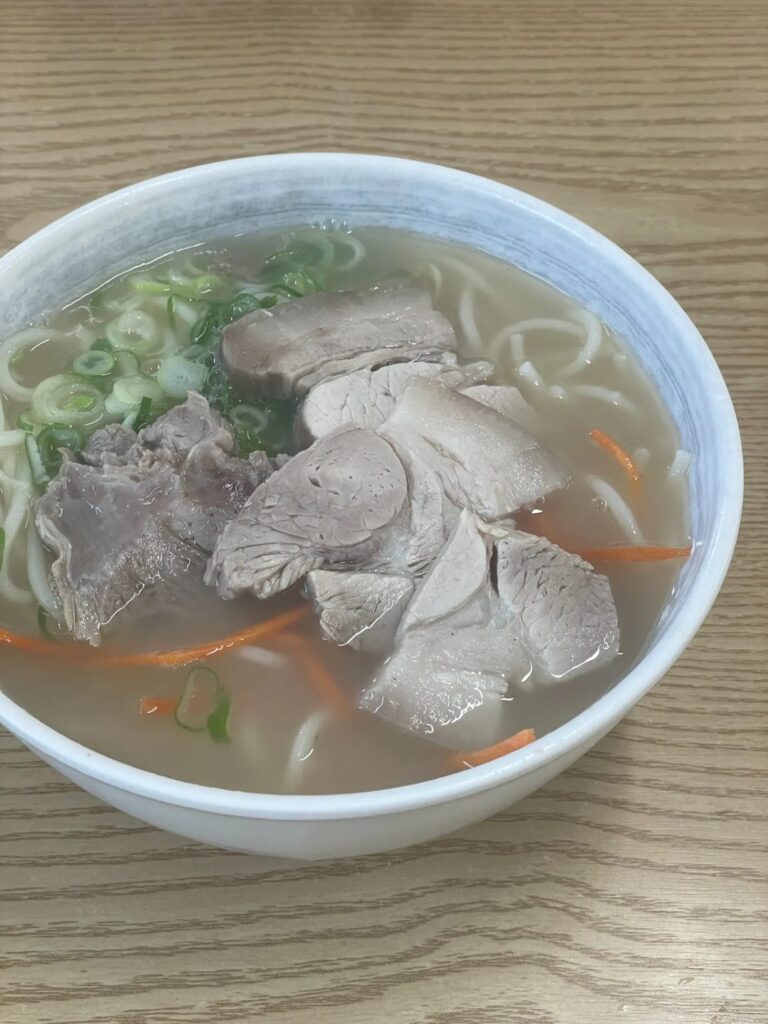
Good to know: Jeju City, 12 Cheonsu-ro (천수로 12). Naver Map.
Jeju Hanmyeonga (제주한면가): A Chef-Run Noodle Bar in Jocheon
The room feels like a tidy ramen bar, with two chefs in whites in the open kitchen, run by a chef from Jocheon. The gogi guksu leans gentle rather than punchy, with a bone broth that briefly reminded me of bugeoguk. It is a fresh take on Jeju noodles. This review is from a separate visit; the shop also appears in our Hamdeok Beach food guide. Original review on Revitguide.
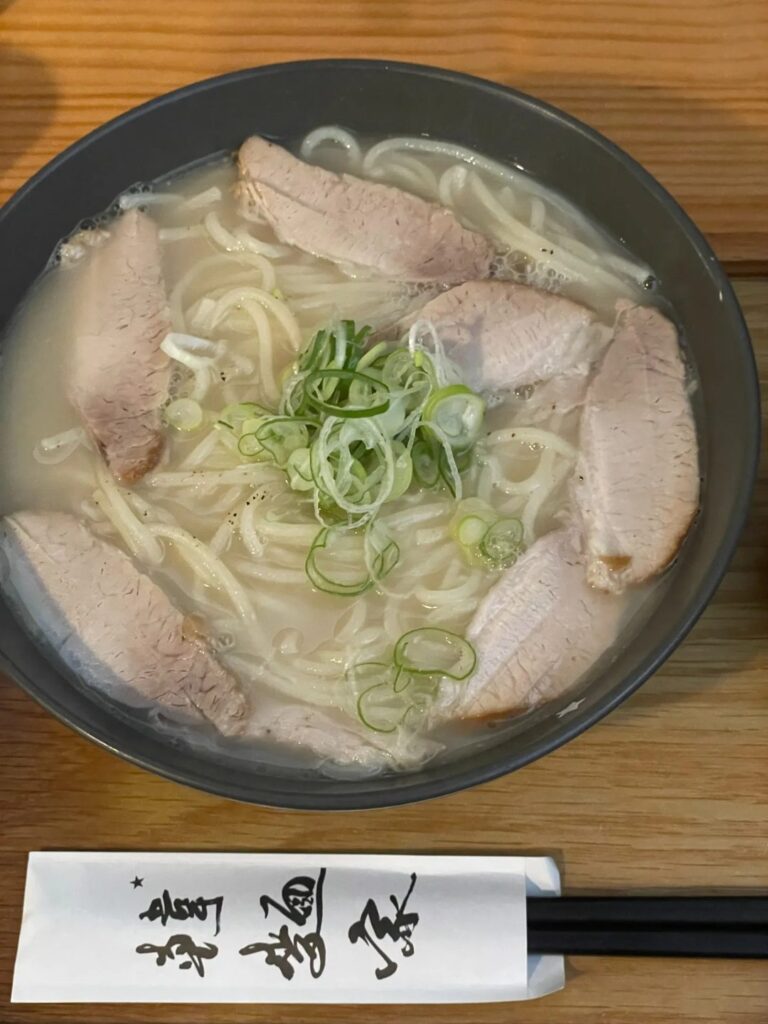
Good to know: Jocheon-eup, 373 Bukseon-ro (북선로 373). Naver Map.
Jocheon Myeonjang Guksu (조천면장국수): 99 Bowls a Day
Recommended by a black pork restaurant owner, I first arrived after it had sold out: the sign says only 99 servings a day. I came back the next day for bibim guksu: sweet, sour and nutty without being harsh, with springy, chewy noodles. The walls are full of plaques and certificates, and the owner serves in person. Next time, the gogi guksu. Original review on Revitguide.
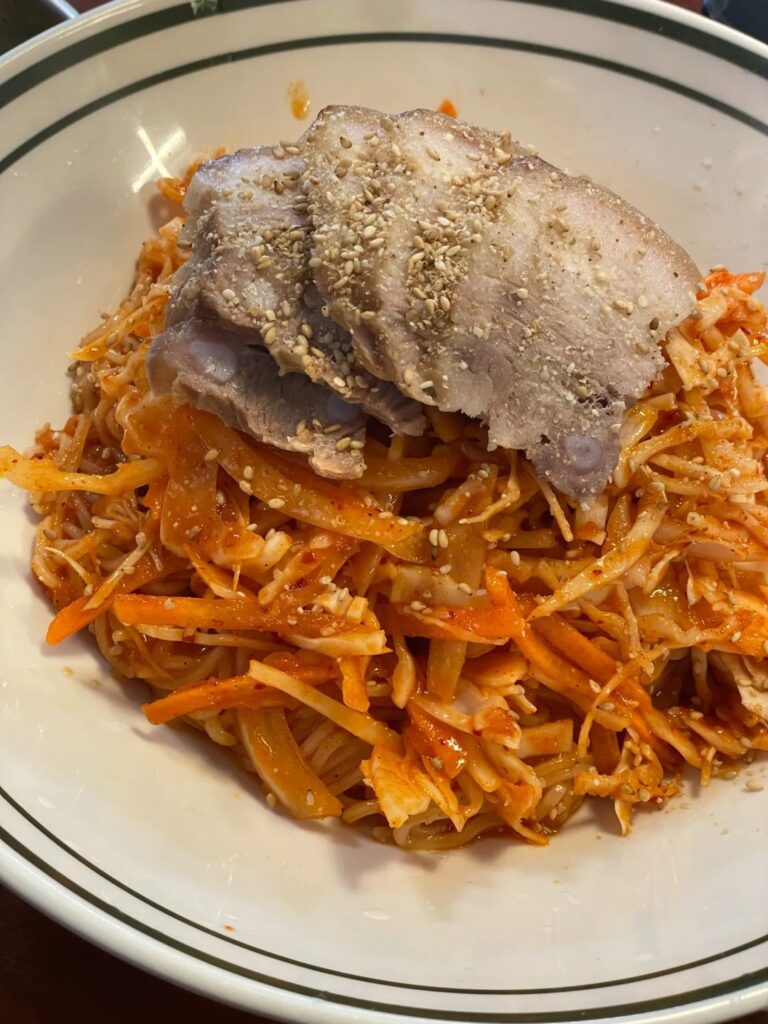
Good to know: Jocheon-eup, 225 Sinbuk-ro (신북로 225). Go early, since it can sell out. Naver Map.
Sanbang Sikdang (산방식당): Jeju-Style Mil Naengmyeon in Moseulpo
After days of galchi and gogi guksu, cold noodles are a welcome change. Even in the morning it was busy with locals. The wheat noodles are thicker than usual naengmyeon, springy and easy to chew, in a cool, tangy broth topped with lean pork. Different from Busan milmyeon and from naengmyeon. Original review on Revitguide. For the Busan version, see our milmyeon guide.
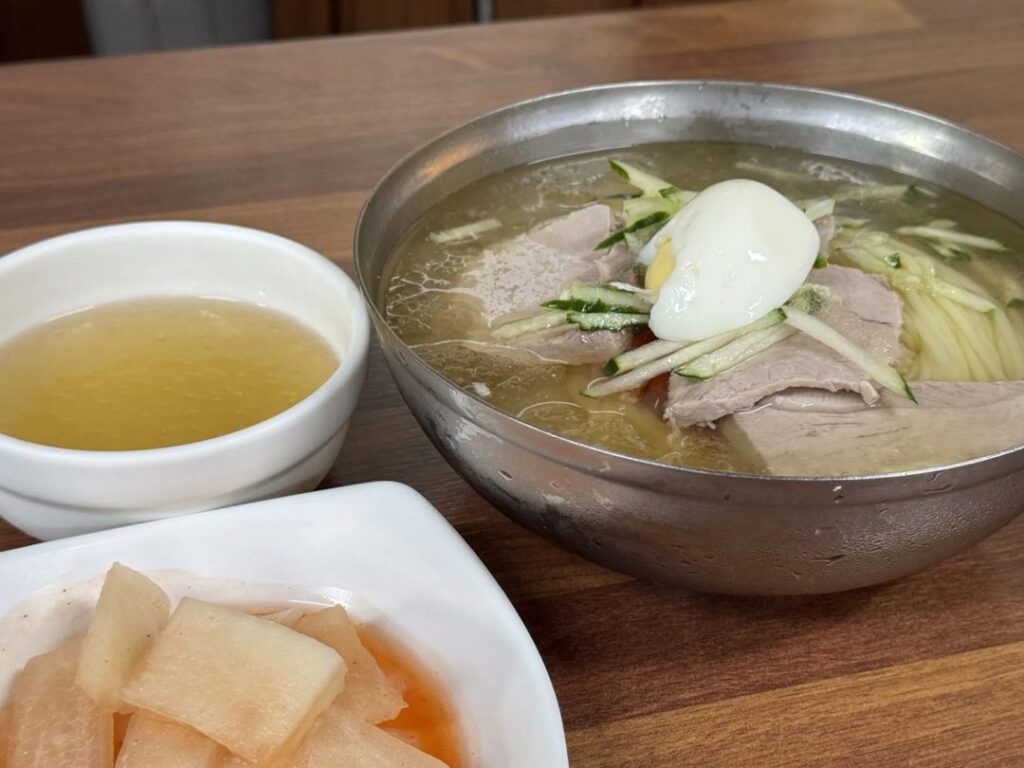
Good to know: Moseulpo, Daejeong-eup, 62 Hamoisam-ro (하모이삼로 62). Naver Map.
Hallasan Arae Cheotmaeul (한라산아래첫마을): Buckwheat Noodles in Andeok
I ordered the Jeju buckwheat bibijakjak-myeon. It starts with warm buckwheat tea, then a colorful bowl of 100% Jeju buckwheat noodles with perilla seeds, Jeju radish, greens, pickled cucumber, Hanwoo and egg. “Bibijakjak” is Jeju dialect for a child’s carefree scribbling. Mixed together, the noodles are soft and the flavors stay balanced, nutty, fresh and salty in turns. The gomtang on the side was clean and light. Original review on Revitguide. It also appears in our Jungmun Resort food guide.
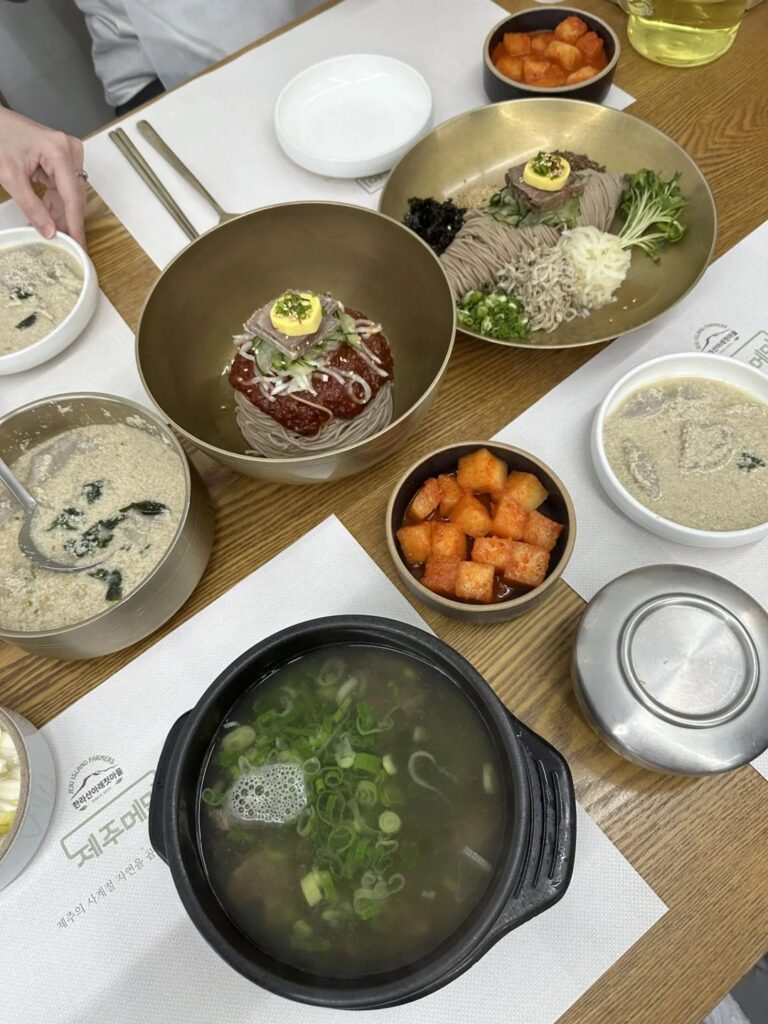
Good to know: Gwangpyeong-ri, Andeok-myeon (광평리 211). Naver Map.
Tips for a Jeju Noodle Day
- Plan by area. Orabang and Darangsi are in Jeju City, close to the airport. Tongil Garden (Jocheon) and Gommak (Gujwa) are on the drive east along the north coast, so they fit a day heading toward the east side of the island.
- Check the season. Tongil Garden only opens from spring to autumn, so skip it in winter.
- Night owls should note Darangsi. Its late hours make it useful after a late flight or a night out.
- Try more than one style. If you only eat gogi guksu, you miss the anchovy, soybean and raw fish bowls that are just as much part of eating in Jeju.
More Jeju Food Guides
Still hungry? Read our guides to galchi (hairtail) restaurants in Jeju, Korean sundae in Seoul and Jeju and Jeju coffee and cafes. For a pork soup on the mainland, see our dwaeji gukbap review from Busan, or browse everything in our Jeju category.
FAQ
What is gogi guksu made of?
Gogi guksu is boiled wheat noodles in a broth simmered from pork, topped with sliced pork. It usually comes with green onion or chives, and many places serve kimchi and kkakdugi on the side.
Where is Guksu Street in Jeju?
Guksu Street (Noodle Culture Street) runs along Sinsan-ro and Samseong-ro around Sinsan Park in Ildo 2-dong, Jeju City. It is a short taxi ride from Jeju Airport.
How much does gogi guksu cost in Jeju?
In 2026, the places in this guide listed gogi guksu between about ₩7,000 and ₩11,000 per bowl. Prices change often, so check the menu on Naver Map before you go.
Is Tongil Garden open all year?
No. Tongil Garden only opens from spring to autumn. In 2026 its season ended on 18 October, and the restaurant’s notice listed a break until 12 April.
What is the difference between gogi guksu and hoe guksu?
Gogi guksu is a hot soup with pork and pork broth. Hoe guksu has no broth: the noodles are mixed with sliced raw fish, vegetables and a sweet, sour and spicy chili sauce.
We checked prices and hours in November 2026, and they can change. Check Naver Map before you go.