Good Gwangju restaurants rarely make it into English travel guides, and the same goes for the rest of the Jeolla region. Yet a fast KTX ride from Seoul puts you at a quiet kaiseki counter in Gwangju, a French lunch at the foot of Mudeungsan, a modern Korean tasting menu in Jeonju and a small Italian wine bar in Iksan. These four picks come from a summer 2026 trip through the region.
The picks below are adapted from visits by Revitguide reviewer 호미식 (Homisik), who rated each 4 out of 5. Each section links to the original Korean review.
If you are planning a longer Jeolla trip, we have also covered Dining Sojae, a Korean tasting menu in Gwangju, and Autrement, a French restaurant in Suncheon. You can find every post for the region in our Jeolla & Gwangju guides.
Gwangju Restaurants and Jeolla Picks at a Glance
| Restaurant | City | Style | What I had | I paid |
|---|---|---|---|---|
| Oboeru (오보에루) | Gwangju, Dongmyeong-dong | Kaiseki | Dinner course | ₩120,000 |
| La Ronde Carrée (라롱드꺄레) | Gwangju, Unrim-dong | French | Lunch course | ₩55,000 |
| Pine (파인) | Jeonju, Hyoja-dong | Modern Korean | Summer course | ₩150,000 |
| Osteria Mattina (마띠나) | Iksan, Yeongdeung-dong | Italian | Three à la carte dishes | ₩120,000 |
The “I paid” column shows what was recorded for each visit, so it may include drinks or more than one person. Check current prices on CatchTable or Naver Map before you book.
Getting to Gwangju Restaurants, Jeonju and Iksan From Seoul
All three cities sit on the high-speed lines heading south from Seoul, so you can cover two of them in one weekend.
- Gwangju: KTX trains from Yongsan Station run to Gwangju Songjeong Station in roughly 1 hour 35 minutes to 2 hours, depending on stops. Trains also leave from Suseo Station in Gangnam. Both Gwangju restaurants below are in Dong-gu, so plan on a taxi or subway ride from Songjeong.
- Iksan: Iksan Station is a major junction where the Honam line and the Jeolla line meet. The fastest KTX from Yongsan takes a little over an hour, and most take about 1 hour 20 to 30 minutes.
- Jeonju: Jeonju Station is on the Jeolla line, one stop past Iksan for most KTX services. Pine is in the Hyoja-dong new town area, not in the Hanok Village, so take a taxi from the station.
Timetables change, so check the Korail app or website before you travel.
1. Oboeru (오보에루): Kaiseki Among Gwangju Restaurants
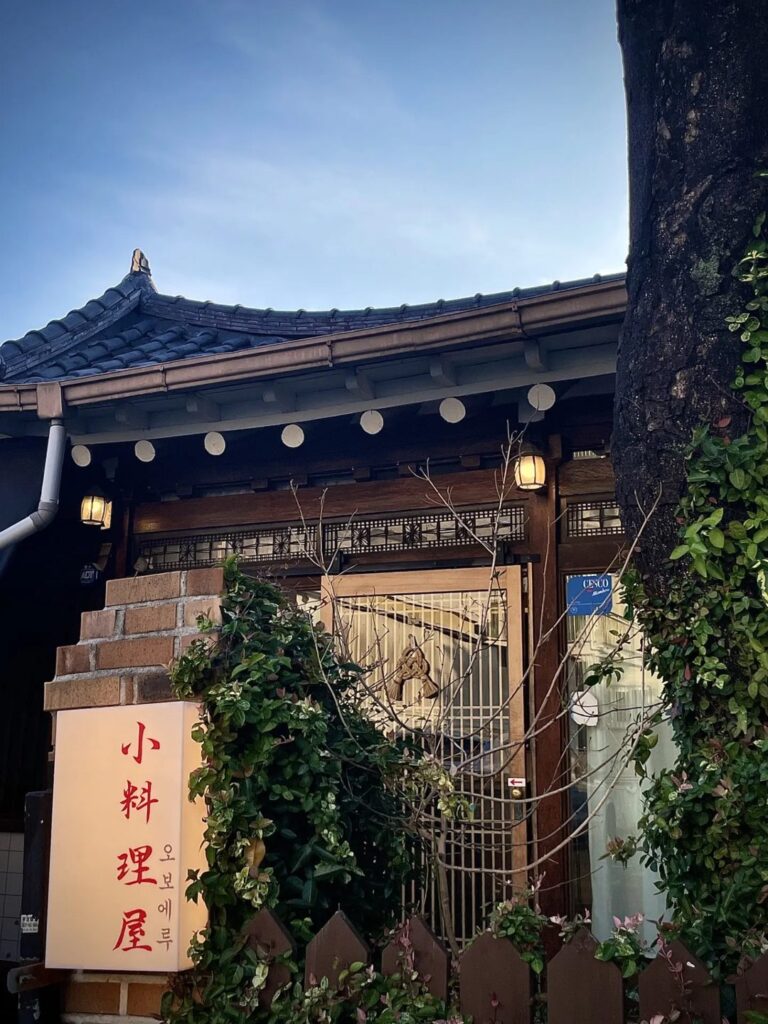
Oboeru may be close to the only place in Gwangju where you can have kaiseki. It sits in a small old house in Dongmyeong-dong, the cafe and restaurant district near the Asia Culture Center.
A chef who warms up over dinner
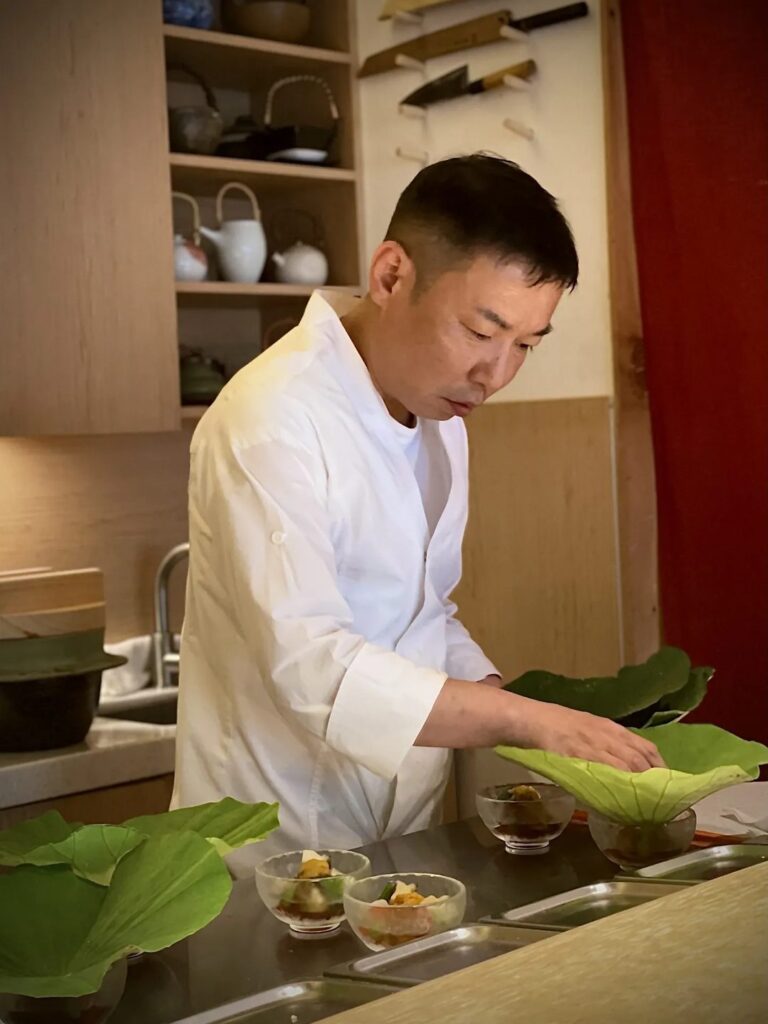
My first impression of Chef Ko Kyung-min was that he had real presence. I was almost hesitant to start a conversation. After the meal, however, we talked, and he turned out to be much warmer and gentler than I expected.
Overall, the cooking is designed to taste good in a direct way rather than to be clever. If you judge only by delicate flow and finish, there were some rough edges. I understood that as a choice: bringing kaiseki, still an unfamiliar culture, to Gwangju in a way that ordinary diners can enjoy.
Even so, that does not mean any compromise on ingredients. Talking after the meal, I could tell that his standards for choosing ingredients and his attitude toward cooking are very clear. Later, the chefs humbly said they still have a lot to learn compared with famous places in Seoul. Personally, I ate very well, without any big regrets.
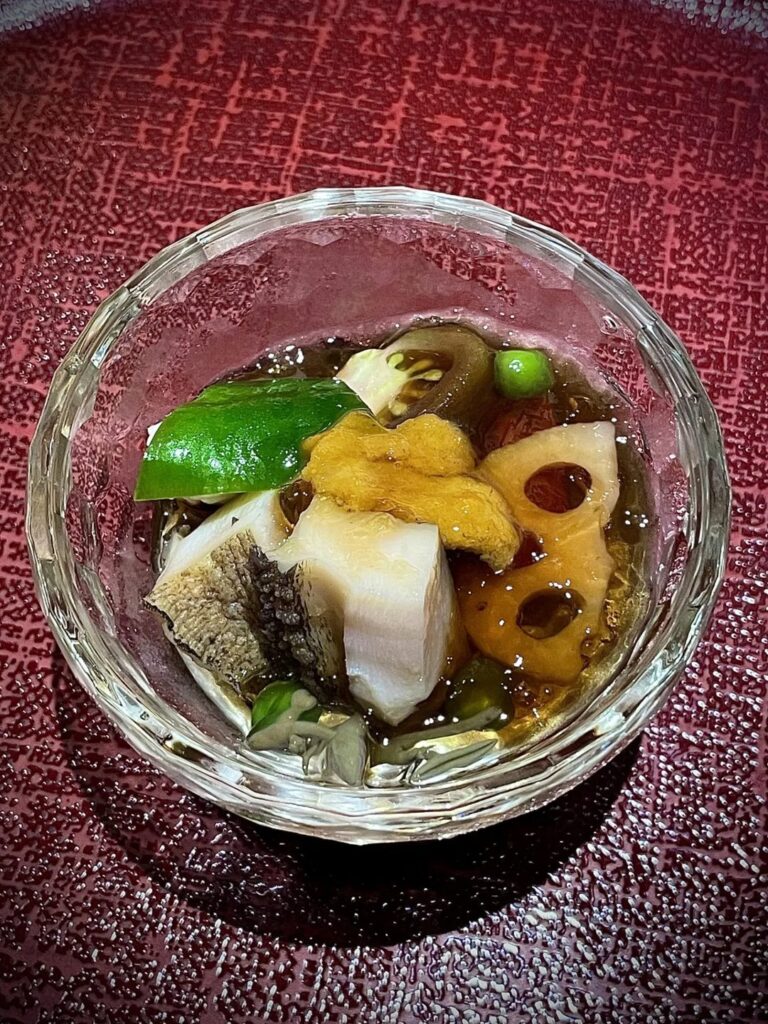
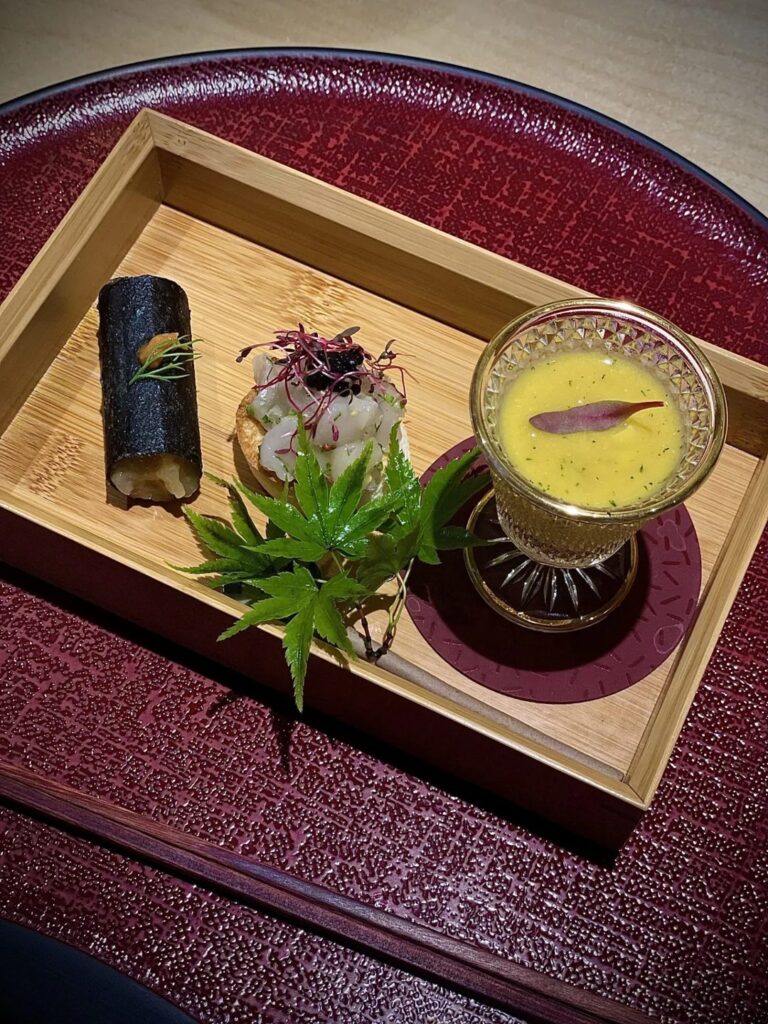
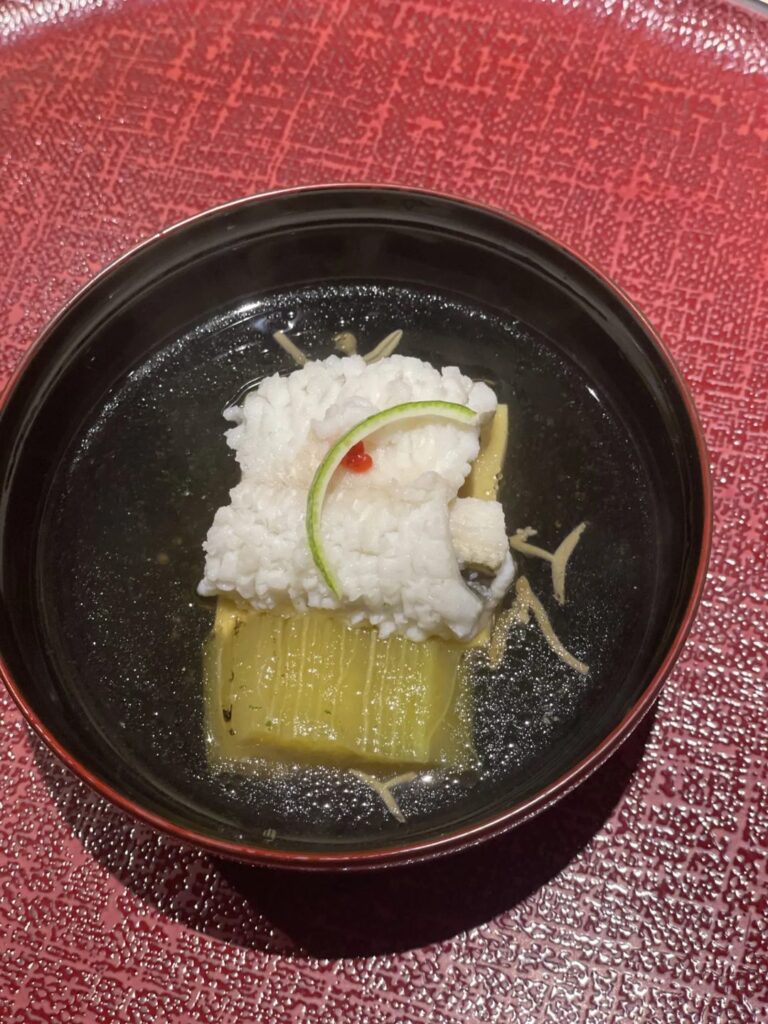
The course at one of the most special Gwangju restaurants
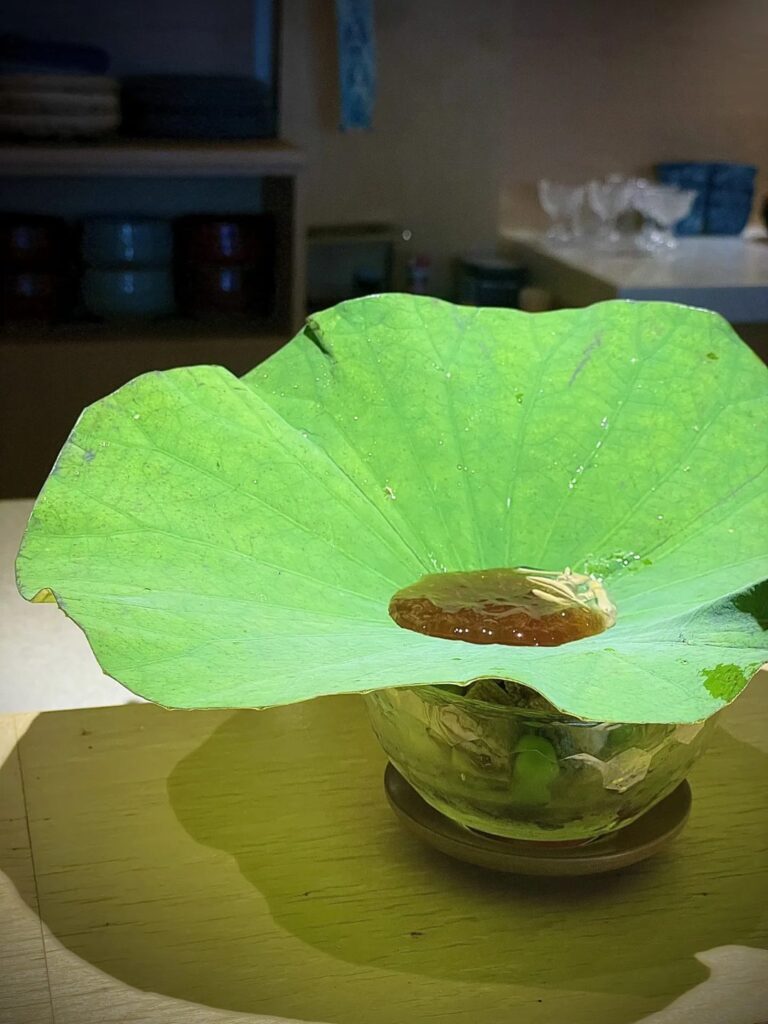
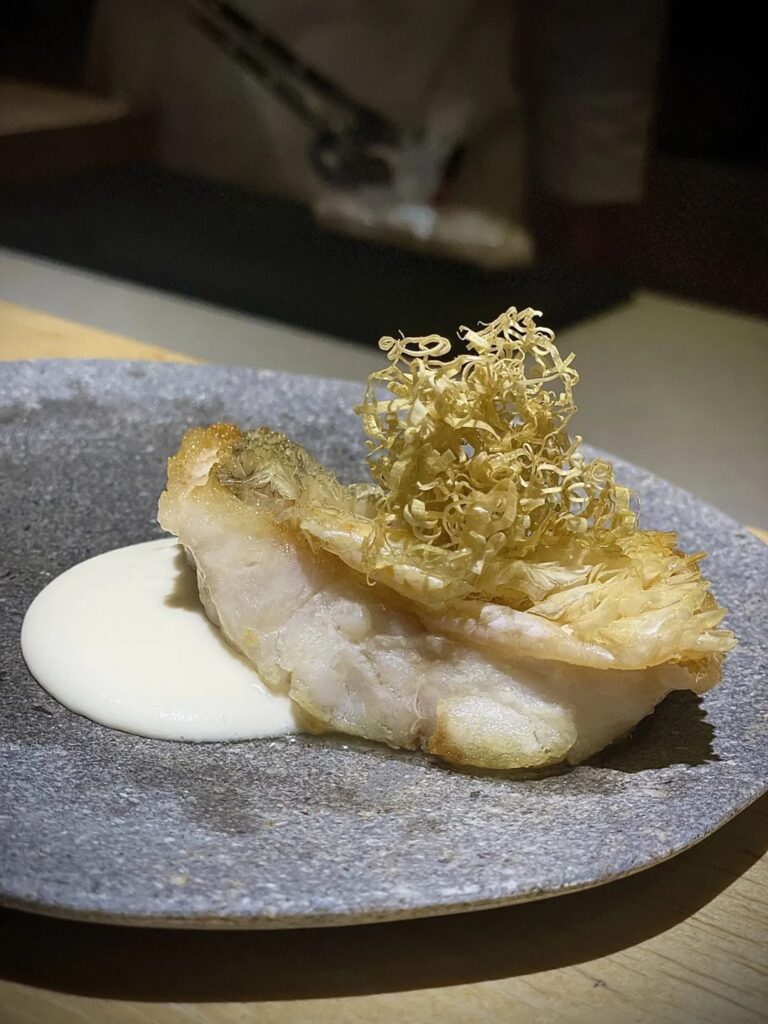
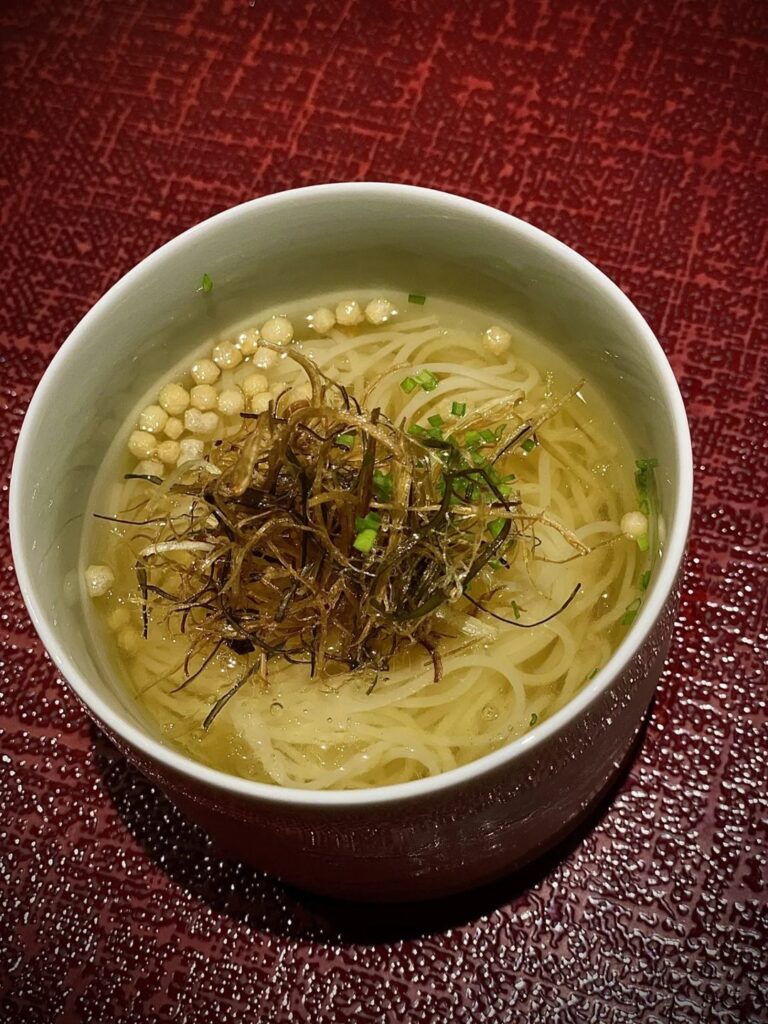
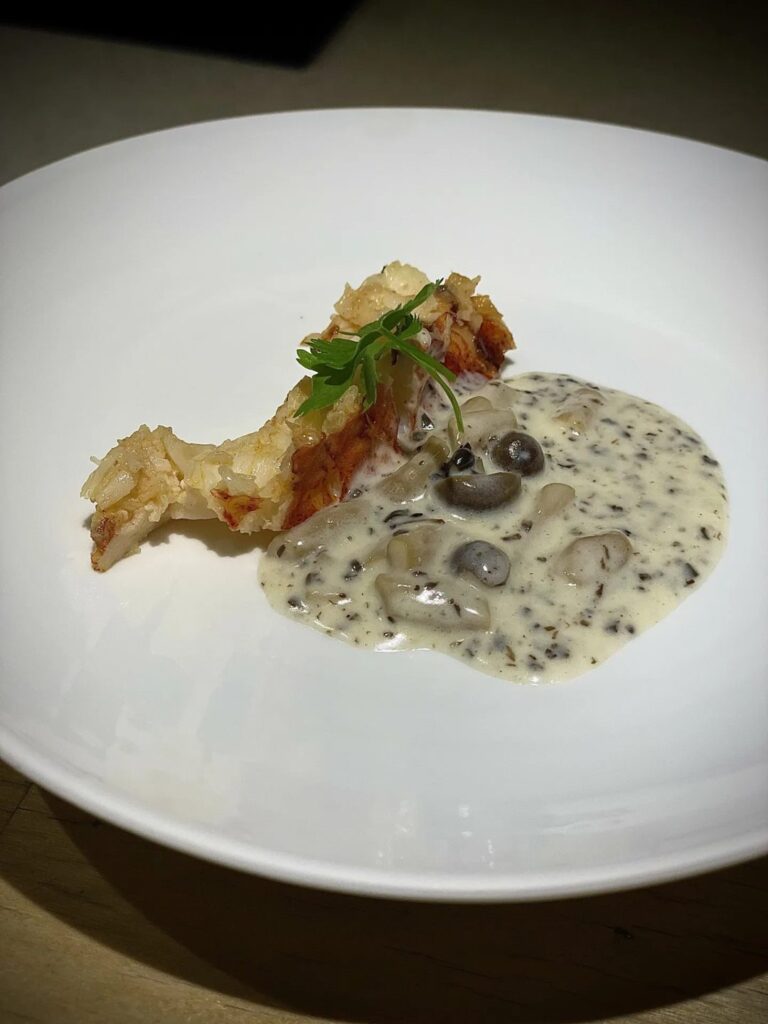
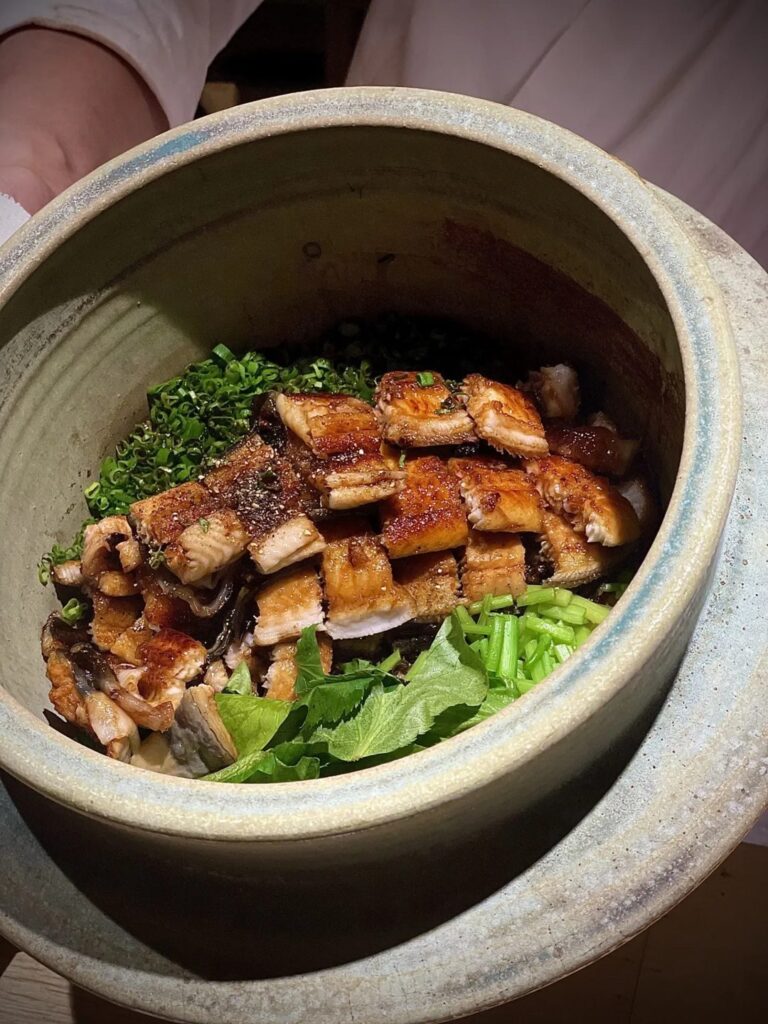
That day the course started with hiyashibachi, a chilled seasonal starter, and moved through one-bite dishes, suimono, otsukuri, crispy fried “shaku-shaku” okdom (tilefish), and agodashi somen with lobster tail.
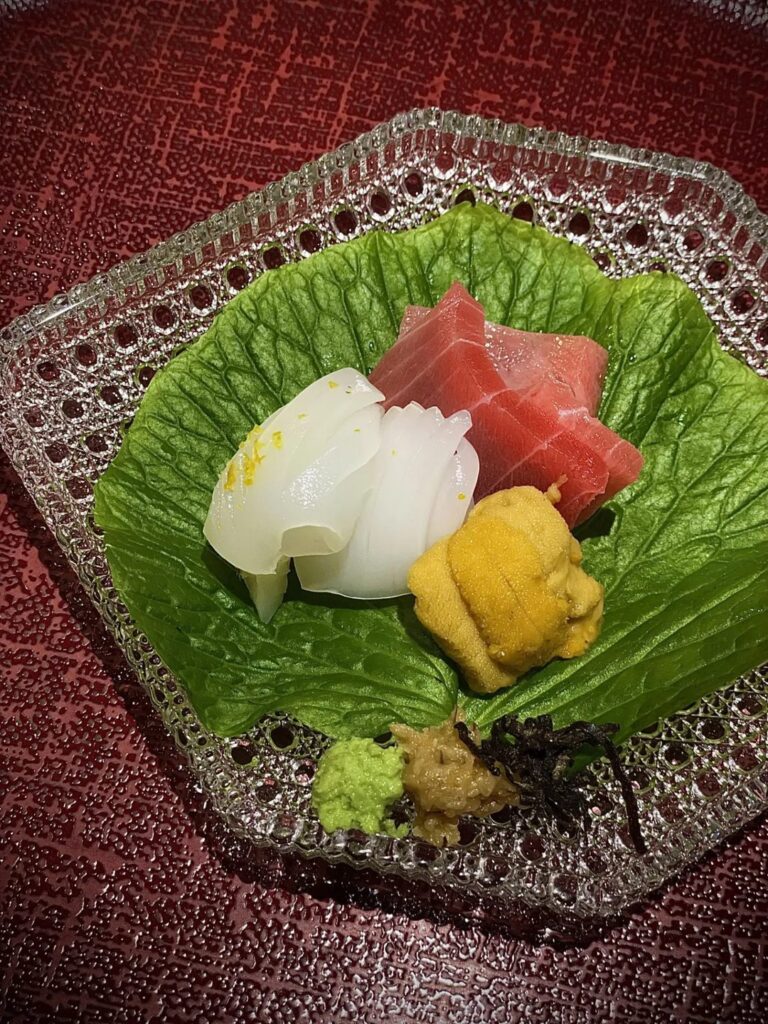
Why Oboeru matters for Gwangju restaurants
More than anything, I was simply glad that a chef is making kaiseki at this level in central Gwangju. Keeping a kaiseki restaurant going in a region where demand may not be strong cannot be easy. I heard that they had been running it as an izakaya until recently and then decided to return to kaiseki, which made it feel even more meaningful.
As I left, I thanked the chef for creating a place like this in Gwangju and for keeping it going in tough conditions. It felt a little bold for a guest to say that, but I think a place like Oboeru means more than a restaurant that sells a meal.
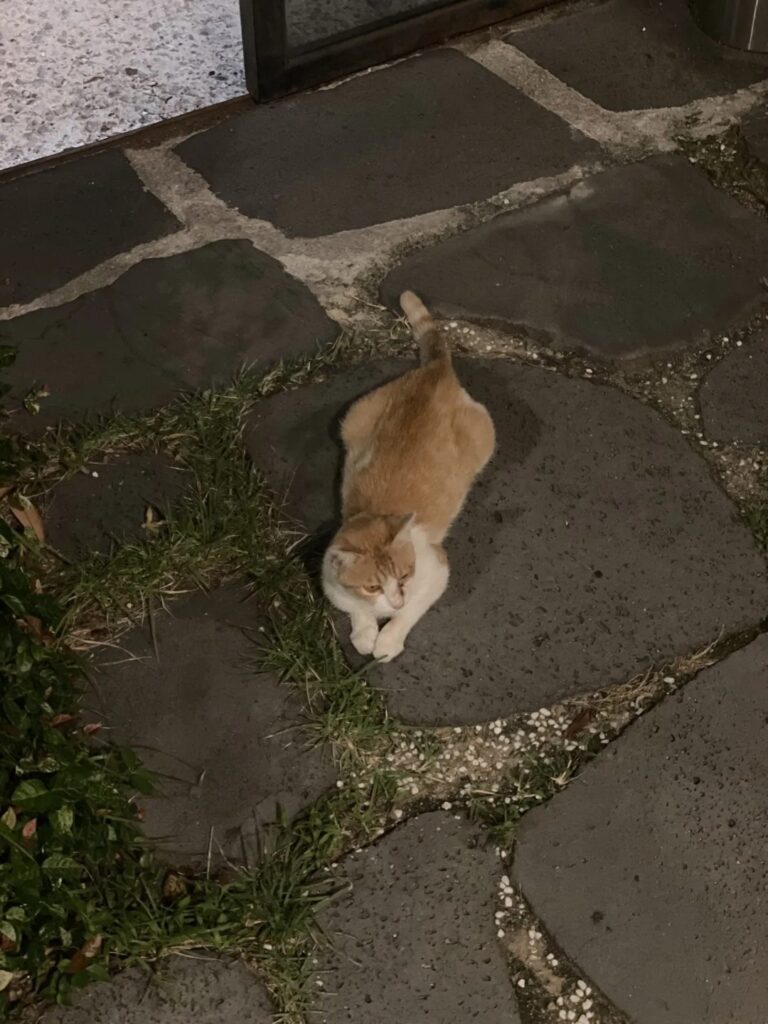
A cat at the door
I cannot say it is the best kaiseki in the country. Still, the space the two of them are building together leaves a clear impression. If the room were a little more polished, I think the food and the chef’s story would come through even more strongly. Even so, among the kaiseki you can find in Gwangju, this was by far the most special experience. When you walk out, a small kitten greets you. It was wary before dinner, but by the time I left it had come a little closer. The kaiseki, the chef and the cat all warmed up over time.
Good to know: booking Oboeru and other Gwangju restaurants
- Address: 1F, 22-4 Dongmyeong-ro 20beon-gil, Dong-gu, Gwangju (광주 동구 동명로20번길 22-4 1층)
- Hours: Blue Ribbon lists Wednesday to Sunday, 19:00 to 21:30, closed Monday and Tuesday. Older listings show izakaya hours, so check the latest schedule.
- Price: about ₩120,000 per person for the dinner course, according to visitor blogs.
- Booking: CatchTable, or call 062-470-1037.
- Map: Open in Naver Map
- Original review on Revitguide
2. La Ronde Carrée (라롱드꺄레): French Food Among Gwangju Restaurants
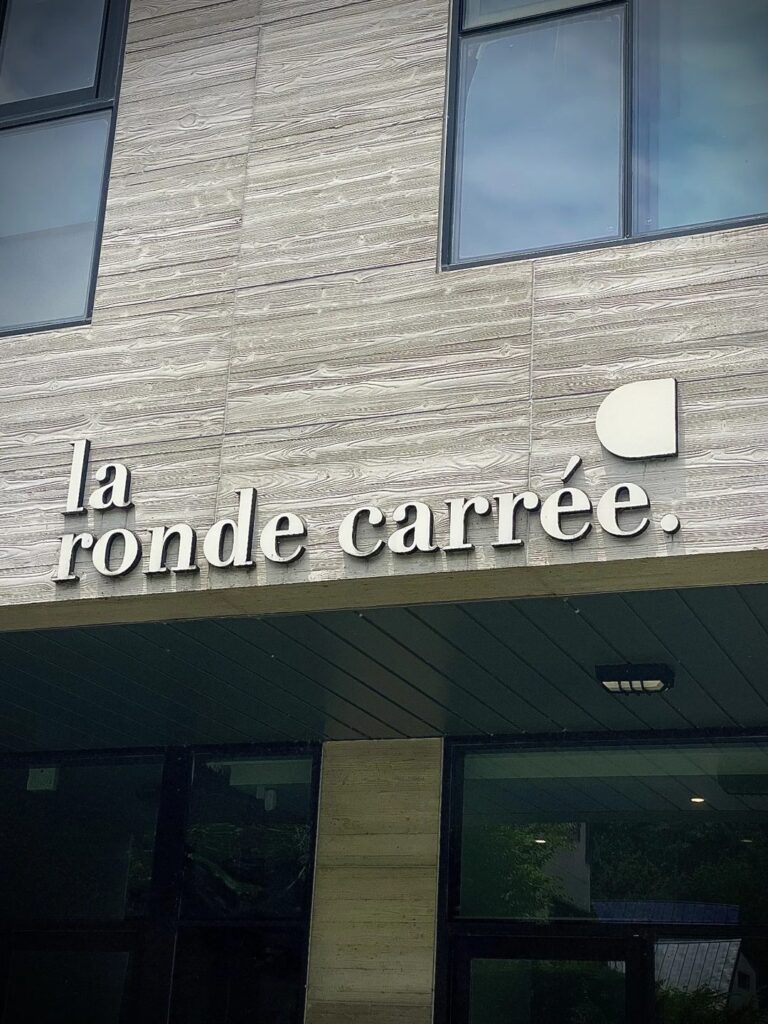
Visitors often point out that Gwangju restaurants serving French food are few, which is part of what makes this one stand out. La Ronde Carrée was a place I had wanted to try whenever I came to Gwangju. It is run by Chef Kim Hyun-woo, who trained in France and Italy and then came home to Gwangju. Chefs who keep a restaurant going in their home region with their own philosophy and background are rare, which made me even more curious. It was well worth the long trip.
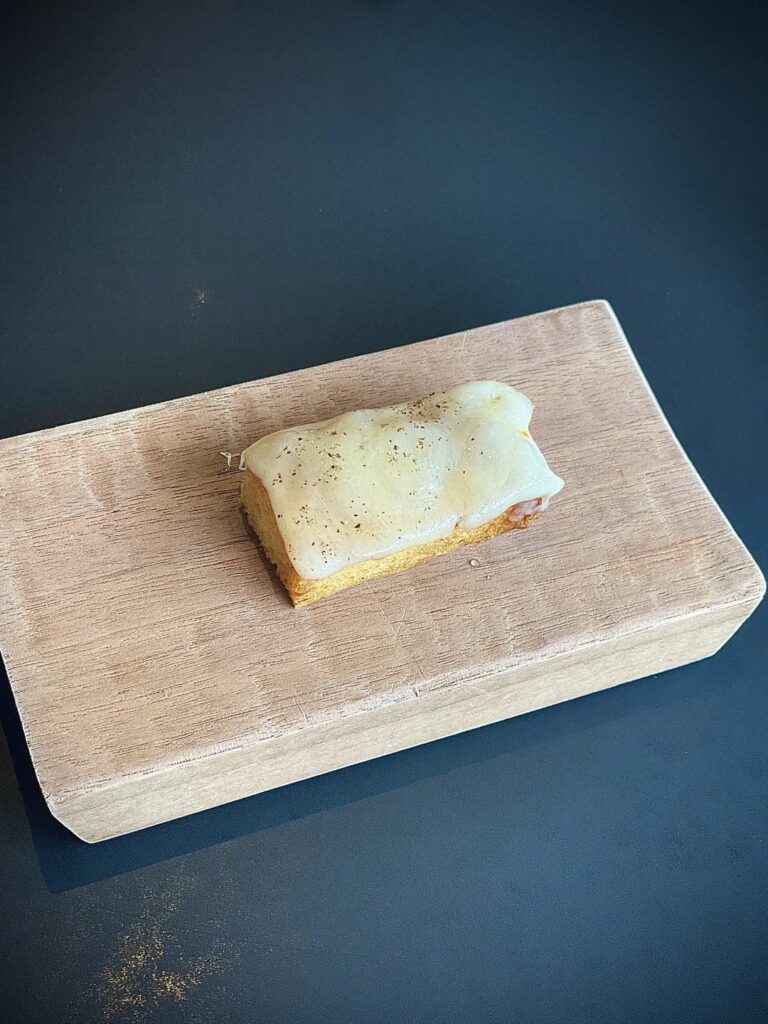
Amuse, tomato sorbet and bread
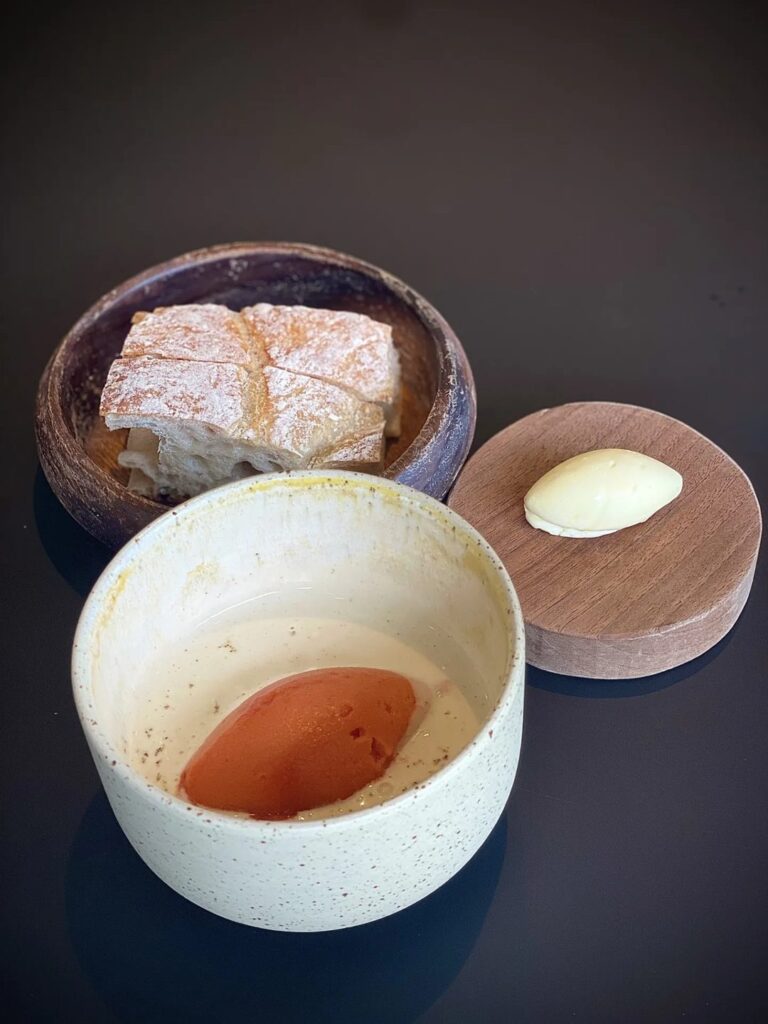
It started with an amuse of toast topped with jamón, honey, Munster cheese and pepper. A familiar combination, but the salty jamón, sweet honey and rich cheese fit together naturally. It is a pairing that never fails.
Next, the tomato sorbet surprised me. I think of sorbet as a dessert, but the cold, fresh tomato woke up my appetite quickly. A rich, nutty cream sauce softened the acidity, and the leftover sauce was great for dipping the campagne. The campagne was crisp outside and chewy inside, and with salty Échiré butter my hand kept reaching for it.
Local croaker and two beef cuts
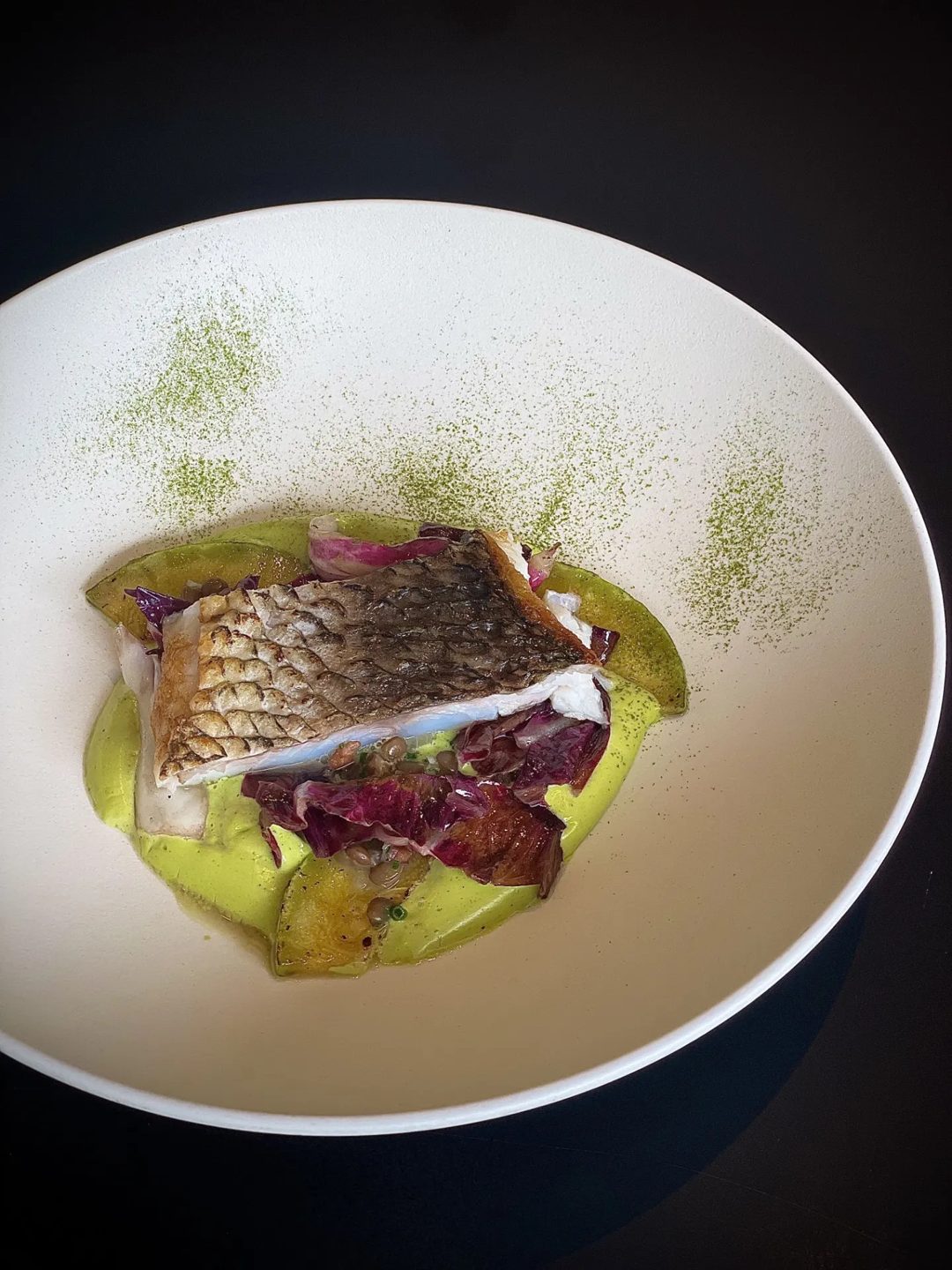
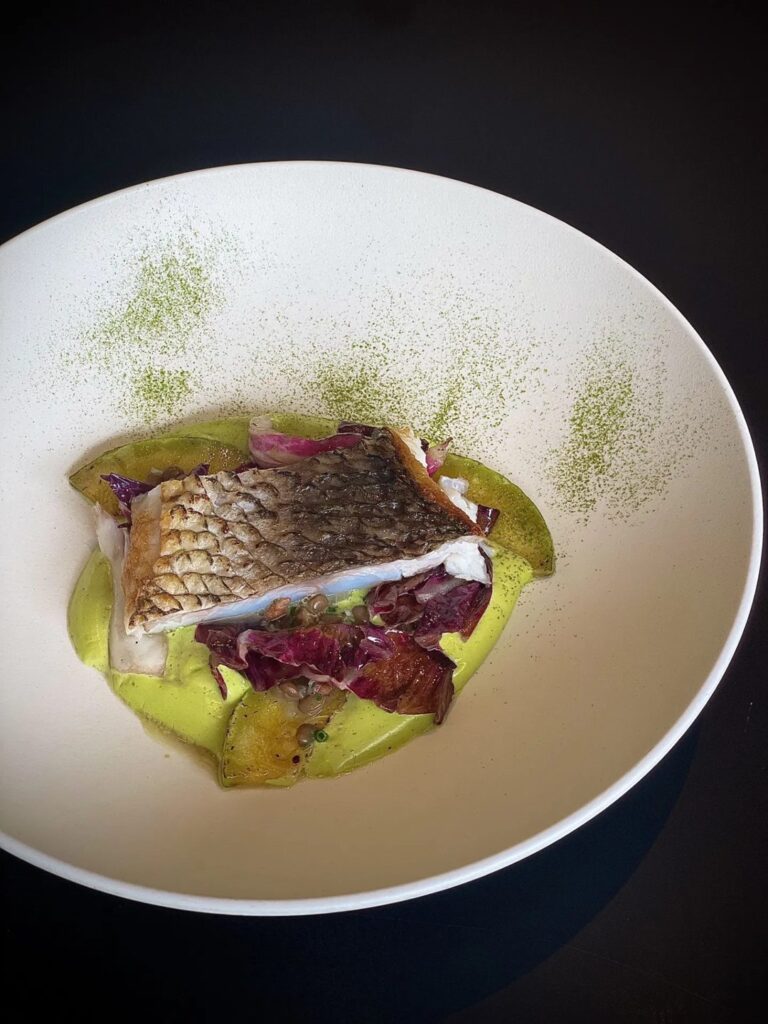
The steak of local min-eo (croaker) was the most impressive plate of the day. The surface was smoked for aroma and texture, and the inside was cooked precisely, tender but not falling apart. The creamy yet fresh Dijon moutarde sauce suited the fish especially well. It had less sweetness than regular yellow mustard and a sharper aroma, but its soft texture did not hide the fish. Beans and cabbage added texture and acidity, and gamtae seaweed powder around the plate added one more layer of the sea.
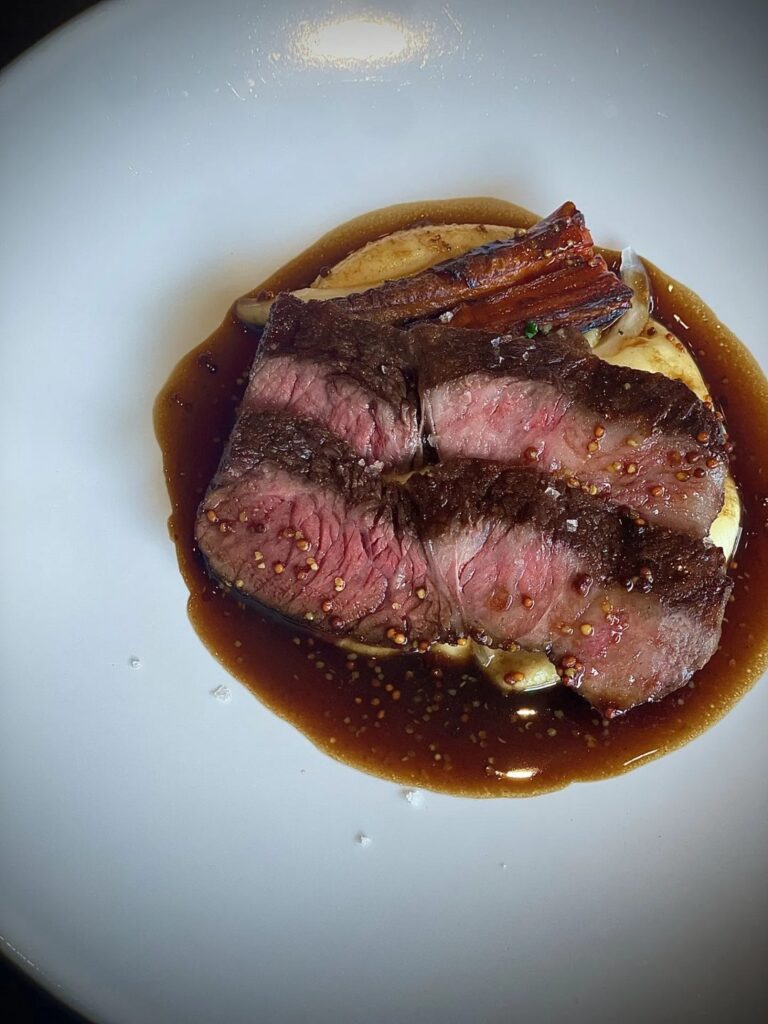
The lunch main is usually beef rump, but that day the chef said it was not aged enough yet and served the bottom sirloin and striploin used at dinner instead. The bottom sirloin had a good chew, and the striploin had more fat and was softer. Comparing two different cuts on one plate was fun. Shiitake, mashed potato and the sauce all suited the beef, and pickled vegetables cleaned up the richness. I was surprised to learn that the sweet, soft side I took for squash was carrot, simmered for more than an hour.
Dessert and a warm goodbye
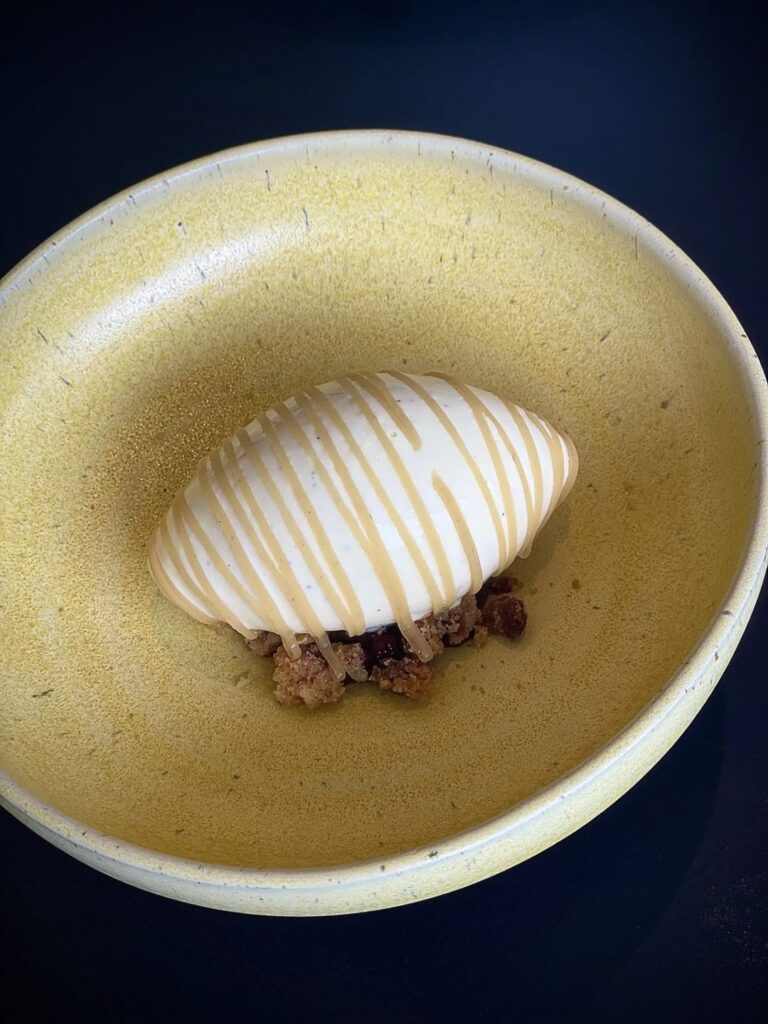
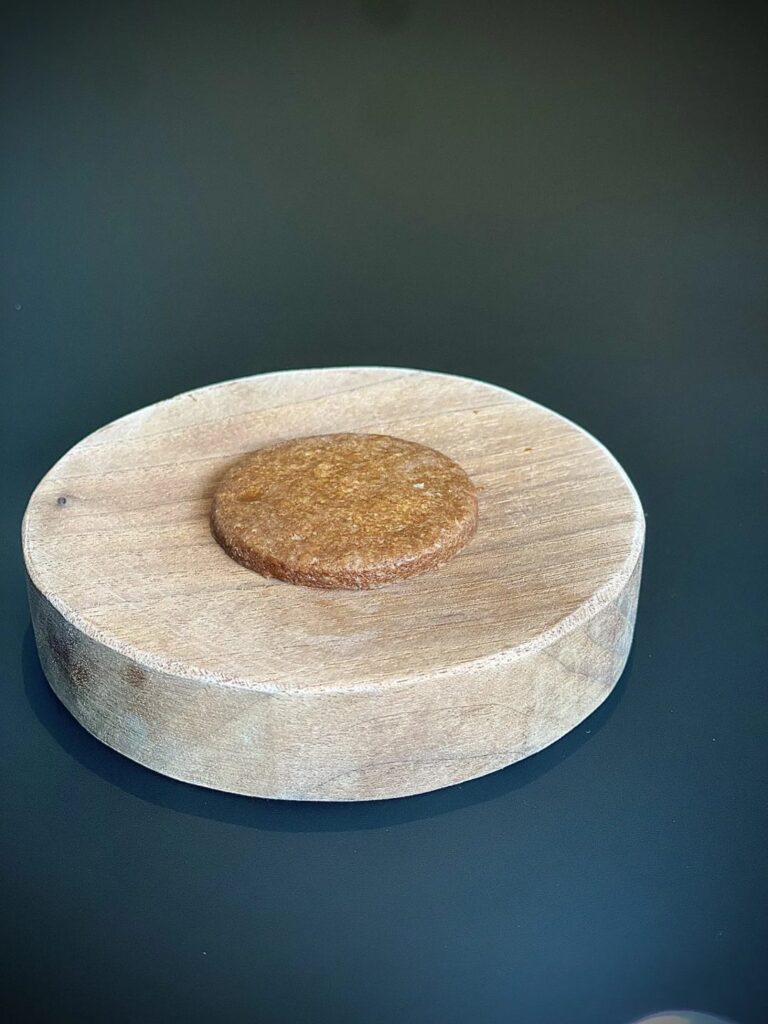
Then, dessert came with a cookie crumble made with doenjang from master Ki Sun-do and a jocheong (rice syrup) caramel sauce. Sweet and salty took turns, a combination that felt unfamiliar yet natural. Finally, black tea and a cinnamon cookie closed the meal. The cookie was hard and crunchy, a bit like nurungji crisped in a pan, so it stayed fun right to the end.
Overall, I was amazed that a lunch alone could be this satisfying. After the meal the chef generously shared tips on other Gwangju restaurants to try and ideas for a food trip. He thanked me again and again for coming such a long way, and that stayed with me. I left promising to come back for dinner next time.
Good to know before visiting this Gwangju restaurant
- Address: 35 Uijae-ro 136beon-gil, Dong-gu, Gwangju (광주 동구 의재로136번길 35)
- Hours: Tuesday to Saturday, 12:00 to 22:00 with a break from 14:00 to 17:00, closed Sunday and Monday (2026 visitor blogs).
- Price: lunch course ₩55,000, dinner course about ₩125,000 (2026 visitor blogs).
- Location: in Unrim-dong, near the Jeungsimsa entrance to Mudeungsan National Park. Visitors mention a public car park right in front.
- Booking: reservations recommended. Phone 062-232-3375.
- Map: Open in Naver Map
- Original review on Revitguide
3. Pine (파인): Modern Korean Food in Jeonju
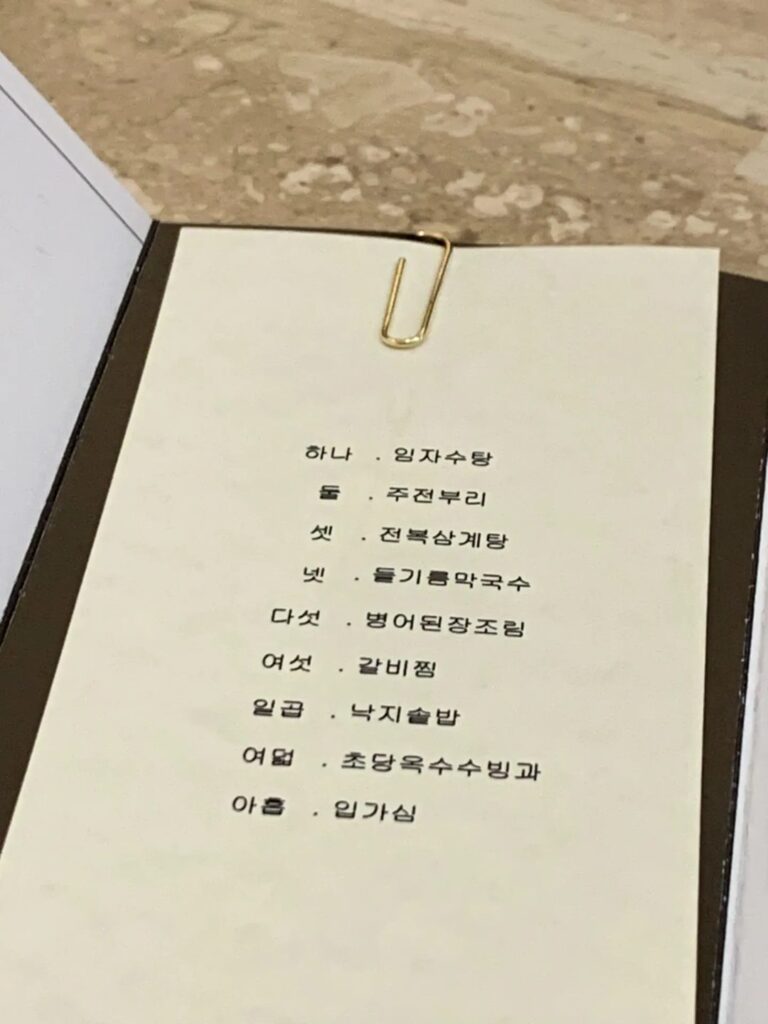
Pine in Jeonju is less about making Korean food strange and more about rearranging the order of flavors we already know. Chef Choi Young was sous chef at Gaon, the three-star Korean restaurant in Seoul, before opening Pine in his home city. The menu changes with each season. My visit was the summer course, which started cold and came back around to warm rice.
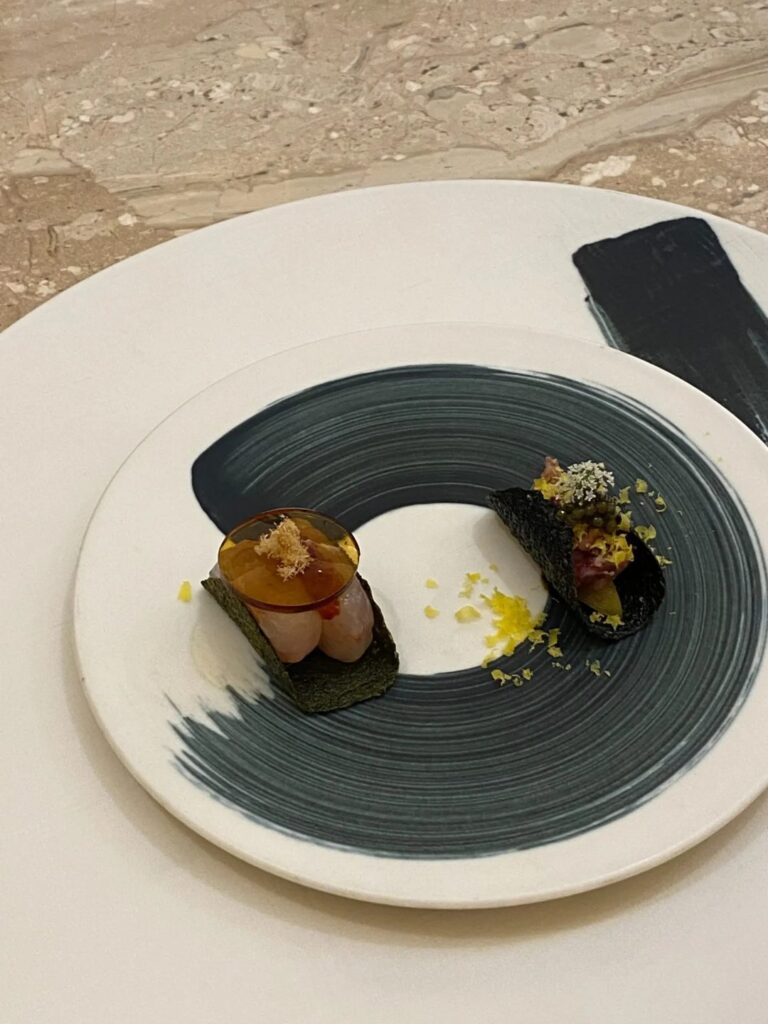
Imjasutang, hoe muchim and pomfret
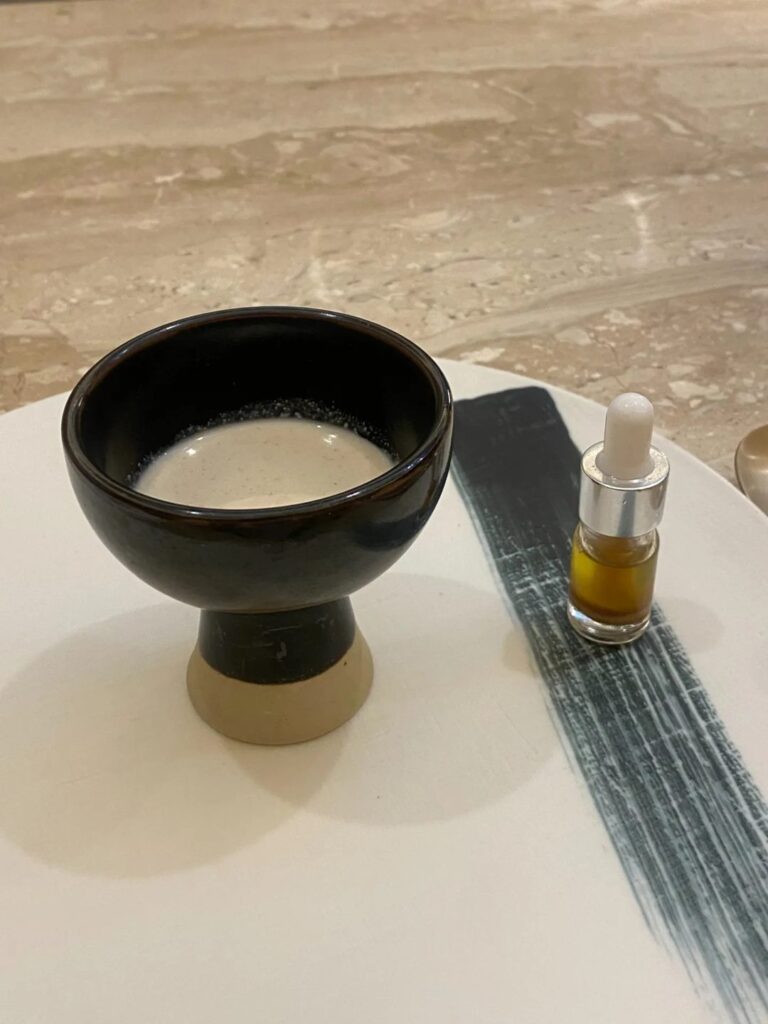
Since it was the summer course, it began with cold imjasutang. The chicken broth, thickened with sesame and pine nuts, was dense but did not linger heavily in the mouth. I love nutty flavors, so it was the perfect way to wake up my appetite.
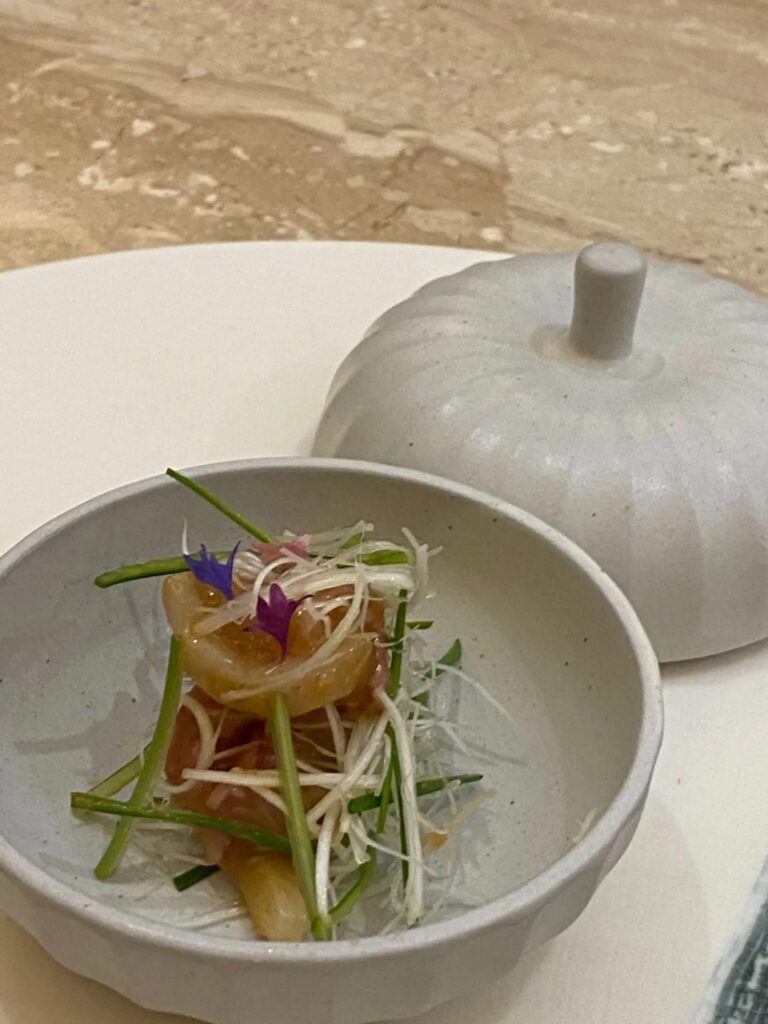
The hoe muchim (dressed raw fish) was not what I expected either. They explained that it used traditional doenjang, so I imagined an earthy taste, but vinegar held the center and actually woke up my palate. The firm bite of cuttlefish mixed in between the soft flakes of croaker gave it a nice texture.
Still, my favorite was the pomfret braised in doenjang. The fish was soft enough to break apart easily, yet the flakes held their shape. The doenjang did not push saltiness forward. It just supported the fish’s nuttiness, so it was not heavy even without rice. A familiar braised fish felt like a completely different dish at Pine.
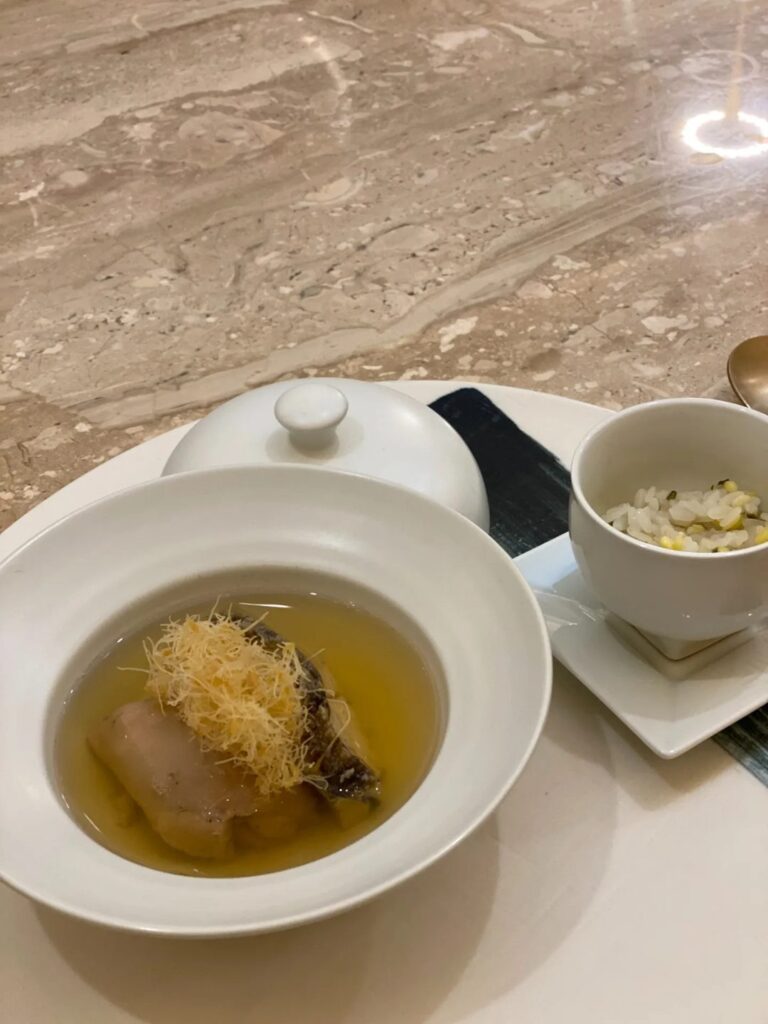
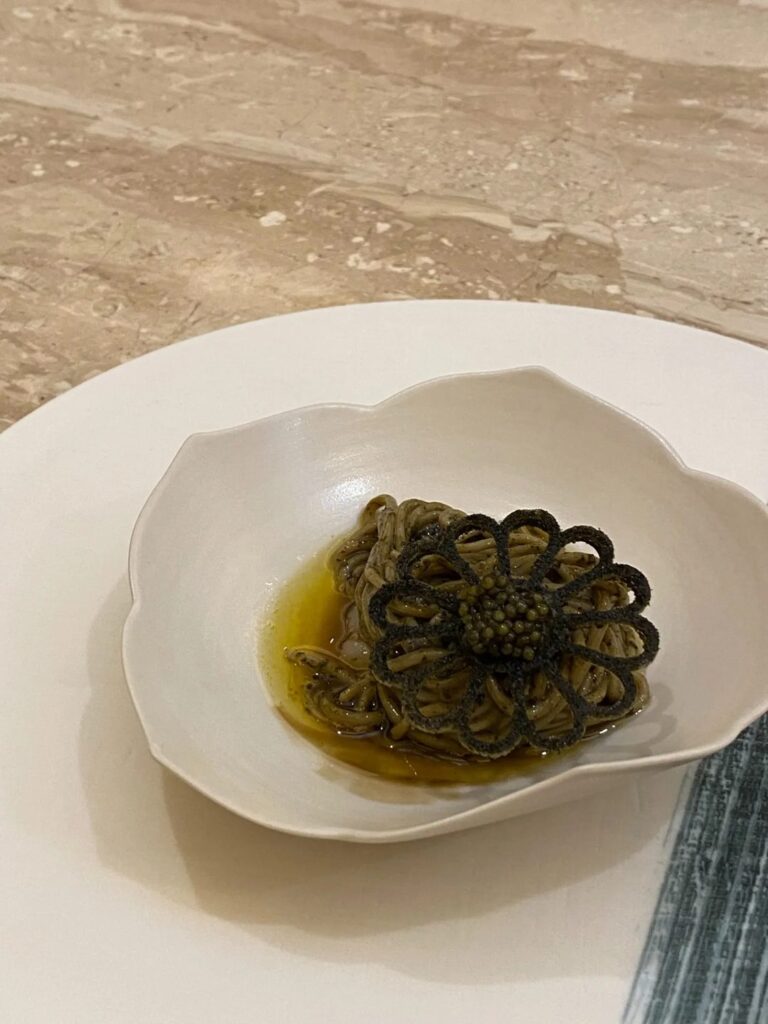
Perilla oil noodles, galbi and octopus pot rice
The perilla oil makguksu put the aroma of the noodles at the center rather than fancy toppings. Caviar, scallop and laver went on the black buckwheat noodles, but none of them stood out too much. I liked that it did not overdo the perilla oil to push nuttiness. Maybe because I am Korean, nutty is always best.
After that, the galbi main, despite its name, felt closer to meat grilled over charcoal than a braise. The tender meat and gentle smoky aroma worked well together, and the vegetables on the side kept it light to the end.
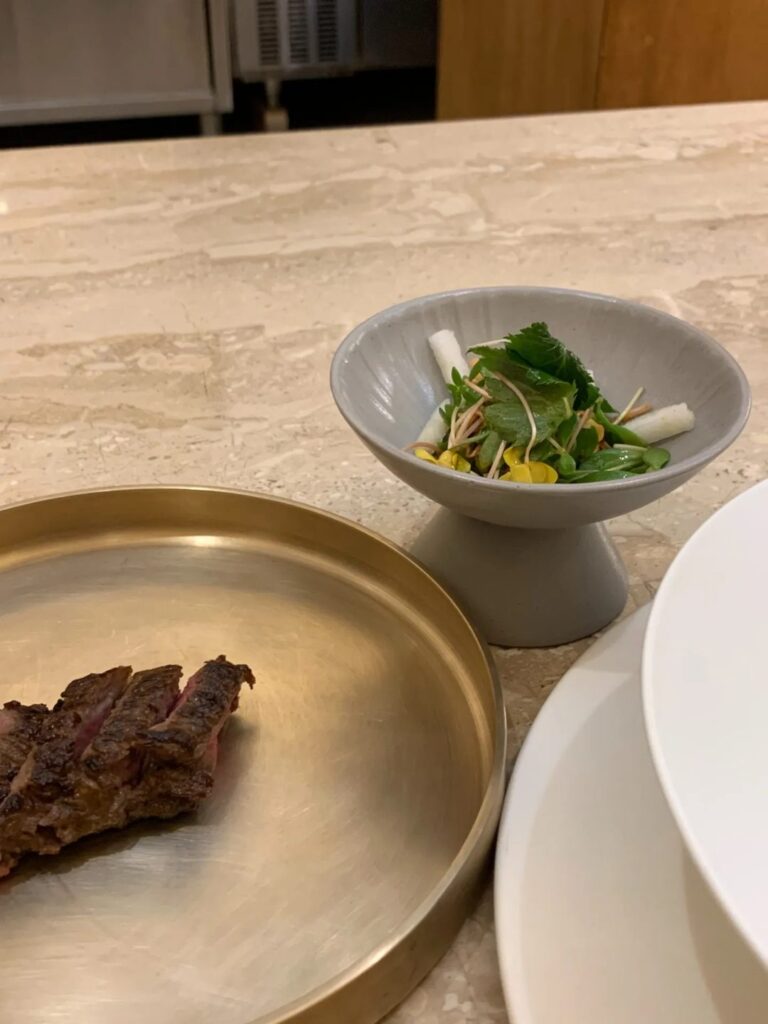
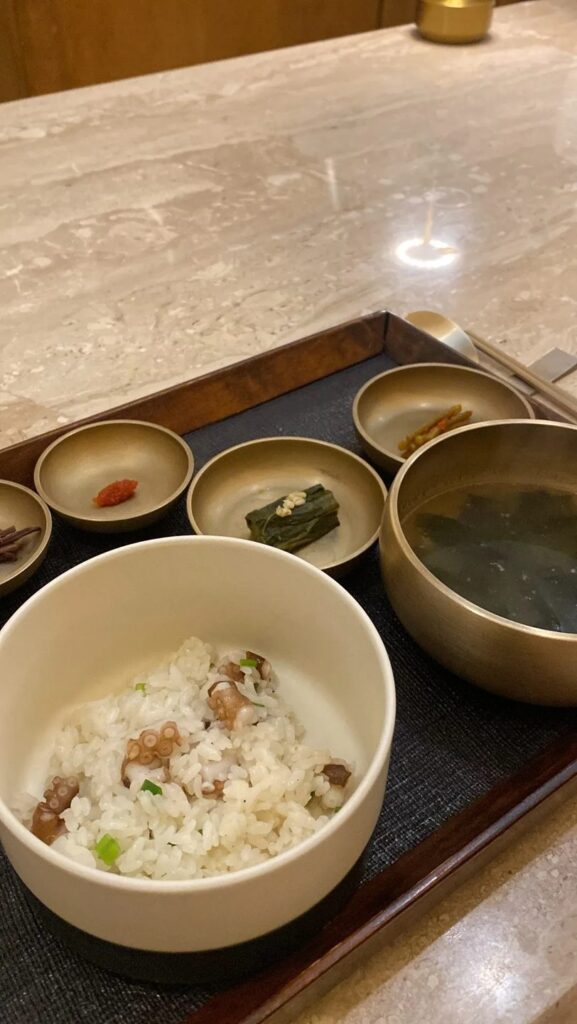
Then, with the final nakji sotbap (octopus pot rice), I relaxed. If the earlier dishes showed the many possibilities of Korean food, the moment the pot rice and side dishes arrived felt like coming home to one well-made bowl of rice. I was already full, but I naturally asked for more rice. Could anyone with a Korean palate dislike Pine? That thought crossed my mind.
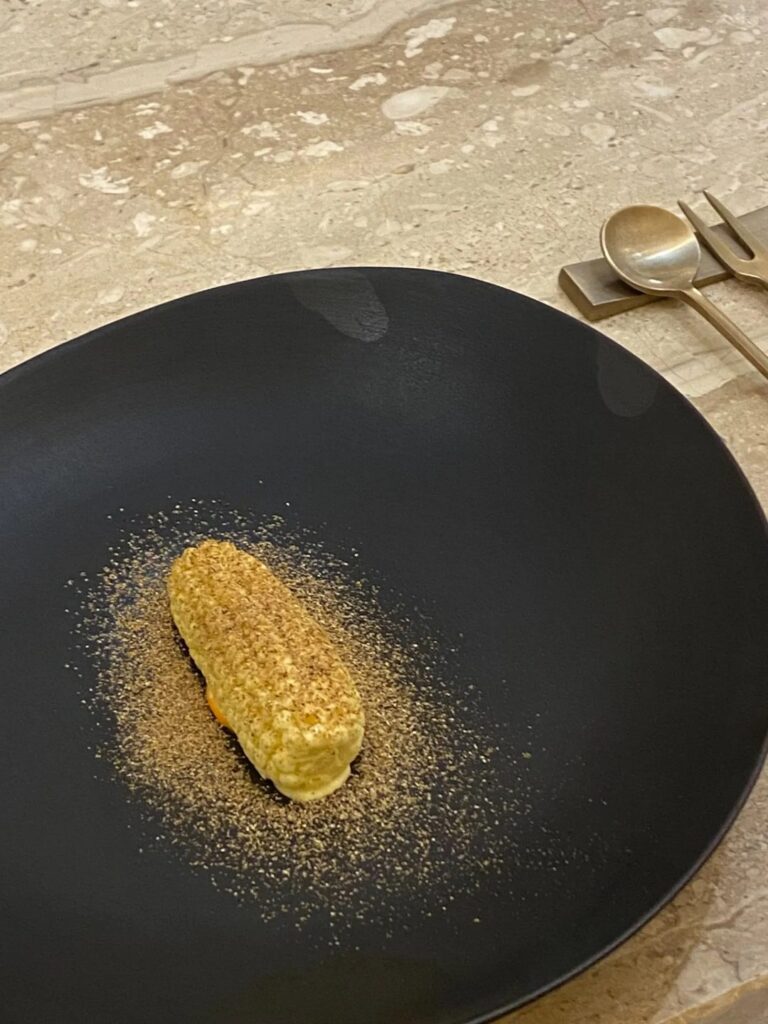
Pine does not exaggerate tradition. Instead, it twists familiar flavors a little so you see them in a new way. I am curious how the same ingredients will appear next season.
Good to know
- Address: 1F, 31-11 Baubaegi 1-gil, Wansan-gu, Jeonju (전북 전주시 완산구 바우배기1길 31-11 1층)
- Hours: Pine posted on Instagram that it ended lunch service after June 30 to focus on dinner. Visitor posts list dinner from 17:30, Thursday to Sunday, closed Monday to Wednesday. Check the latest schedule on CatchTable.
- Price: dinner course ₩150,000 per person (2026 sources), which matches what I paid.
- Booking: CatchTable (search “파인 전주”). Phone 063-225-6243.
- Map: Open in Naver Map
- Original review on Revitguide
4. Osteria Mattina (마띠나): Italian in Iksan
Mattina was the most unexpected meal I had in Iksan. I went after hearing it was a rare Italian place for the region, and I vaguely pictured a nice pasta spot with a good mood. From the very first plate, though, I could tell this place was something more.
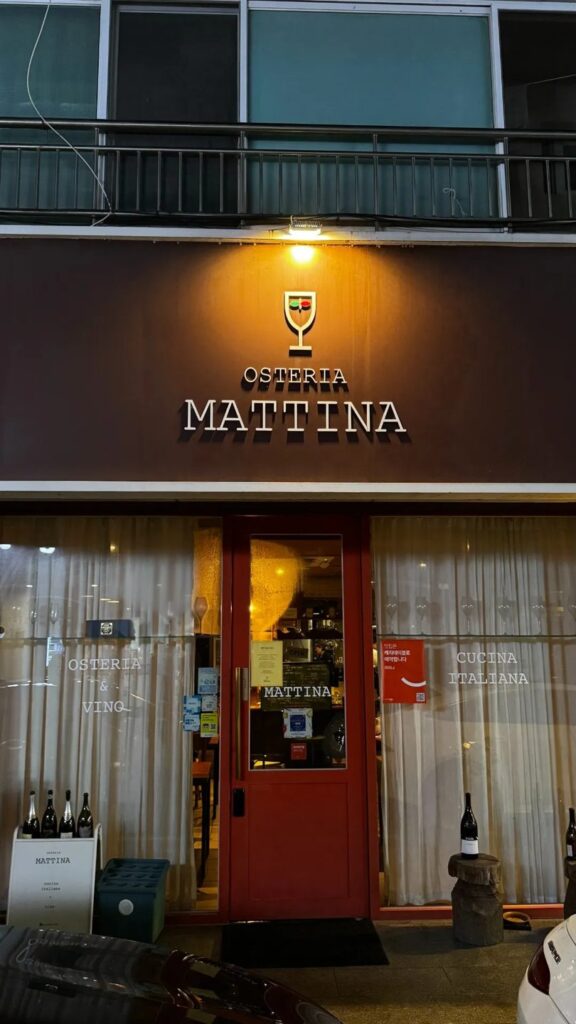
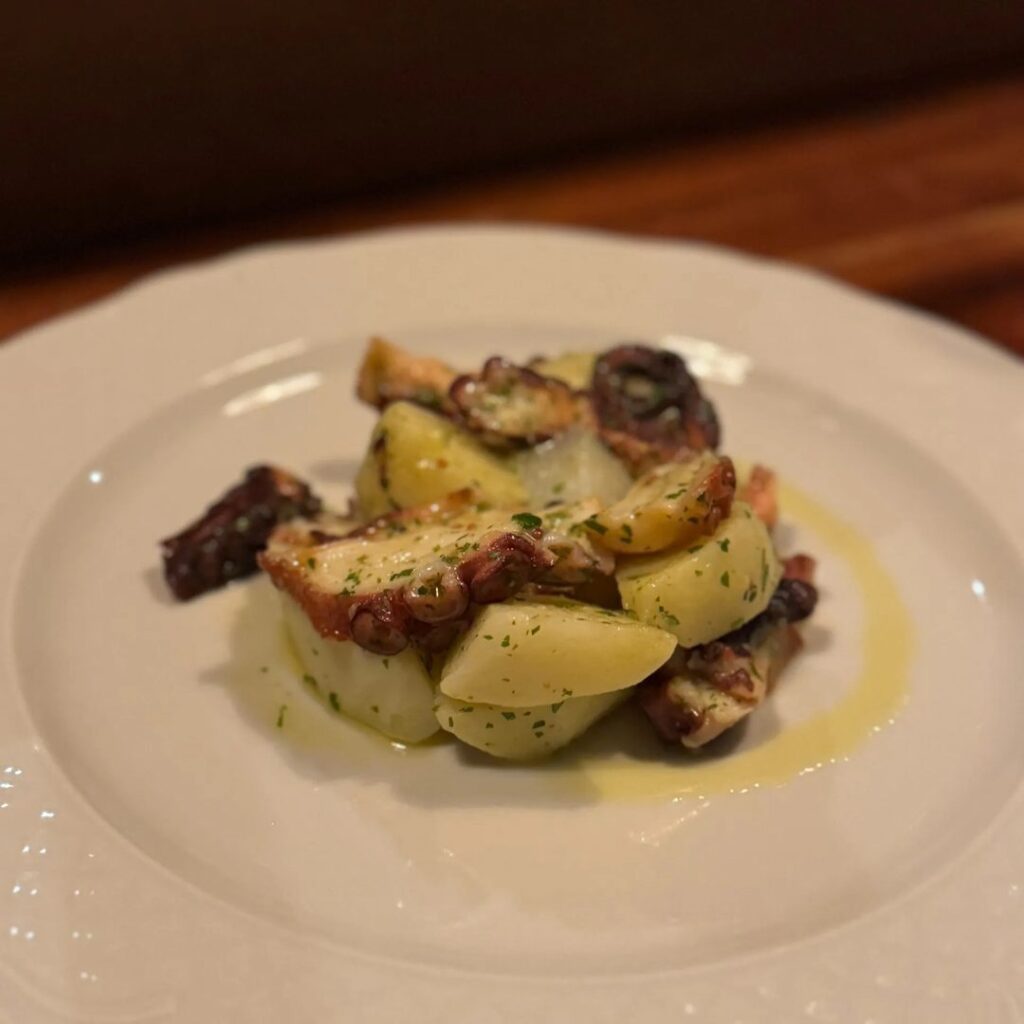
The octopus and potato looks simple on paper. But the thick slices of octopus were springy without being tough, and with the potato and herbs each bite had real density. It is a dish that wins on cooking and seasoning rather than piling on ingredients.
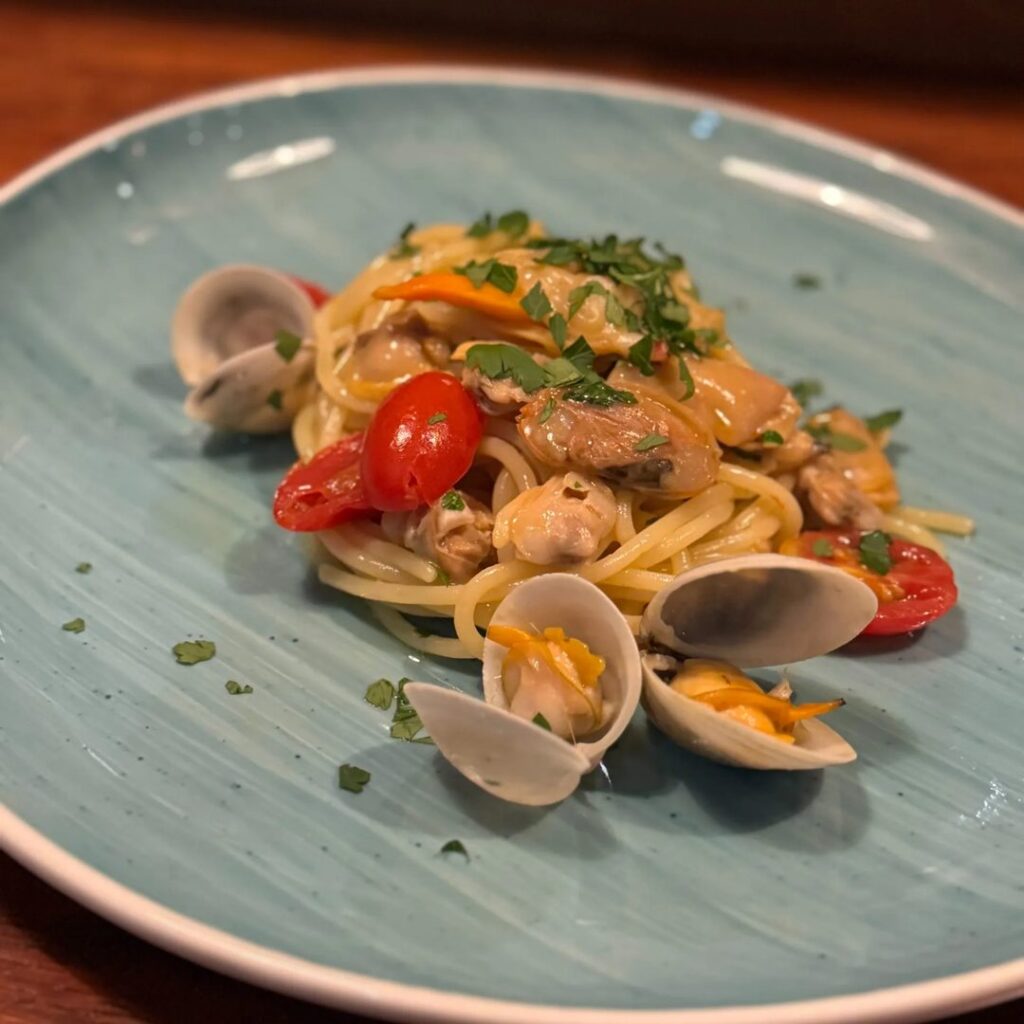
In fact, the vongole was even more impressive. It did not politely hide the saltiness and sea flavor of the clams. It pulled them out as they are. If you prefer mild, soft pasta, it may feel a little strong. Personally, I was happy to eat a vongole this clear-tasting for the first time in a while. The clam stock and oil soaked deep into the firm noodles, and I kept going until the bottom of the plate.
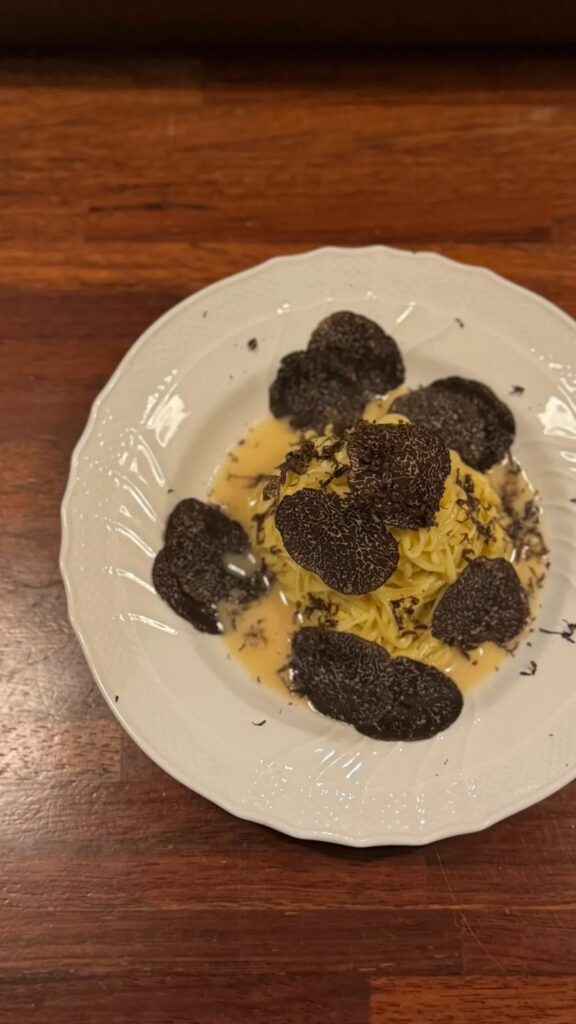
By contrast, the truffle tajarin went in a completely different direction. The thin noodles held the nutty sauce closely, and the truffle aroma did not just brush past like a garnish. It carried the whole dish. Of the three, it was the richest and most luxurious.
Of course, this is not food that adjusts to suit everyone. The salt level is clear, and it does not hide the aroma of its ingredients. That is exactly why it does not blend in with other places. I was glad to find a small Italian restaurant in Iksan that sticks to these flavors. Next time I would like to share a bottle of wine and eat a little more slowly.
Good to know
- Address: 1F Hun House, 32-7 Hanaro 11-gil, Iksan (전북 익산시 하나로11길 32-7 훈하우스 1층), in the Yeongdeung-dong area.
- Hours: Blue Ribbon lists Tuesday to Saturday, 17:30 to 01:00 (last order 23:00), closed Sunday and Monday.
- Chef: Kim Sung-soo, according to a Blue Ribbon column. It is a small, wood-toned room with a counter and a few tables.
- Booking: CatchTable. Its page says there is no parking at the restaurant (a paid car park building is nearby) and lists corkage of ₩30,000 if you also order wine from the list, ₩50,000 otherwise.
- Map: Open in Naver Map
- Original review on Revitguide
More Gwangju Restaurants and Jeolla Picks Rated 3.5
These extra picks are adapted from visits by Revitguide reviewer 호미식 (Homisik), who rated each 3.5 out of 5. They add more Gwangju restaurants plus Naju gomtang, Suncheon, Jeonju and Iksan.
Gwangju
Alain (알랭), Yongbong-dong
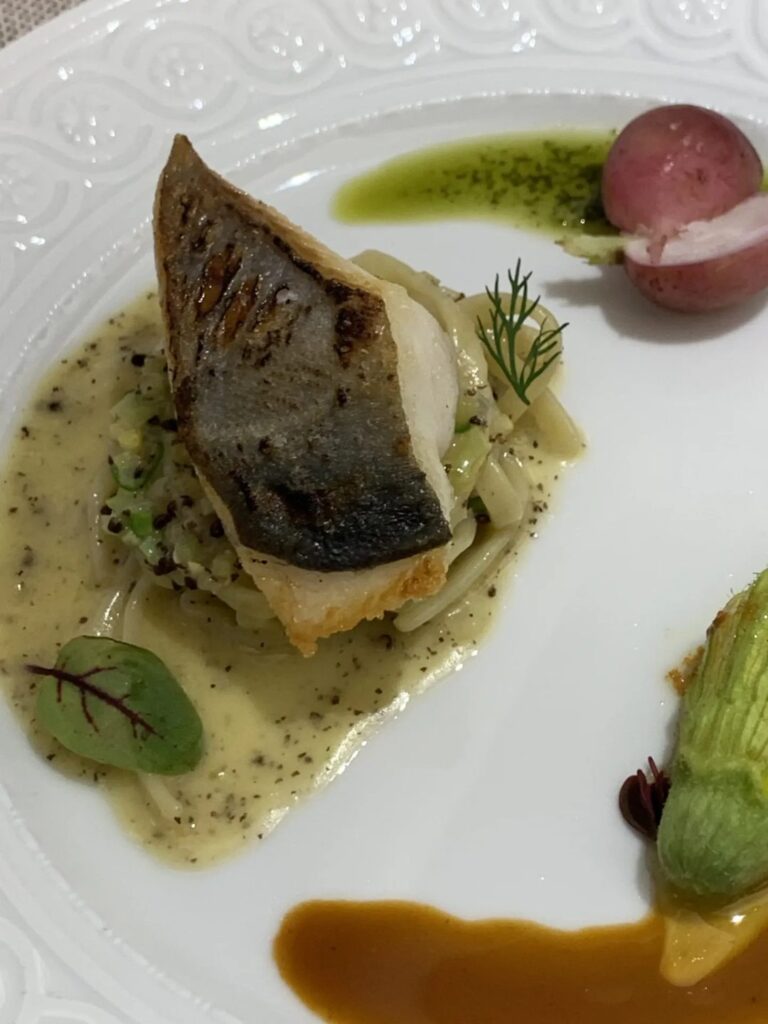
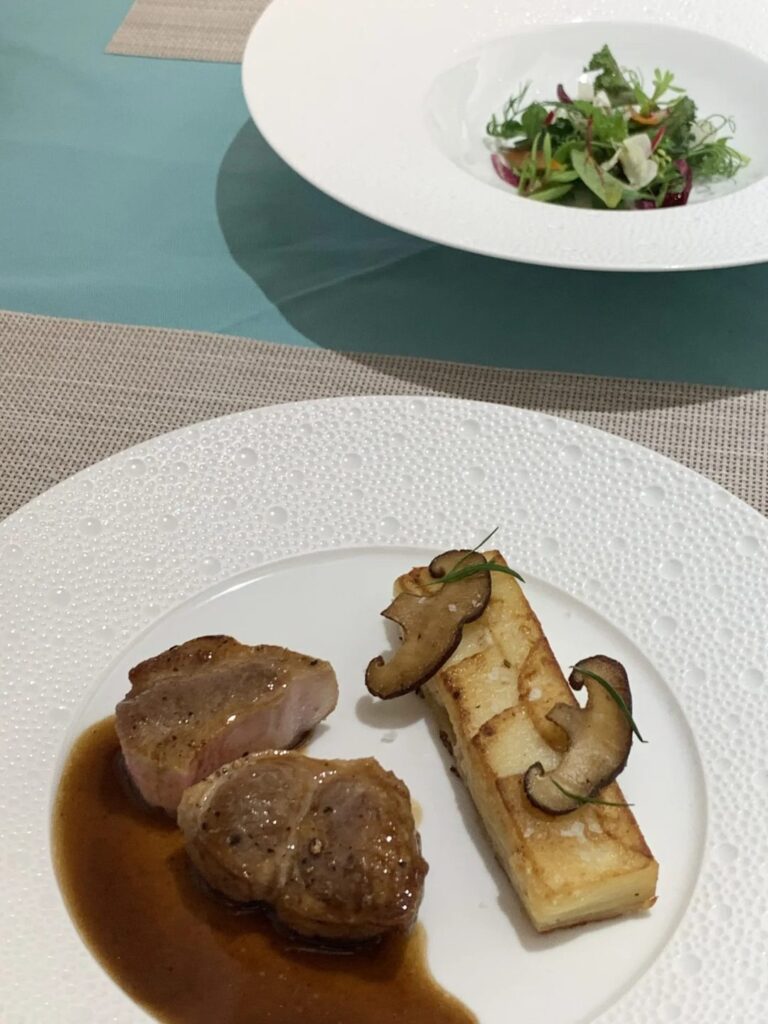
Alain has carried French cooking in Gwangju since 2013. In addition, the chef climbed the stairs to explain every plate. The onion soup came straight from the oven, and the standout was a local conch “escargot” cooked perfectly, tender but still chewy. Pomfret with perilla pasta, a pork steak main and a rose-scented cheese ice cream rounded it out.
Where: Yongbong-dong, Buk-gu, Gwangju (알랭 광주). Open in Naver Map. Original review on Revitguide: read it here.
Pitt (피트), Yangnim-dong
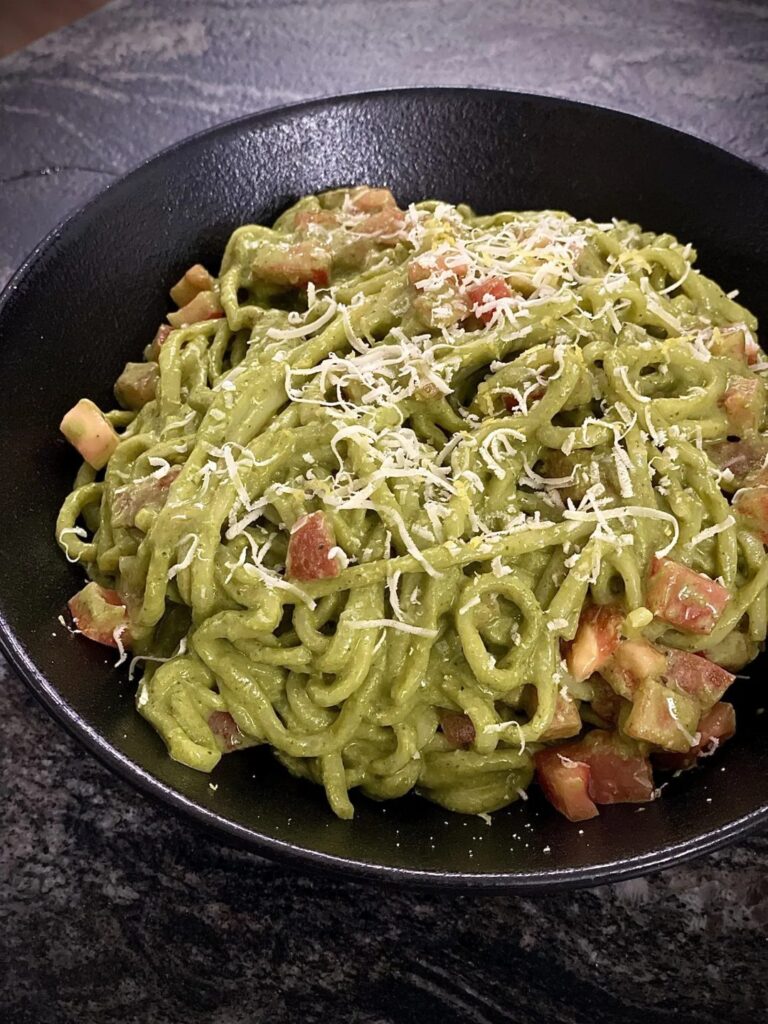
Pitt hides in a quiet residential alley, a short walk from where you park. Courses were booked out, so I came after 20:00 for à la carte. The basil cold noodles were bright without overdoing the basil, and the meat main had a strong but welcome fire aroma, with roasted onions and potatoes and a sauce I kept going back to. I want to return for the full course.
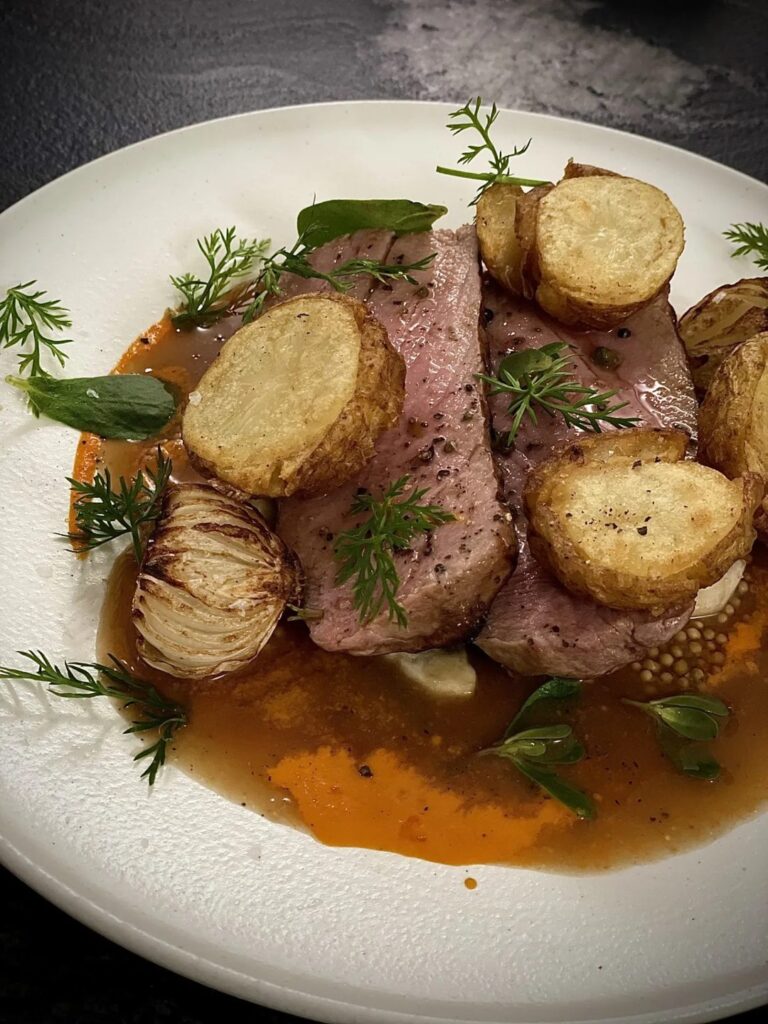
Where: Yangnim-dong, Nam-gu, Gwangju (피트 광주). Open in Naver Map. Original review on Revitguide: read it here.
Rhinebeck (라인벡), Suwan
Because the course changes with the day’s ingredients, the long explanations made it fun. “Samgyetang” arrived as a roasted chicken stuffed with mushrooms, flounder came with a naengi (shepherd’s purse) sauce, and asparagus was dressed like kimchi. The duck main had crisp skin and juicy meat, and the meal ended with a maesil jelly.
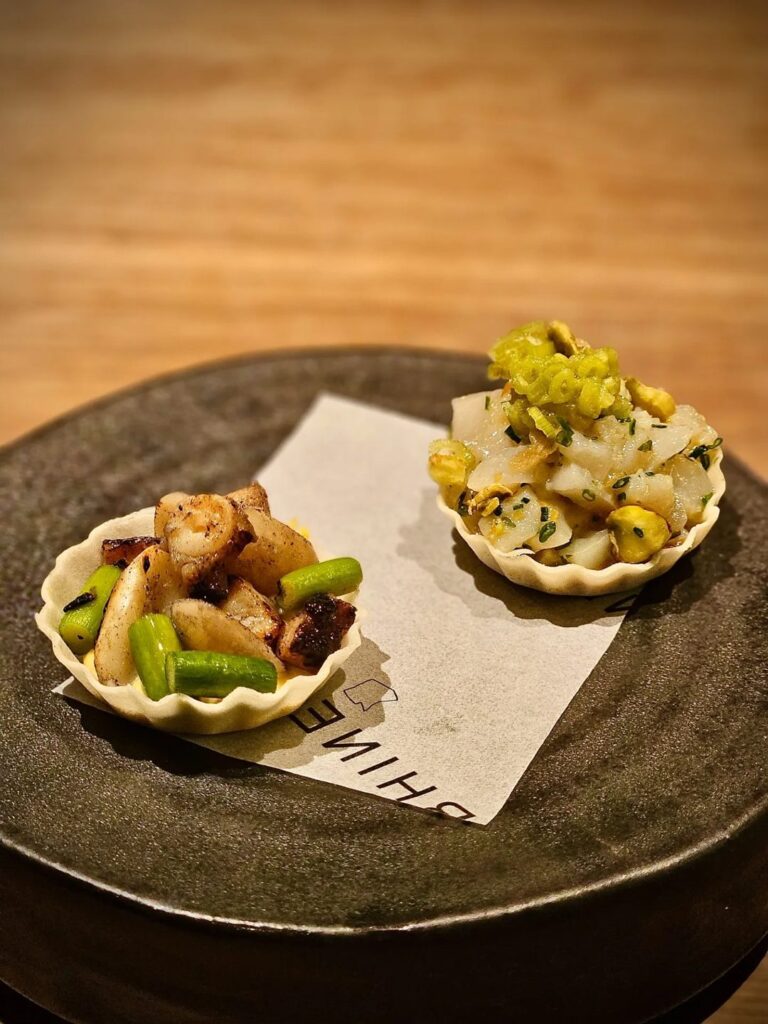
Where: 1F, 44-5 Suwan-ro 50beon-gil, Gwangsan-gu, Gwangju (라인벡). Open in Naver Map. Original review on Revitguide: read it here.
La Violetta (라비올레따)
At first the seasoning felt gentle. However, eaten slowly, the seafood pasta let the ingredients come through. Similarly, the steak was well cooked, with sweet roasted carrot and smooth potato purée. Each ingredient keeps its shape and role on the plate.
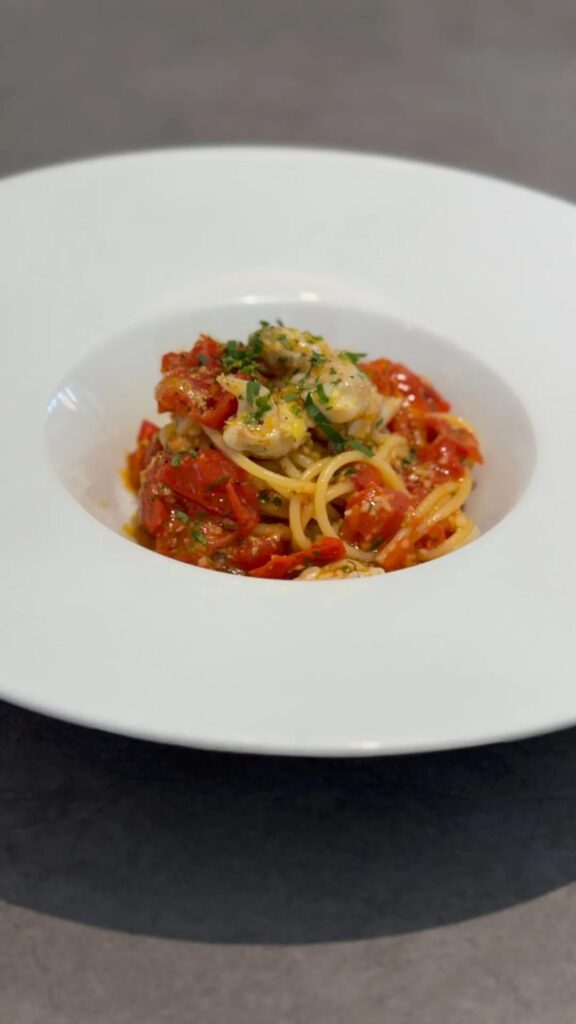
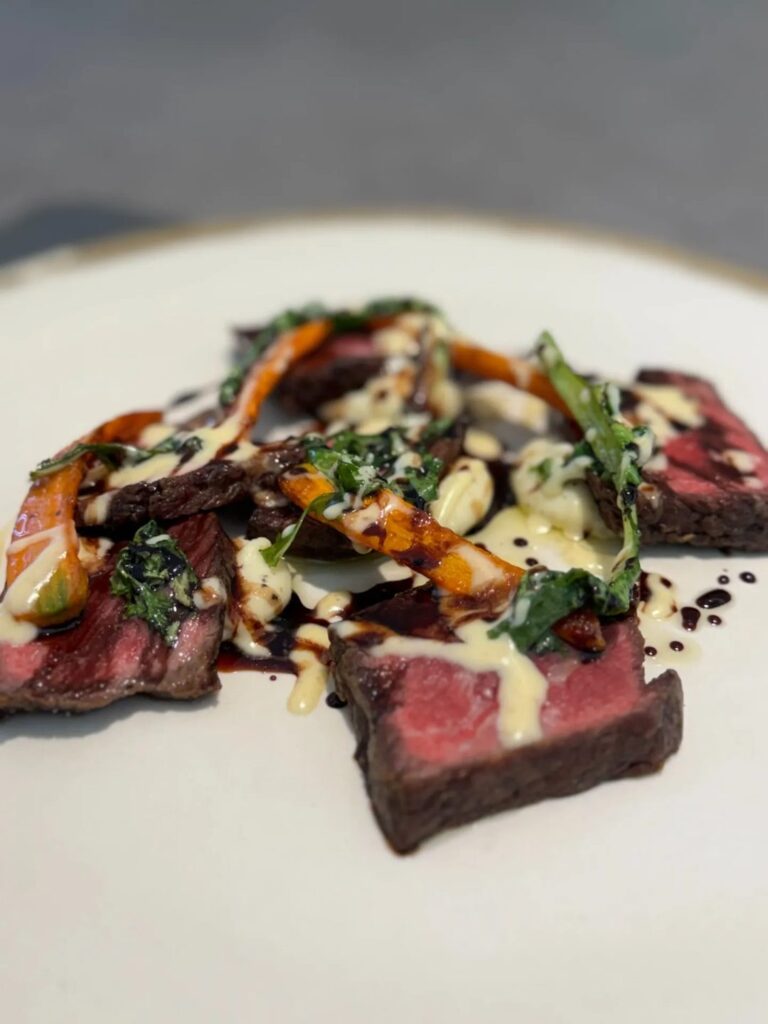
Where: Imam-dong, Nam-gu, Gwangju (라비올레따). Open in Naver Map. Original review on Revitguide: read it here.
Moves Coffee (무브스 커피)
A spacious, wood-toned cafe that feels like a hideout. I ordered the Moves Latte by name alone, and the coffee was solid, clean and balanced. The owner even wrote me a handwritten list of Gwangju restaurants, a memorable welcome for a traveler.
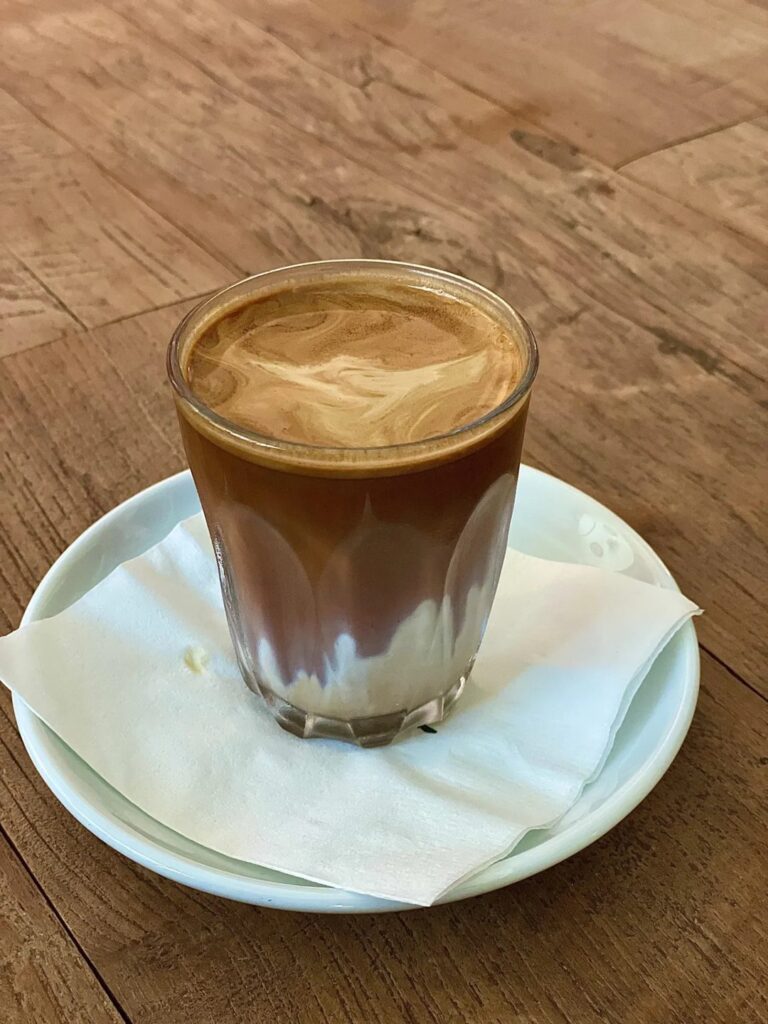
Where: Bongseon-dong, Nam-gu, Gwangju (무브스 커피). Open in Naver Map. Original review on Revitguide: read it here.
Naju Gomtang: Taetjari, Noanjip, Hayanjip and Nampyeong Halmaejip
For a side trip from Gwangju, Naju gomtang (clear beef soup) is easy, and the three famous shops sit within a five-minute walk of each other. Taetjari came first: egg garnish, a well-seasoned broth with deep beef flavor and finely cut meat, with excellent aged kimchi. Noanjip was my favorite, with big lean slices and more sesame and pepper in the broth, in a large hall that still feels like an old shop. Meanwhile, Hayanjip, the best known, combines both styles: big meat, lots of scallion, egg garnish and a clean broth. Finally, Nampyeong Halmaejip on the same street was clean and easygoing, closest to Hayanjip.
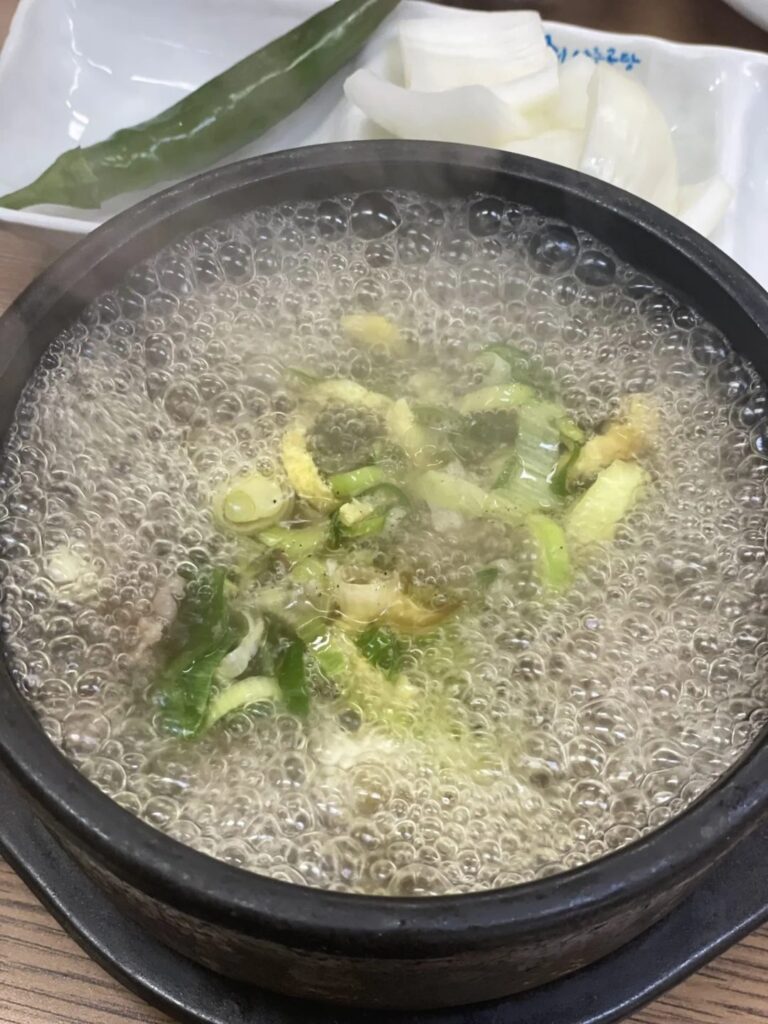
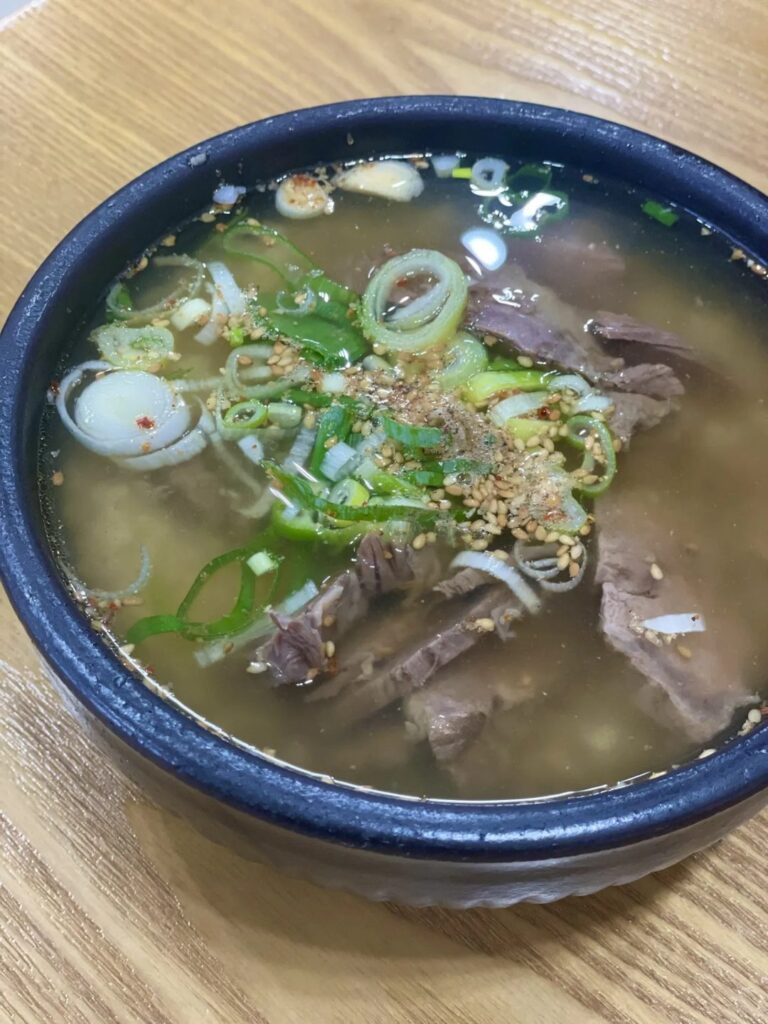
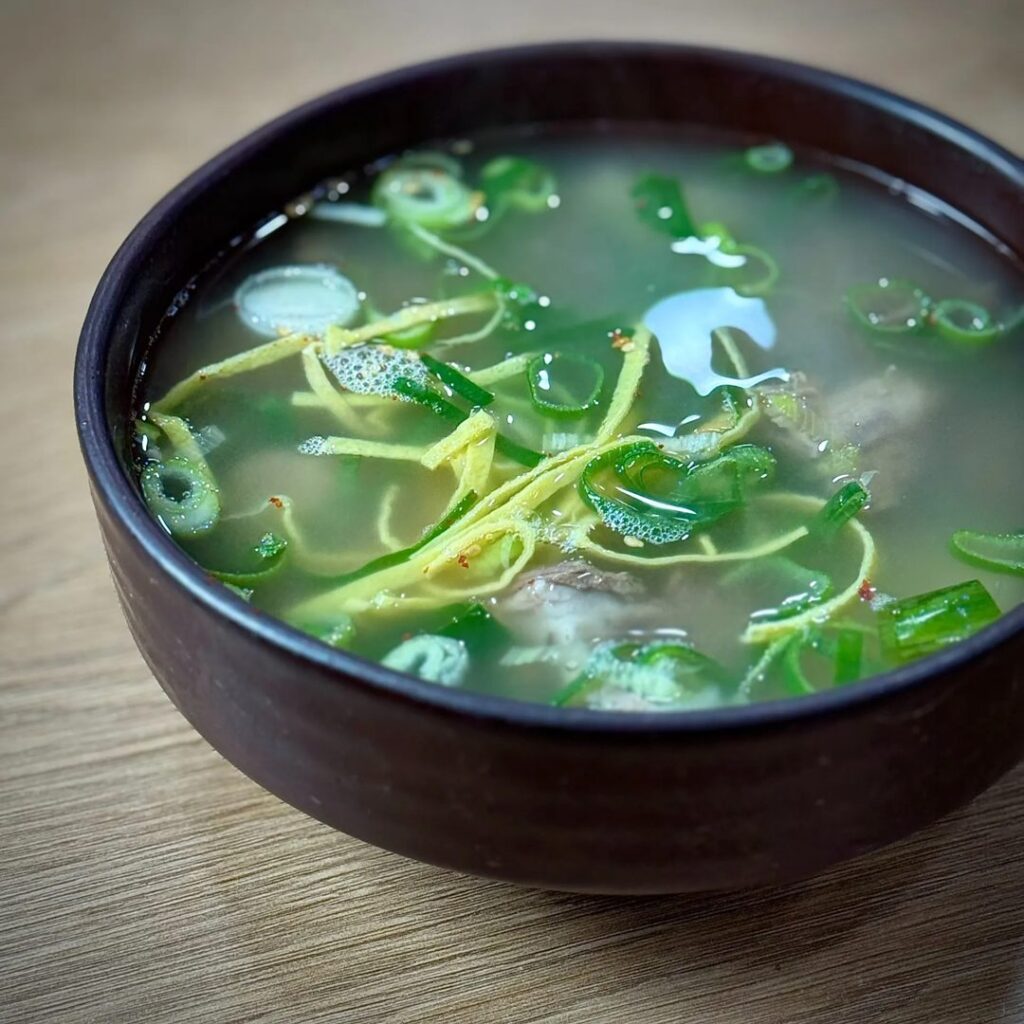
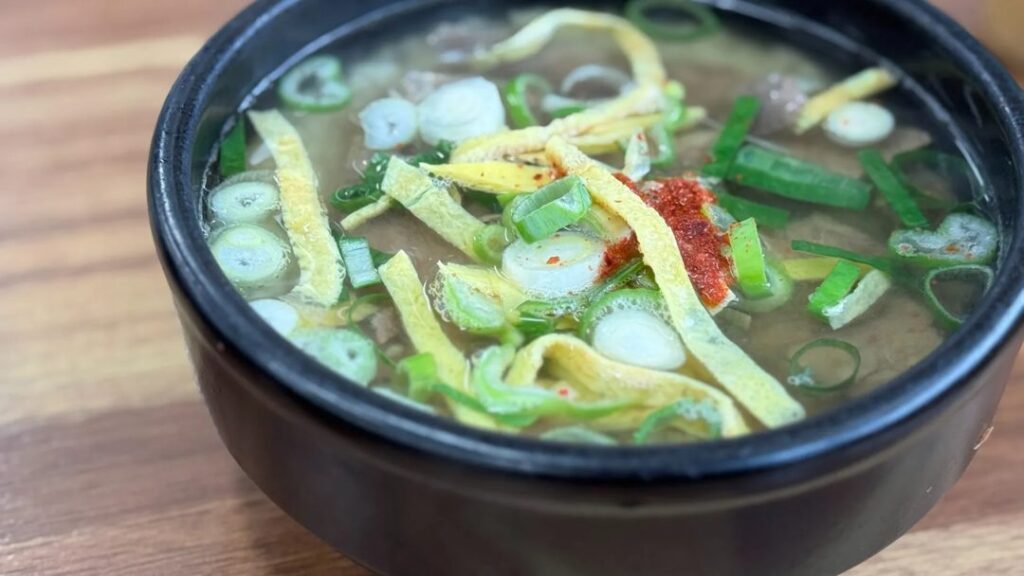
Where: around Geumseonggwan-gil, Naju. Open in Naver Map. Original reviews on Revitguide: Taetjari, Noanjip, Hayanjip, Nampyeong Halmaejip.
Suncheon, Jeonju and Iksan
Sushi Manwol (스시만월), Suncheon
A small, calm counter near the court in Wangji-dong. The Tongyeong horse mackerel kept its character, tidied by scallion and ginger, and the eel was the other highlight. The rice was a little salty and tart, with grains that held their shape. Pair it with our Suncheon French dinner.
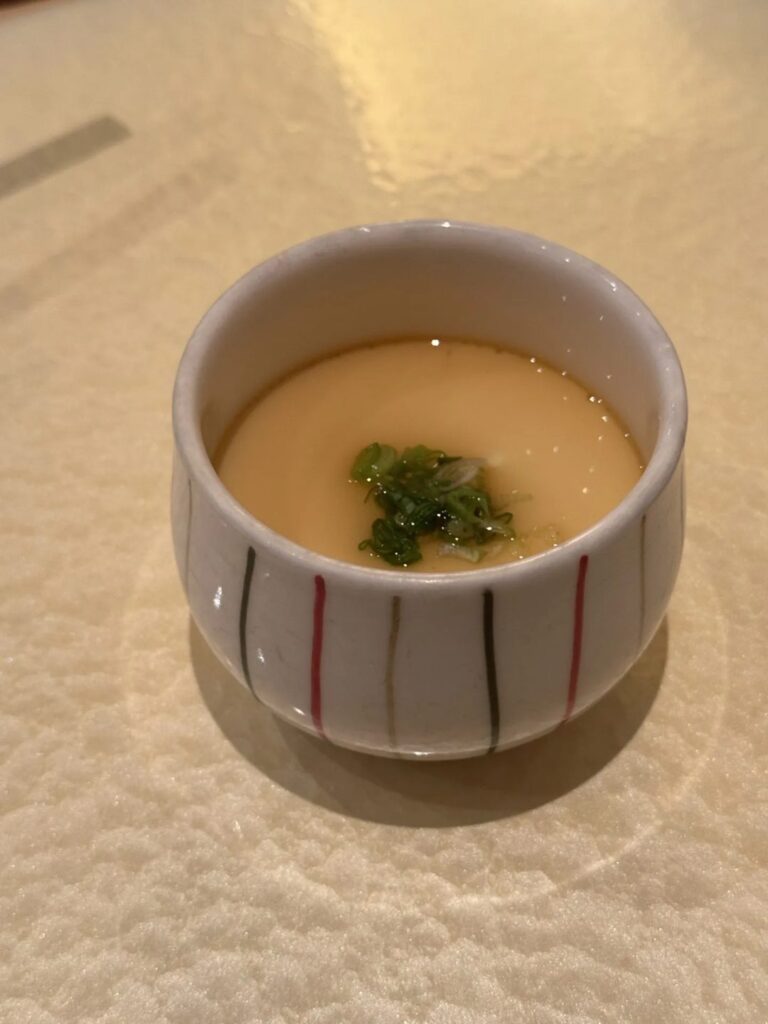
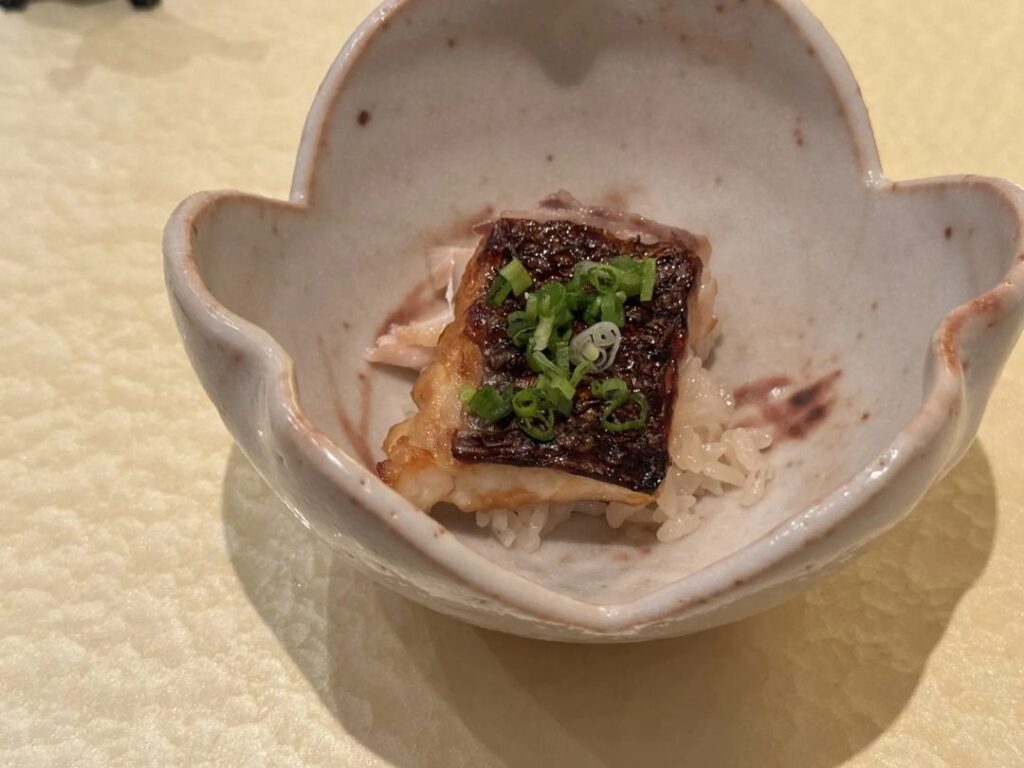
Where: 3-26 Wangji 1-gil, Suncheon (스시만월). Open in Naver Map. Original review on Revitguide: read it here.
Lino (리노), Suncheon
A small Italian restaurant in a restored hanok off Suncheon’s culture street. The chef trained in Milan and Trentino-Alto Adige, and it shows in the firm, chewy pasta with seafood. The hanwoo tenderloin, cooked medium, was mild and tender. Northern Italian technique with ingredients from the region.
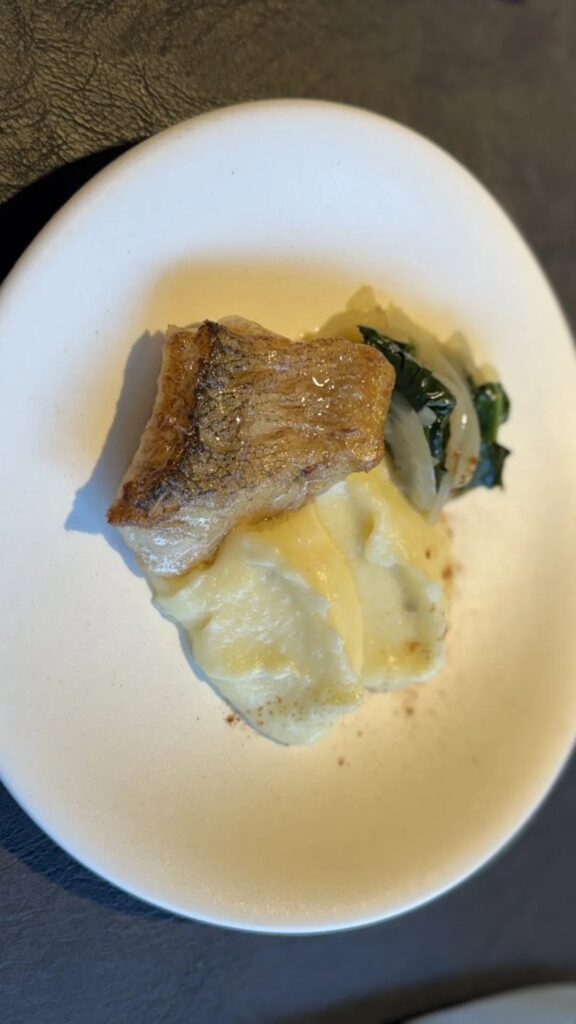
Where: 71 Yeongdong-gil, Suncheon (리노 순천). Open in Naver Map. Original review on Revitguide: read it here.
Katsu Morijo (카츠모리조), Jeonju
Thick, pale pink slices that are fully cooked, juicy, with fat sweetness that comes late. The coarse crust is surprisingly light and stays crisp. For that reason, eat the first pieces plain. They take your order while you wait, so food arrives soon after you sit.
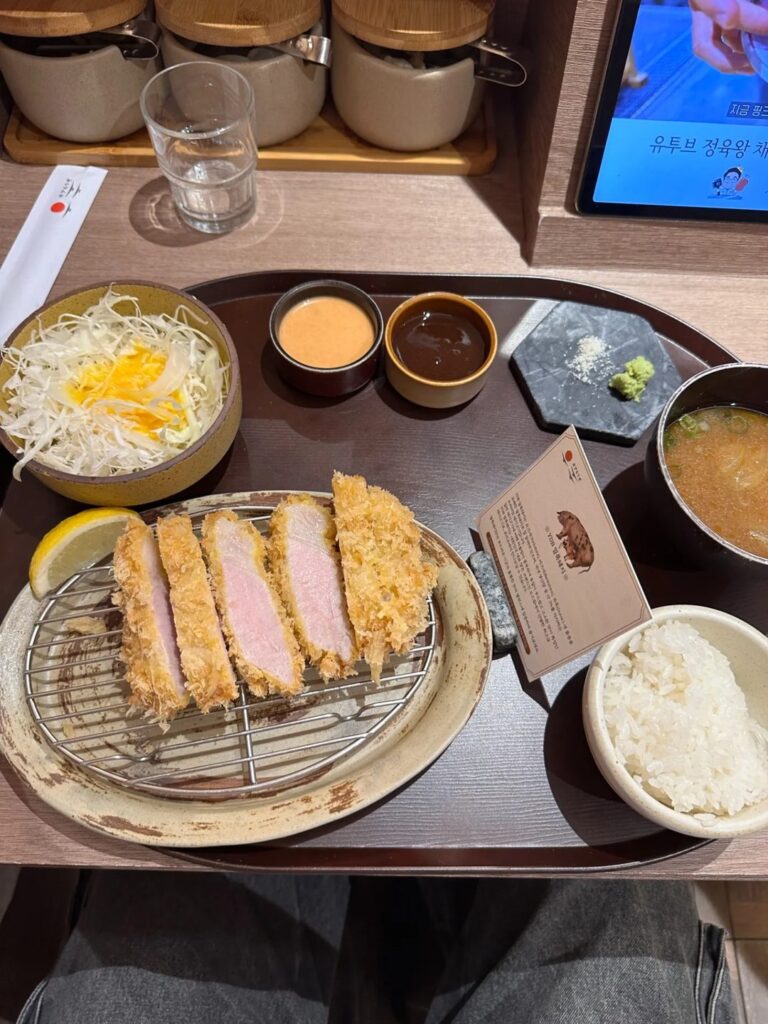
Where: Junghwasan-dong 2-ga, Wansan-gu, Jeonju (카츠모리조). Open in Naver Map. Original review on Revitguide: read it here.
ITAL (이탈), Iksan
First, the polpo was among the best I have had, seared outside and tender inside, even better with the caviar on top. Then the mortadella pizza put cold cheese on hot dough, with pistachio balancing the rich meat. A good choice for Italian with wine in Iksan.
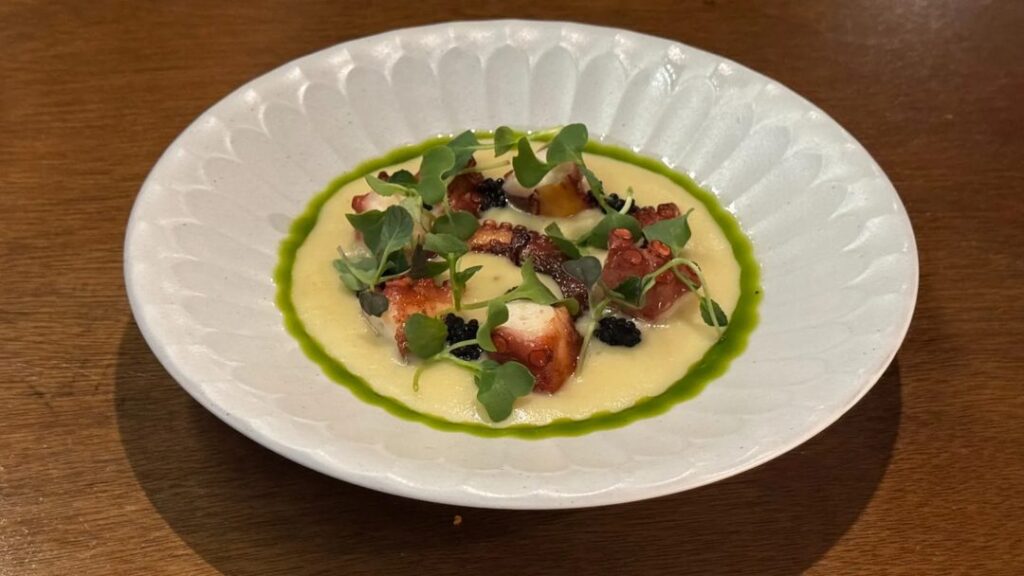
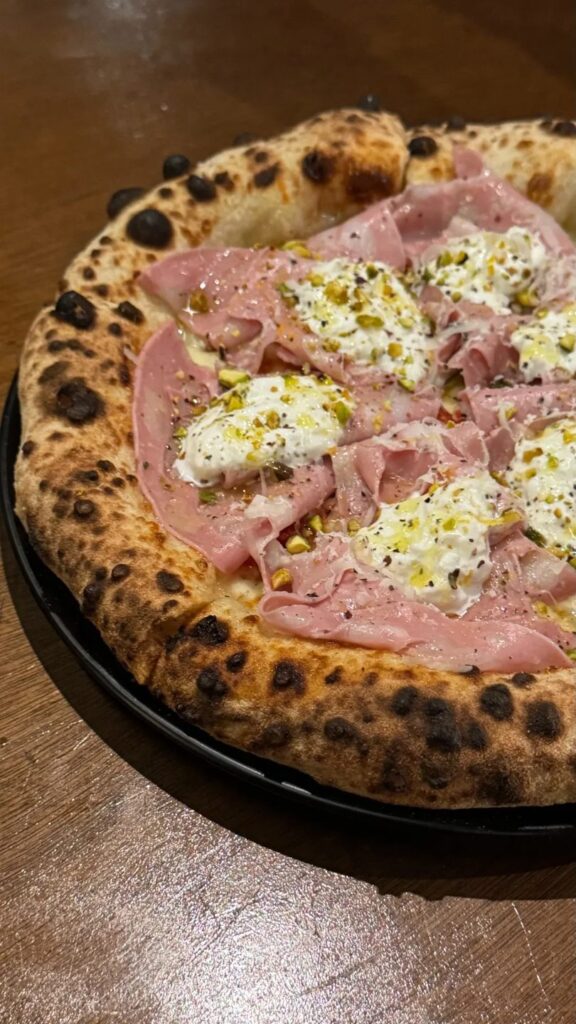
Where: 44-4 Muwang-ro 17-gil, Iksan (ITAL 익산). Open in Naver Map. Original review on Revitguide: read it here.
Tips for Booking Gwangju Restaurants and Jeolla Fine Dining
- Check closing days first. Most Gwangju restaurants on this list are small, chef-run places. All four places close at least one or two weekdays, and Pine opens only four days a week.
- Book on CatchTable where possible. Small counters like Oboeru and Pine fill up on weekends.
- Pair cities by train. Iksan and Jeonju are close to each other, and Gwangju is under an hour further south by KTX, so you can add Gwangju restaurants to a Jeonju trip.
- Bring cash or a card that works in Korea, and keep a Naver Map or KakaoMap link handy for taxis.
Also, if you want more Gwangju restaurants and Jeolla ideas, read our Dining Sojae review, our Autrement review in Suncheon, and our best Korean restaurants in Seoul before you head south.
FAQ
Are there good Gwangju restaurants for fine dining?
Yes. Gwangju restaurants include a small but growing group of chef-led places, such as Oboeru for kaiseki, La Ronde Carrée for French food and Dining Sojae for Korean tasting menus. Prices are usually lower than similar meals in Seoul.
How do I get from Seoul to Gwangju restaurants for dinner?
Take a KTX from Yongsan or a train from Suseo to Gwangju Songjeong Station, which takes roughly 1 hour 35 minutes to 2 hours. From there, take a taxi to Dong-gu, where Oboeru and La Ronde Carrée are.
Is Pine in Jeonju open for lunch?
Pine announced that it stopped lunch service after June 30 and now focuses on dinner. Check CatchTable or its Instagram for current seatings before you go.
Can I visit Jeonju and Iksan on the same day?
Yes. The two cities are close, and many KTX trains stop at both. A late lunch in Jeonju and dinner at Mattina in Iksan works well, since Mattina opens in the evening.
Do these restaurants have English menus?
However, we could not confirm English menus at any of the four. Staff at course restaurants usually explain each dish, and a translation app helps with à la carte menus like Mattina’s.
We checked prices, hours and booking information in November 2026, and they can change. Check Naver Map before you go.