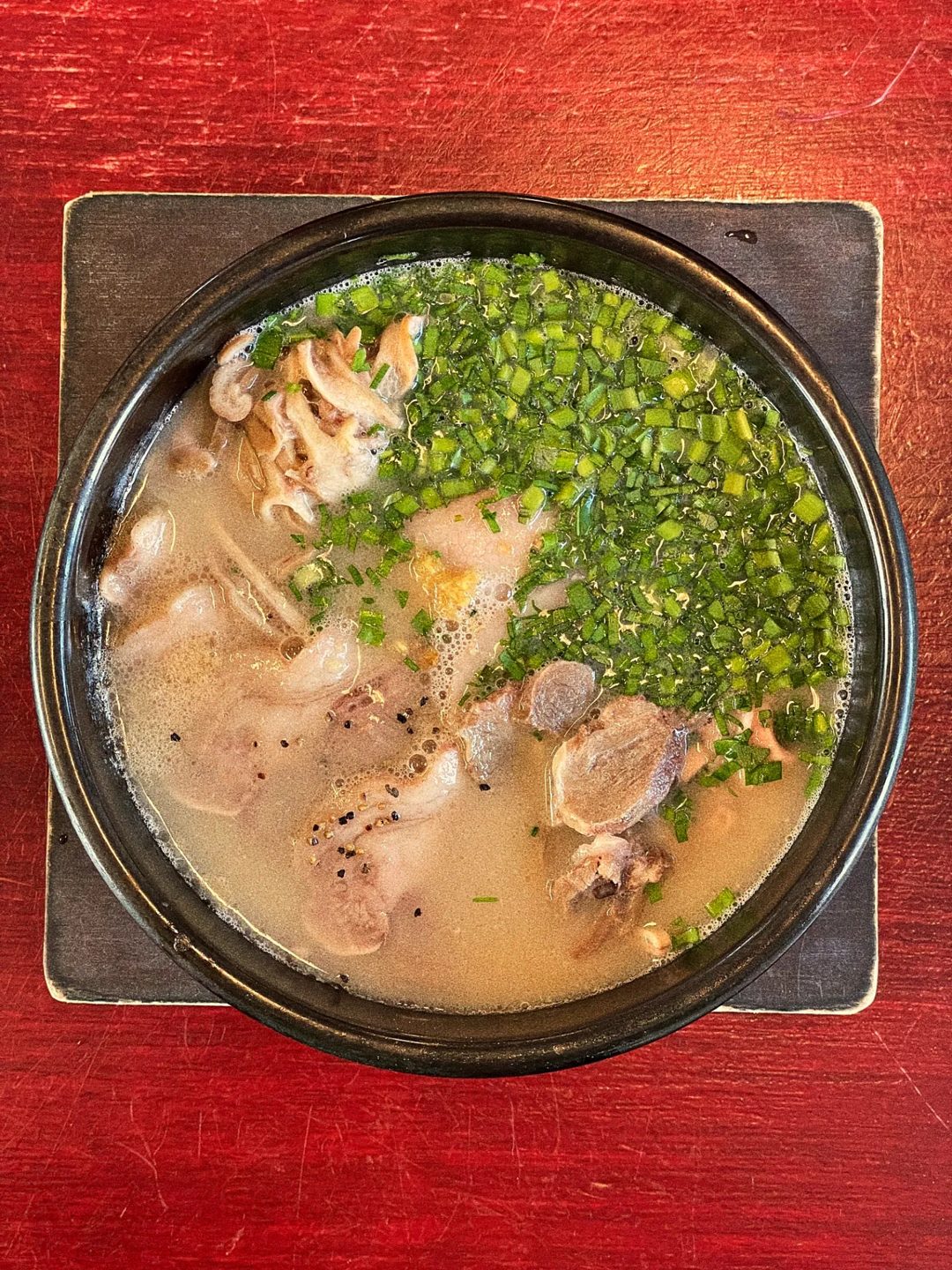
Dwaeji gukbap (돼지국밥, pork and rice soup) is the dish most people think of first when they think of Busan, and Eomyongbaek (엄용백 돼지국밥) is one of the city’s newer names for it. In Japanese it is often written 豚クッパ, and in Chinese 猪肉汤饭. This guide starts with a Saturday lunch at Eomyongbaek’s original Suyeong branch in September 2026, where I tried both the rich and the clear broth. After that come eight more dwaeji gukbap shops across Busan, from old market counters in Yeongdo to a ₩7,000 bowl near Busan Station, plus two beef gomtang spots for days when you want a change.
This guide is adapted from visits by Revitguide reviewer 호미식 (Homisik), who rated Eomyongbaek 4 out of 5 and each of the other shops 3.5 out of 5. Read the original Korean review of Eomyongbaek on Revitguide; links to the other reviews are in each section.
Dwaeji Gukbap in Busan: All 11 Bowls at a Glance
| Shop | Area | Style | Good for |
|---|---|---|---|
| Eomyongbaek (엄용백) | Suyeong | Clear and rich broth, modern room | Comparing both broth styles |
| Hapcheon Ilryu (합천일류) | Sasang | Garlic-heavy broth, pork udon option | Garlic lovers |
| Gamasot (가마솥) | Yeongdo | Clear broth, old-school room, open 24 hours | Late nights |
| Jaegi (재기) | Yeongdo | Market-stall gukbap | Market atmosphere |
| Hwamokjeong (화목정) | Yeongdo | Beef head ttaro gukbap | A calm breakfast |
| Yeongjin (영진) main branch | Saha | Garlicky broth, attentive staff | Old-school service |
| Jeil (제일) | Seo-gu, near Busan Station | Clear broth, ₩7,000 bowl | Budget meals |
| Anmok (안목) | Namcheon | Clear broth, add dadaegi halfway | Gwangalli stays |
| Haeundae Wonjo Halmae (해운대원조할매) | Haeundae | Familiar Busan-style bowl | An easy meal near the beach |
| Hanwolgwan (한월관) | Gwangalli | Neat beef gomtang | A calm, tidy meal |
| Geodae Gomtang (거대곰탕) | Haeundae | Very rich beef gomtang | Fans of thick broth |
Eomyongbaek Dwaeji Gukbap at a Glance
| Address | 1F, 39 Suyeong-ro 680beon-gil, Suyeong-gu, Busan (부산 수영구 수영로680번길 39 1층) |
| Nearest station | Suyeong Station (Lines 2 and 3), Exit 11, about a 4-minute walk (around 230 m) |
| Hours | Weekdays 11:30 to 21:30, weekends from 11:00. Break time around 15:00 to 17:00. Last order around 21:00 |
| Closed | Listed as open year-round, with closures around major holidays such as Seollal and Chuseok |
| Price | Each gukbap ₩14,000 (October 2026). My lunch came to ₩19,000 per person |
| Waiting | Remote and on-site queue through the Tabling app |
| Parking | No private lot. Use paid lots nearby |
| Map | Open in Naver Map |
What Is Dwaeji Gukbap?
Dwaeji gukbap is a bowl of pork broth with sliced boiled pork, served with rice. It is Busan’s signature comfort food, and the dish is often traced back to the Korean War years, when the city was crowded with refugees. Today you will find a gukbap shop on almost every block, and many locals eat it for breakfast or as a hangover cure.
There are two broad styles. Busan-style broth is usually clear and light, made mainly from meat. Miryang-style broth, named after a town north of Busan, is milky and rich because it is made by boiling pork bones for hours. Eomyongbaek serves both, which makes it a good place to compare them side by side.
How to season it
The broth usually arrives lightly seasoned, and you finish it at the table. For example, most shops put out these extras:
- Saeujeot (새우젓, salted tiny shrimp): add a little at a time instead of salt.
- Buchu (부추, garlic chives): stir them into the hot broth.
- Dadaegi (다대기, a red chili seasoning paste): mix it in for heat and a deeper flavor.
- Rice: some people tip it into the soup, others eat it on the side, spoon by spoon.
A good tip is to taste the broth plain first, then season it step by step. That is exactly how the clear bowl worked best for me, as you will see below.
The Space: An Old Dish in a Modern Room
If you walk in expecting one of Busan’s old-school dwaeji gukbap joints, even the atmosphere is different. The room is neat and organized around an open kitchen, and the shop takes a traditional gukbap and presents it in a fairly modern way.
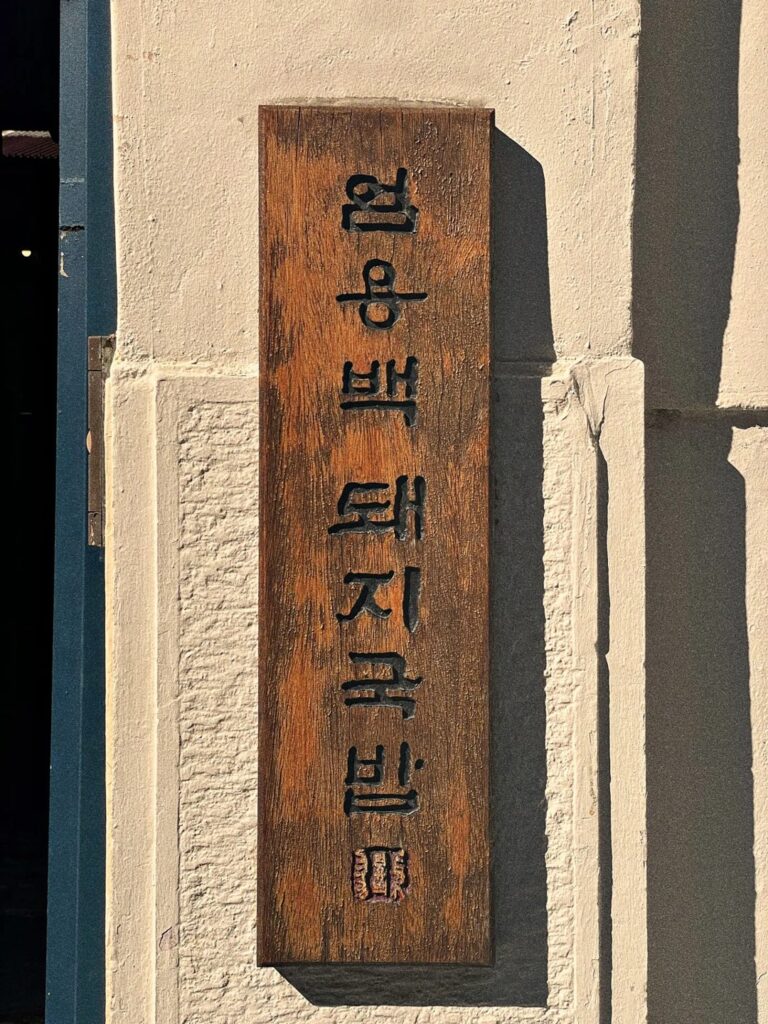
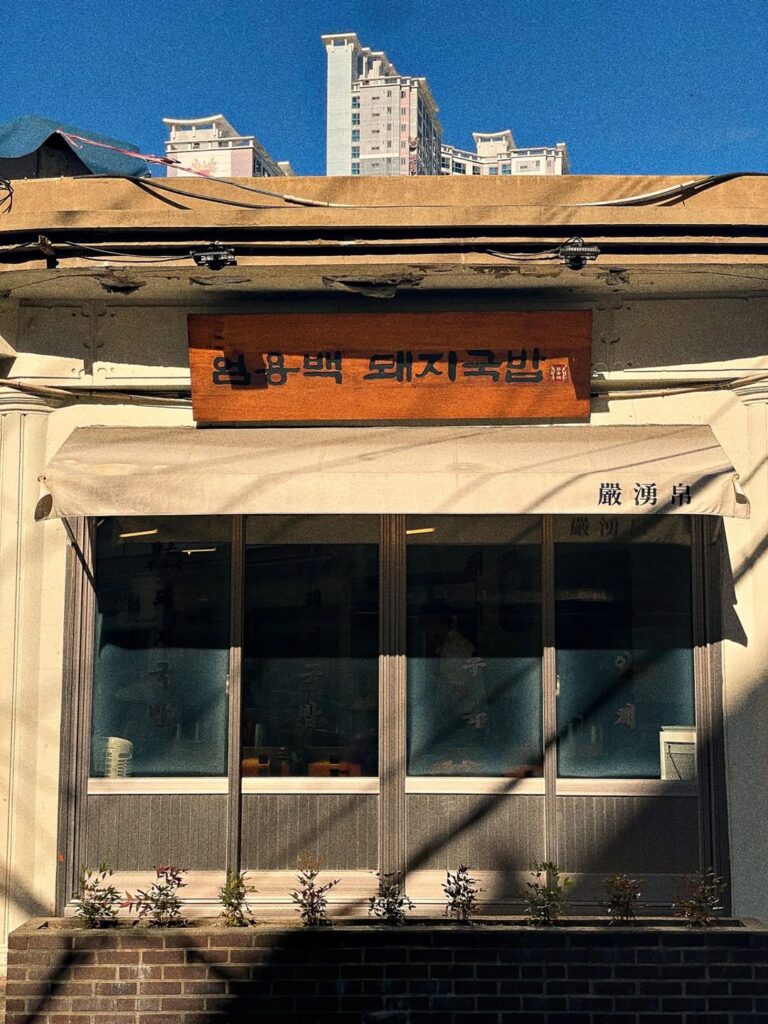
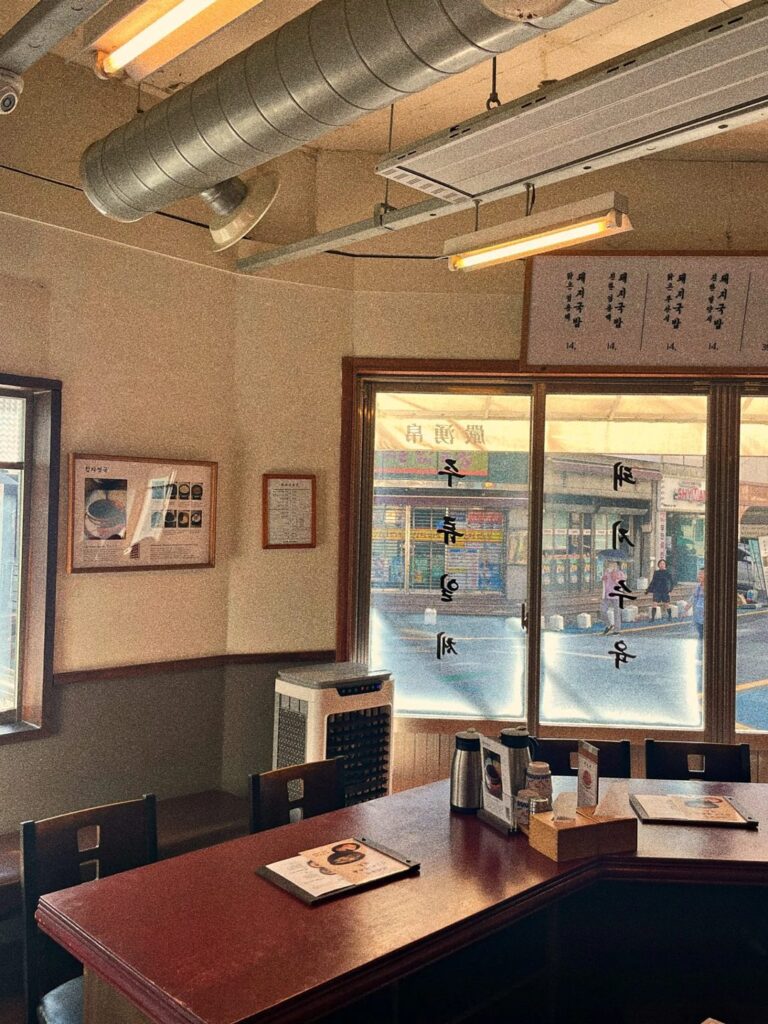
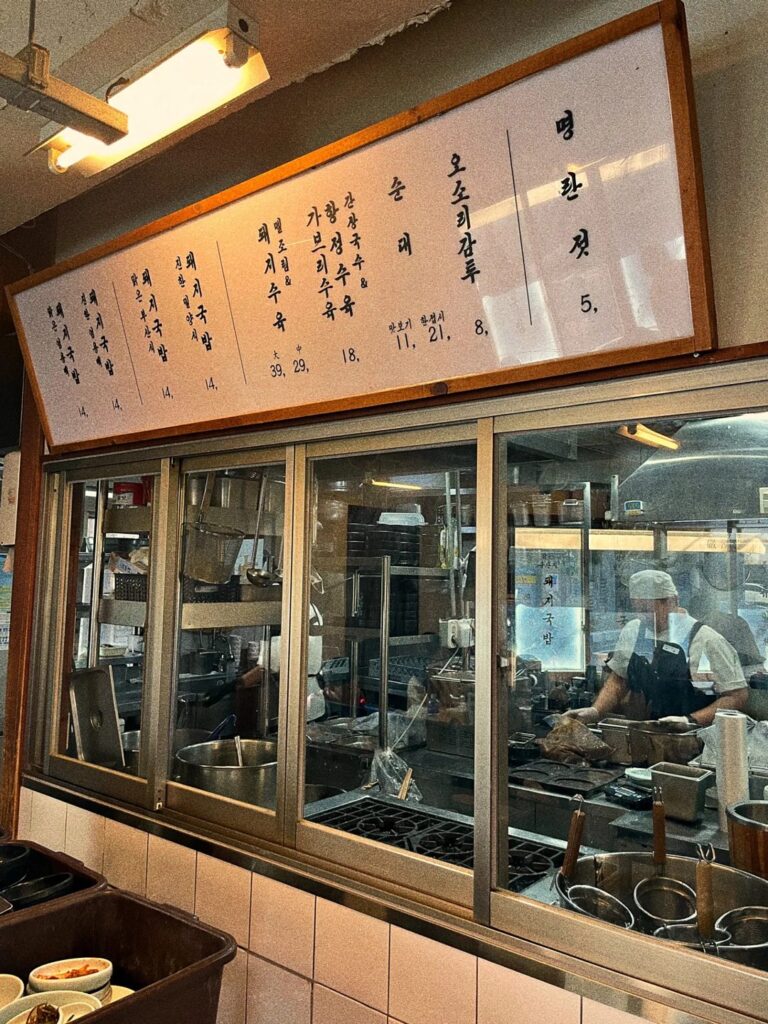
According to Visit Busan, the restaurant was opened by Busan-born chefs who each had more than ten years of cooking experience in different fields. The handwritten menu board above the kitchen lists the soups, several suyuk (boiled pork) plates and small sides.
Rich vs Clear: My Two Bowls of Dwaeji Gukbap
The meat
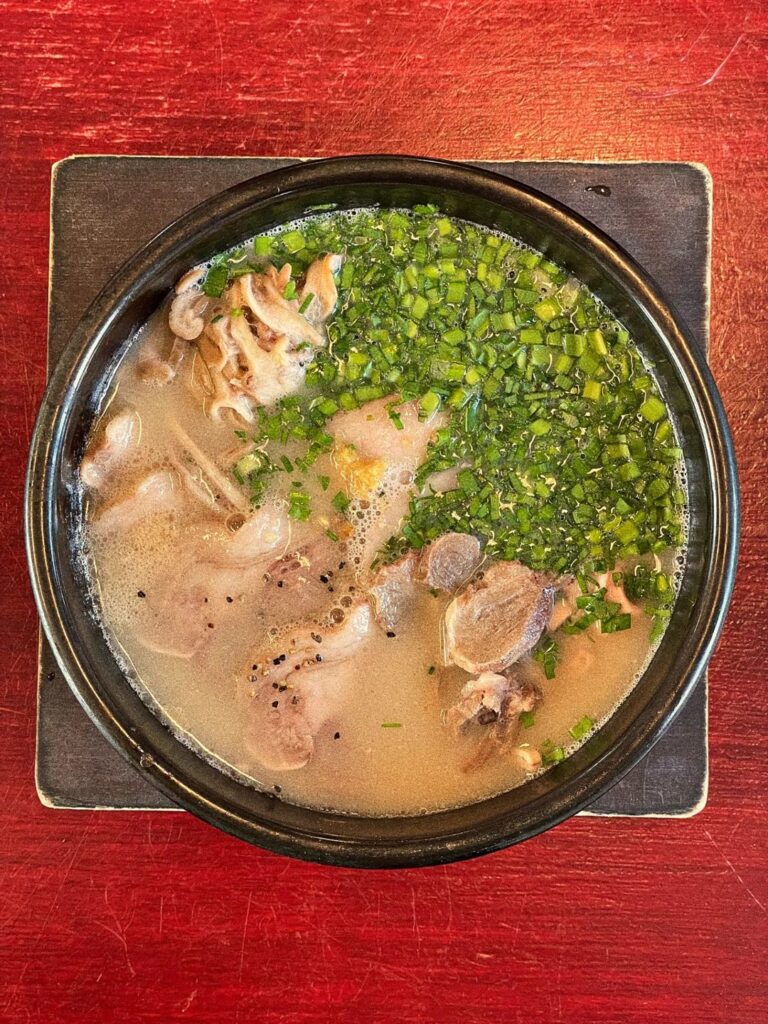
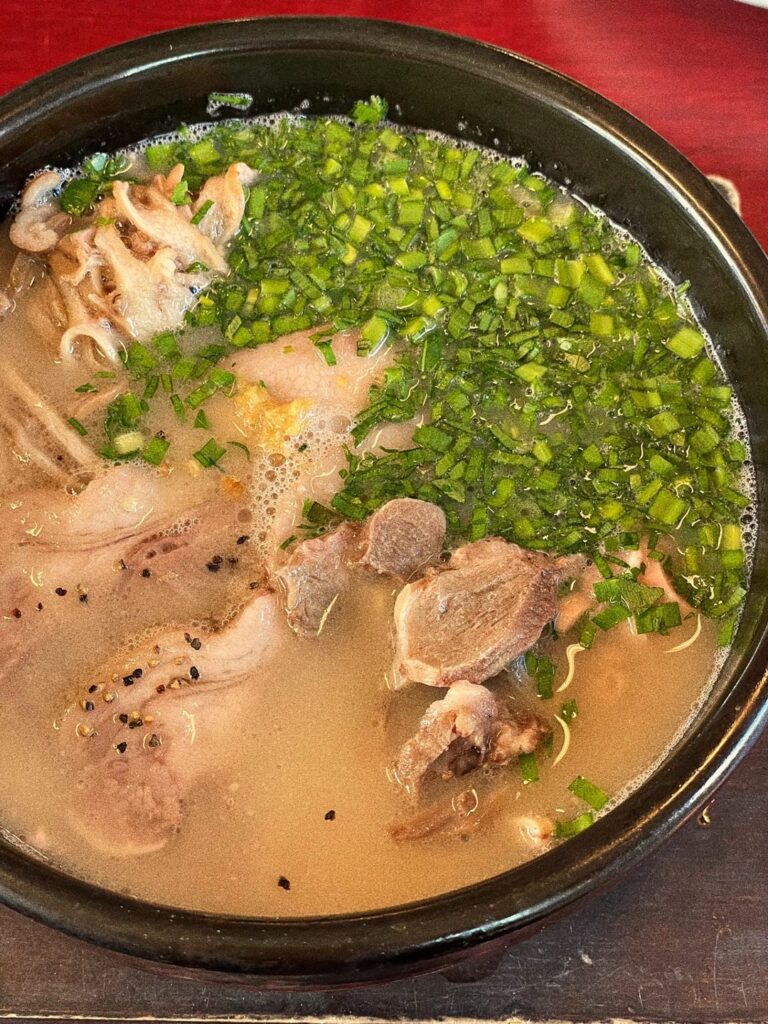
The best part was the meat. It is sliced thin and very tender, and it slides down easily with the broth. Thin chives tucked in between the slices add a crisp bite, which I also liked.
The rich bowl
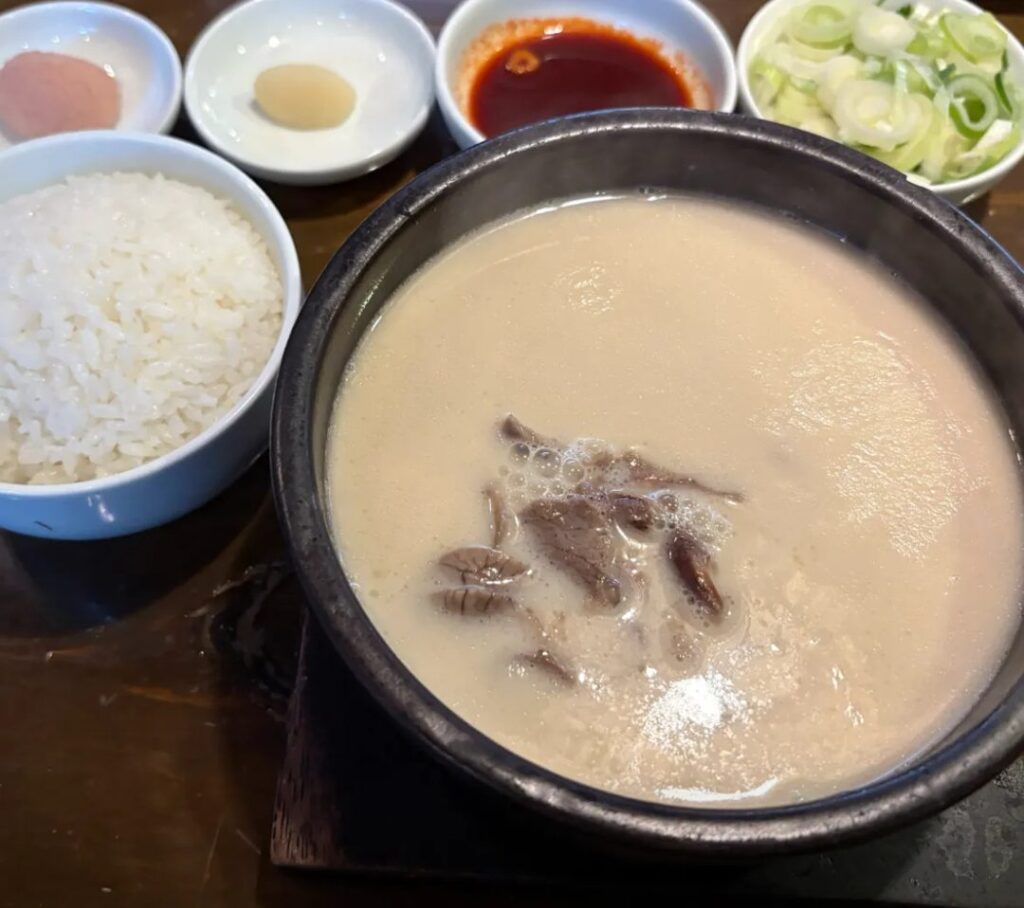
The rich gukbap has a subtle herbal aroma. It feels different from the heavy dwaeji gukbap I usually eat, so this place clearly has its own character. The menu says the rich broth is flavored with ginger, garlic and danggwi (Korean angelica root), which explains that gentle herbal note.
The clear Busan-style bowl
On the other hand, the clear Busan-style gukbap grows on you the more you eat. I enjoyed the broth on its own at first, and once I stirred in the dadaegi, the flavor came into sharper focus. It does not lean on salt, so I could taste the broth itself right to the end.
Overall, Eomyongbaek does not try to copy traditional dwaeji gukbap exactly. Instead, it feels like a place that has reworked the dish in its own way.
Menu and Prices
Prices below come from the Suyeong branch menu as reported in October 2026. All four soups cost the same, so the choice is simply about broth style.
- Clear Eomyongbaek dwaeji gukbap (맑은 엄용백 돼지국밥): ₩14,000. Clear broth with several pork cuts, including hangjeongsal (pork jowl) and osori gamtu (pork stomach)
- Rich Eomyongbaek dwaeji gukbap (진한 엄용백 돼지국밥): ₩14,000. Milky pork-bone broth with ginger, garlic and danggwi
- Busan-style and Miryang-style dwaeji gukbap: ₩14,000 each
- Pork suyuk platter: ₩29,000 (medium) or ₩39,000 (large)
- Hangjeong and gabeuri pork suyuk with soy sauce noodles: ₩18,000
- Sides: a tasting plate of sundae (₩11,000) and myeongran, salted pollock roe (₩5,000)
Tips for Visiting
- Join the queue on the Tabling app before you arrive. Lunch and weekend dinner times get busy.
- Plan around the afternoon break, roughly 15:00 to 17:00.
- Come with a friend and order one rich and one clear bowl to share and compare.
- There is no parking, so take the subway to Suyeong Station. Gwangalli Beach is a short taxi ride away.
- Want an early breakfast? The Haeundae branch (39 Gunam-ro 24beon-gil, near Haeundae Station Exit 7) opens at 08:00 and has its own parking lot. It uses the CatchTable waitlist.
Verdict on Eomyongbaek
Eomyongbaek is a good pick if you already know classic dwaeji gukbap and want to see a cleaner, more modern take, or if you want to try clear and rich broth in one sitting. The tender, thinly sliced meat is the highlight. Rating: 4 out of 5.
Planning more meals in the city? Our Busan food guide covers ten must-eat dishes, including milmyeon, ssiat hotteok and other gukbap shops by area. You can also browse every post in our Busan category. Heading to Seoul next? See our picks for the best Korean restaurants in Seoul.
More Dwaeji Gukbap in Busan Worth a Stop
These extra picks are adapted from visits by Revitguide reviewer 호미식 (Homisik), who rated each 3.5 out of 5. None of them tries to be modern. Most are old shops where the broth, the room and the regulars are all part of the meal.
Hapcheon Ilryu Dwaeji Gukbap (합천일류돼지국밥), Sasang
Hapcheon Ilryu is often named among the most famous gukbap shops in Busan, and the bowl comes loaded with garlic. The garlic hits fast and directly from the first spoonful. This is not a subtle, gently built broth; it knows exactly what it wants to taste like from the start. I ordered the pork udon (dwaeji udon), which puts udon noodles in the same broth. It was a fun way to try the soup, though the noodles did not change the taste much. If you like noodles in your soup, it is worth one try. How much you enjoy this place depends on how much you love garlic.
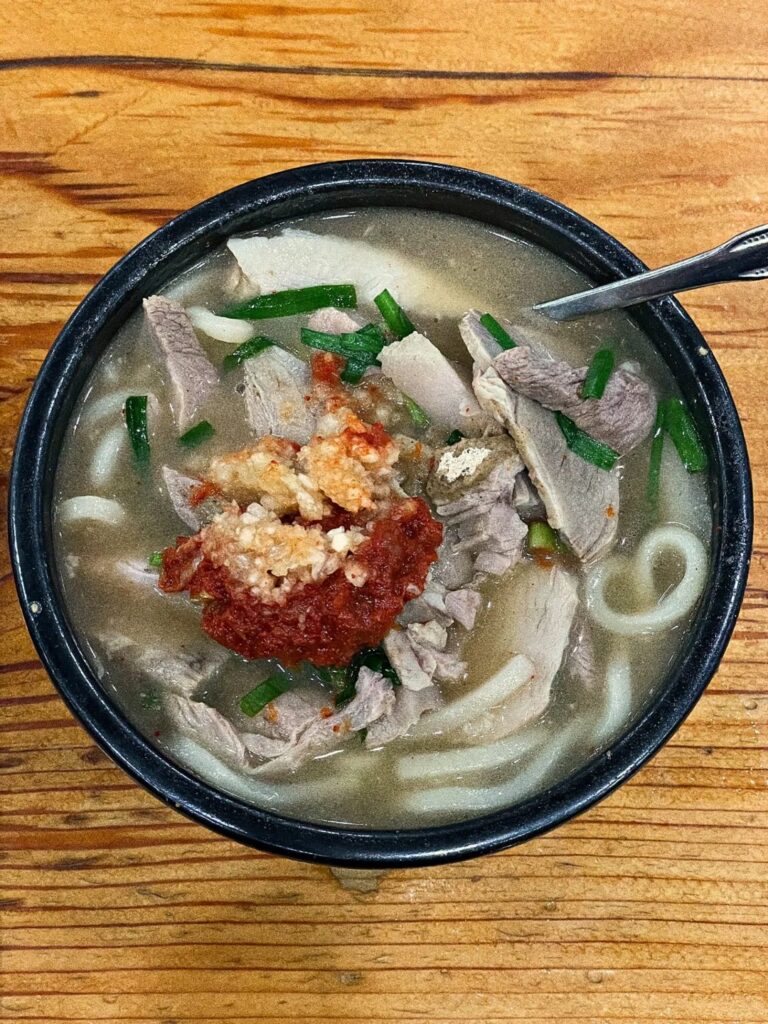
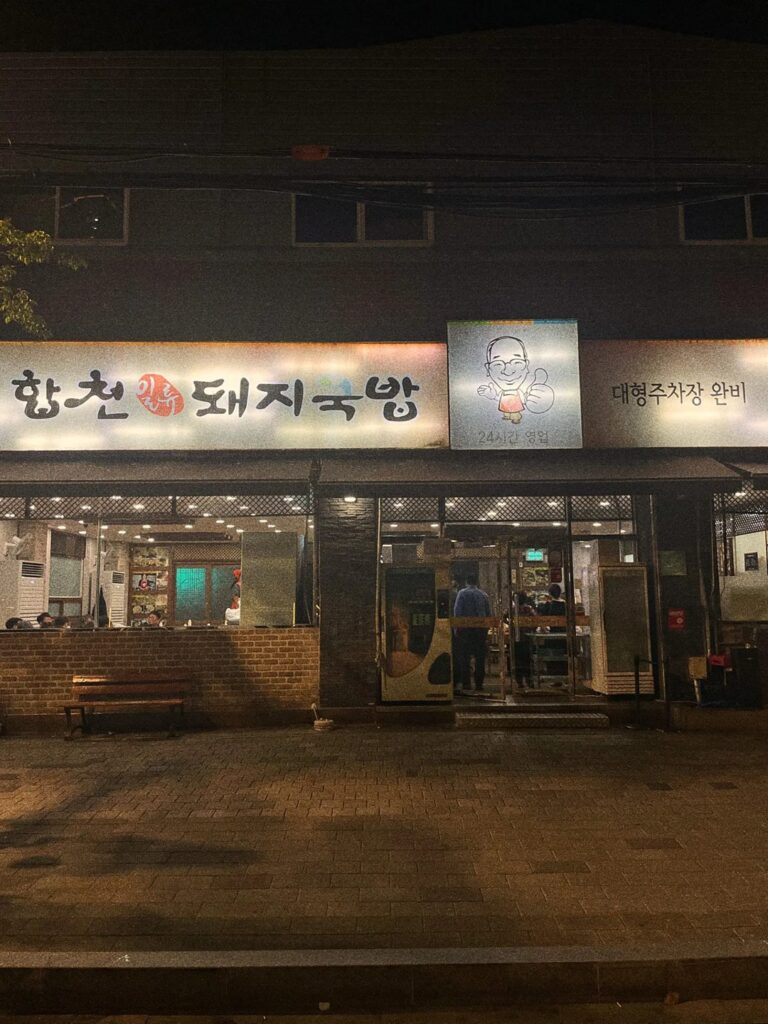
Area: 34 Gwangjang-ro, Sasang-gu (부산 사상구 광장로 34). Naver Map · Original review on Revitguide
Gamasot Dwaeji Gukbap (가마솥돼지국밥), Yeongdo
The word “nopo” (an old, long-running shop) really fits here. If you want the feel of old Busan, Yeongdo is a better bet than newer districts like Haeundae or Gwangalli, and this place sets the mood from the entrance. Inside, it feels like stepping back in time. The staff took my order without a word, and somehow I did not mind; an old shop that is too friendly can feel strange.
The broth leans clear rather than thick, but it is not light. A gentle, rich aroma of fat gives it weight, there is almost no gamey smell, and a quiet meaty flavor holds everything together. It is only lightly seasoned, so I added a little salted shrimp and salt, which made the broth even better. It is open 24 hours, which is a big plus. Come here on a day when you want clear broth, at any hour.
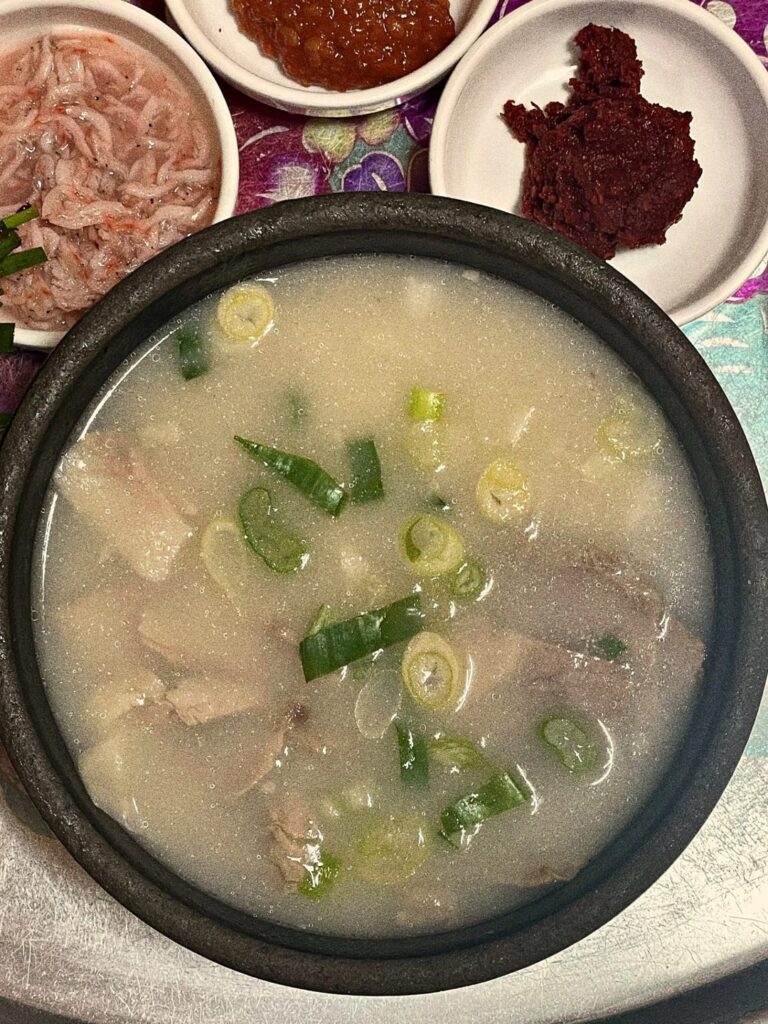
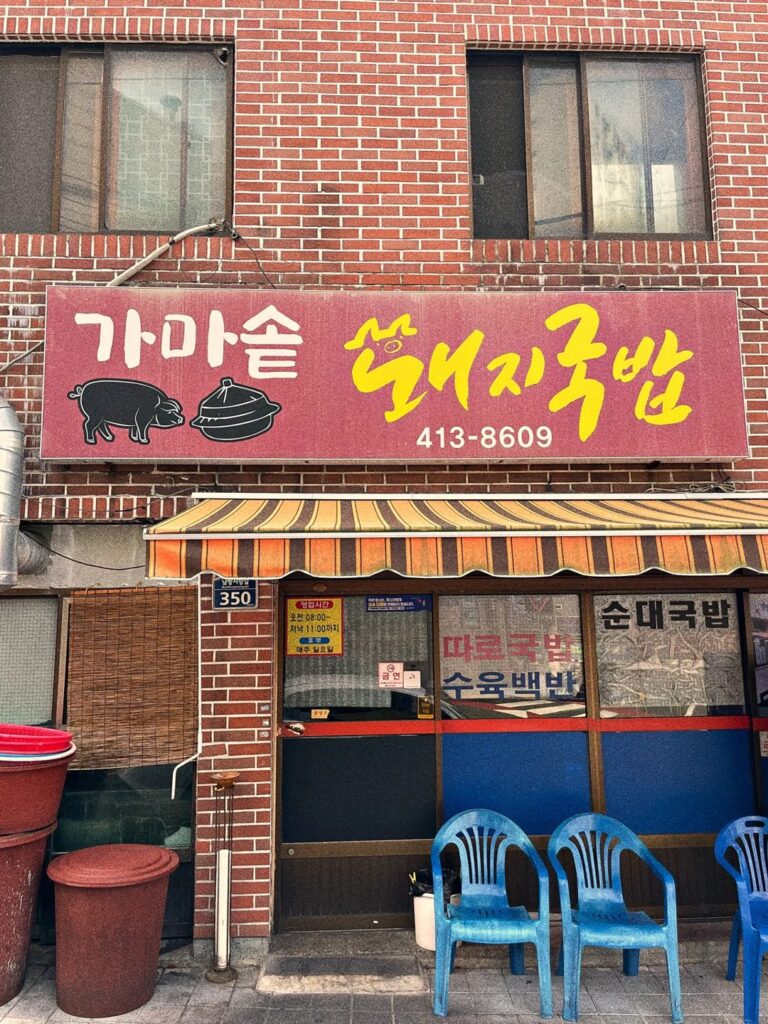
Area: Sinseon-dong 2-ga, Yeongdo-gu (부산 영도구 신선동2가). Naver Map · Original review on Revitguide
Jaegi Dwaeji Gukbap (재기돼지국밥), Yeongdo
Jaegi is an old gukbap shop inside a market, so the setting itself adds a lot of old-school flavor. That market feel is part of the charm, but if you are sensitive about hygiene it may bother you a little. The broth is tasty and has solid Busan-style basics. It does not try to stand out; it just quietly serves a good bowl. Here you eat the market along with the soup.
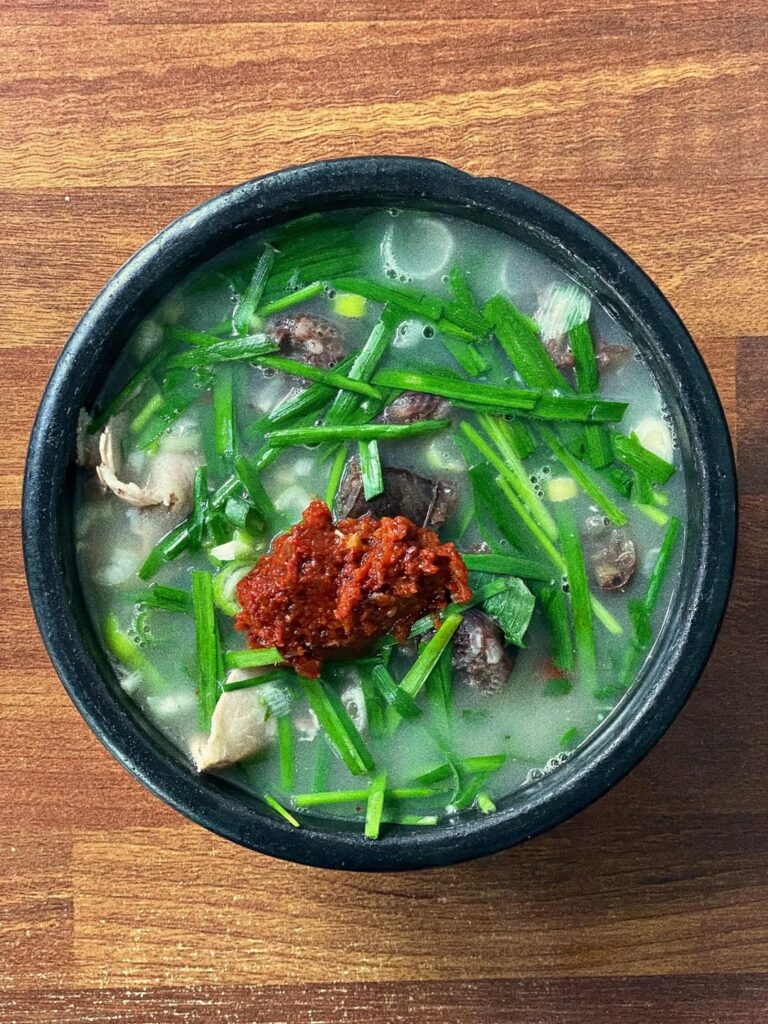
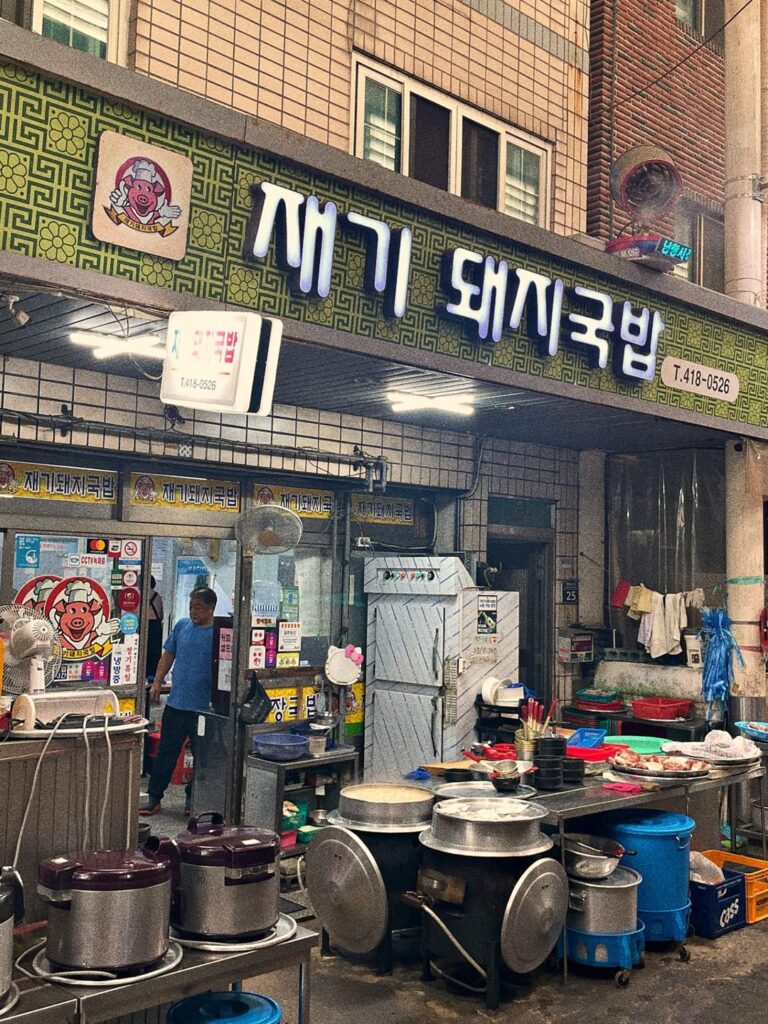
Area: Jeoryeong-ro 490beon-gil, Yeongdo-gu (부산 영도구 절영로490번길). Naver Map · Original review on Revitguide
Hwamokjeong Ttaro Gukbap (화목정따로국밥), Yeongdo
Hwamokjeong keeps the feel of an old gukbap house, and locals kept coming in even on a weekday morning. “Ttaro” means the rice comes on the side. I had the beef head gukbap (so-meori gukbap), which was good. It is not about a strong personality; it is a steady, old-style meal, and the fact that it tastes the same every time seems to be exactly why people come back.
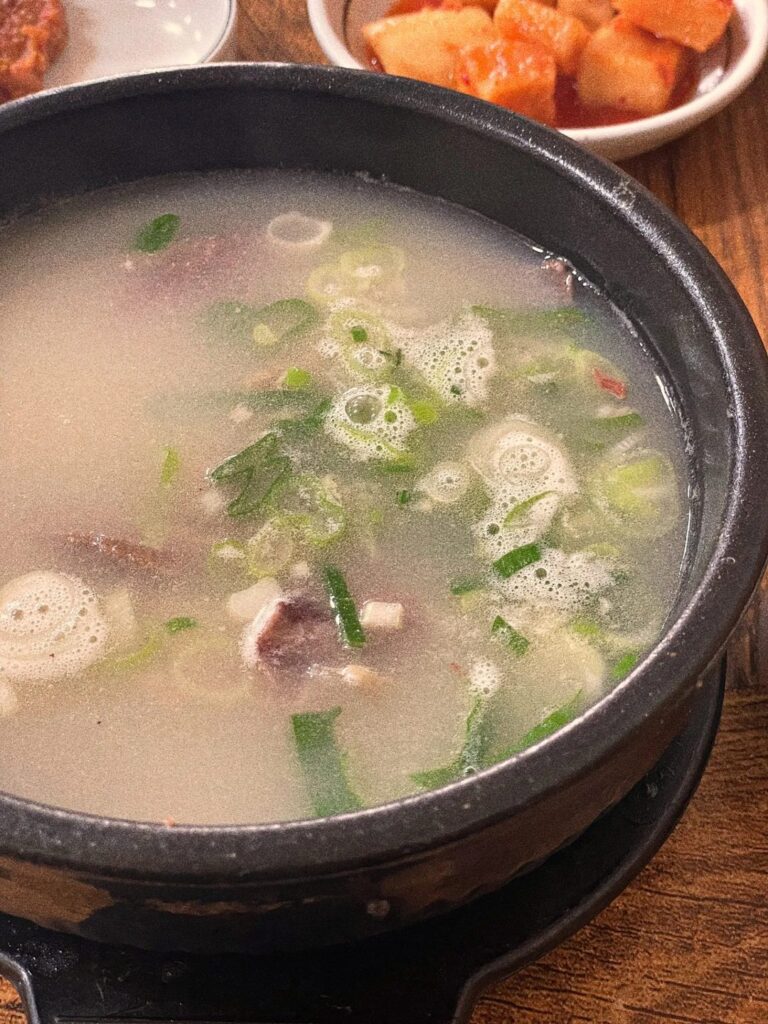
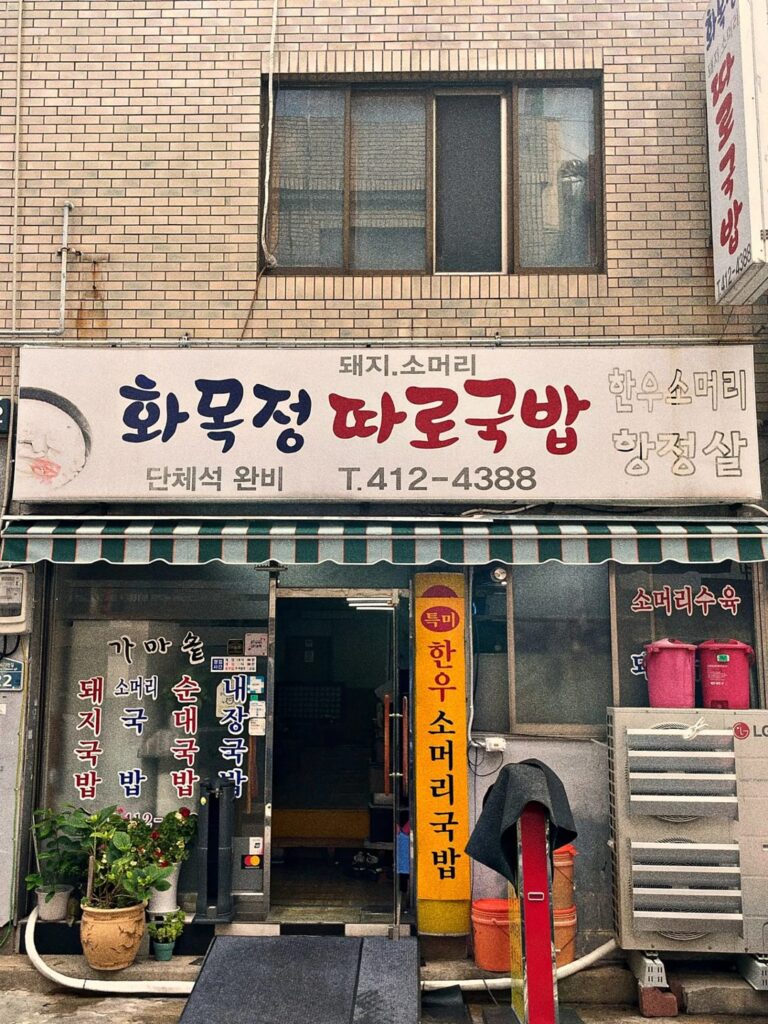
Area: 22 Taejong-ro 73beon-gil, Yeongdo-gu (부산 영도구 태종로73번길 22). Naver Map · Original review on Revitguide
Yeongjin Dwaeji Gukbap (영진돼지국밥) Main Branch, Saha
Yeongjin has the atmosphere of an old gukbap house. The broth carries a fairly strong garlic flavor, so the first impression is clear. If you prefer a plain broth, it may split opinions, but the garlic is what gives this shop its character, and among Busan gukbap shops that push garlic, it is not overly aggressive. The staff kept checking whether we needed anything during the meal, which I especially liked.
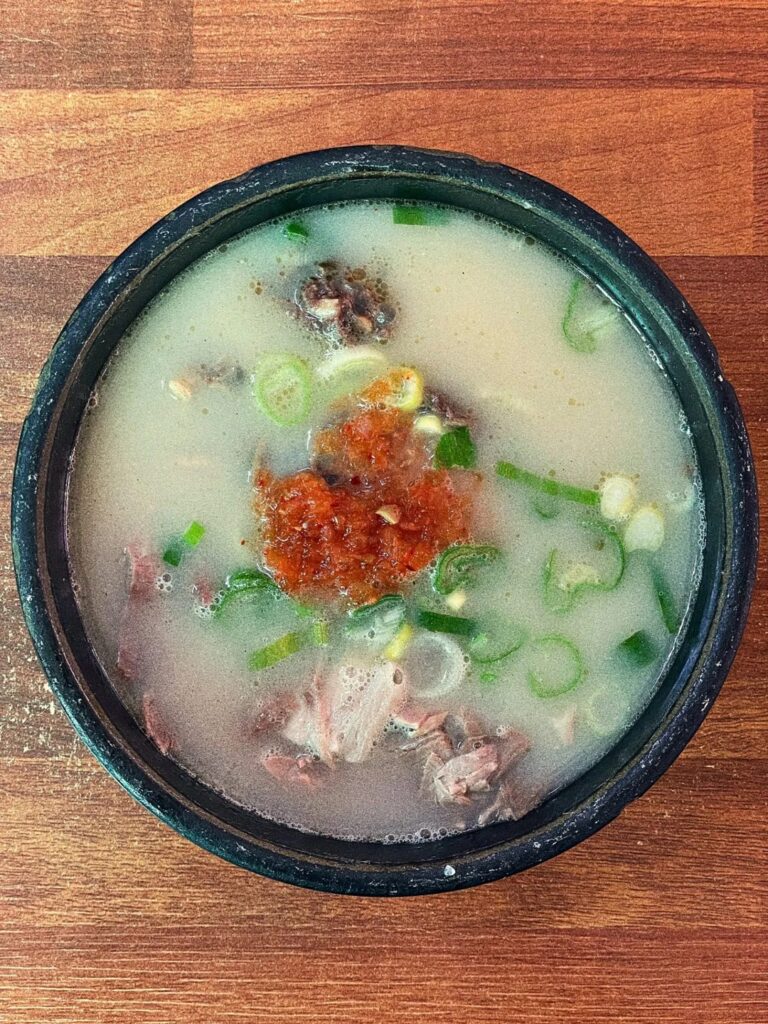
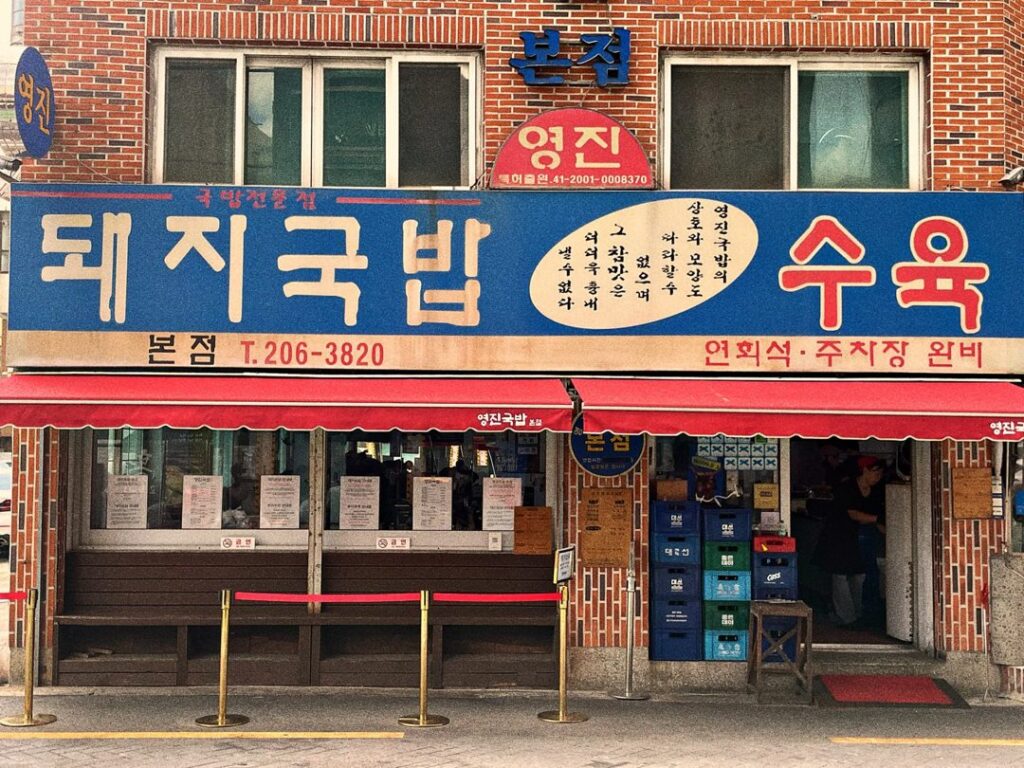
Area: 39 Hasinbeonyeong-ro 157beon-gil, Saha-gu (부산 사하구 하신번영로157번길 39). Naver Map · Original review on Revitguide
Jeil Dwaeji Gukbap (제일돼지국밥), near Busan Station
A friend who is proud of Busan gukbap told me I had to go here, and now I stop by almost every time I visit Busan. It is not far from Busan Station, in front of Dong-A University. I used to love thick, heavy gukbap and thought I did not like clear broth, but this place taught me how good clear gukbap can be. The bigger shock was the price: ₩7,000 when I visited in March 2026. If you like fatty cuts, ask for “bi-seok-dwae”, short for gukbap with fatty pork mixed in.
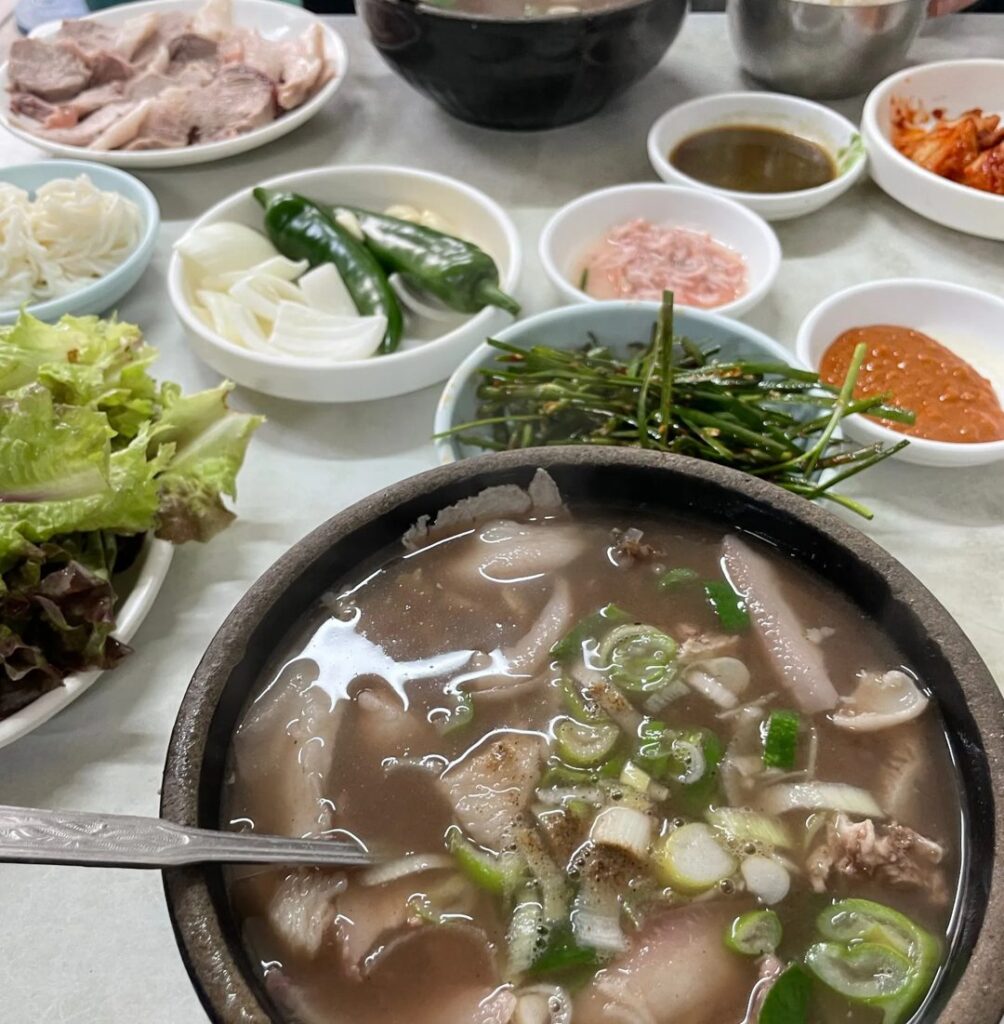
Area: Bumin-dong 2-ga, Seo-gu (부산 서구 부민동2가). Naver Map · Original review on Revitguide
Anmok (안목) Main Branch, Namcheon
Do not stir in the chili paste (dadaegi) right away. I recommend eating about half the bowl as clear broth first. Once you know the base, add the dadaegi and the bowl changes clearly: it gets spicier and deeper, and the soup feels heavier, so the first and second halves almost feel like different dishes. Do not skip the whole and minced garlic at the self-serve bar either. A spoonful of minced garlic adds a sharp kick that makes everything clearer. Clear first, then dadaegi and garlic: that was the best way to enjoy this broth.
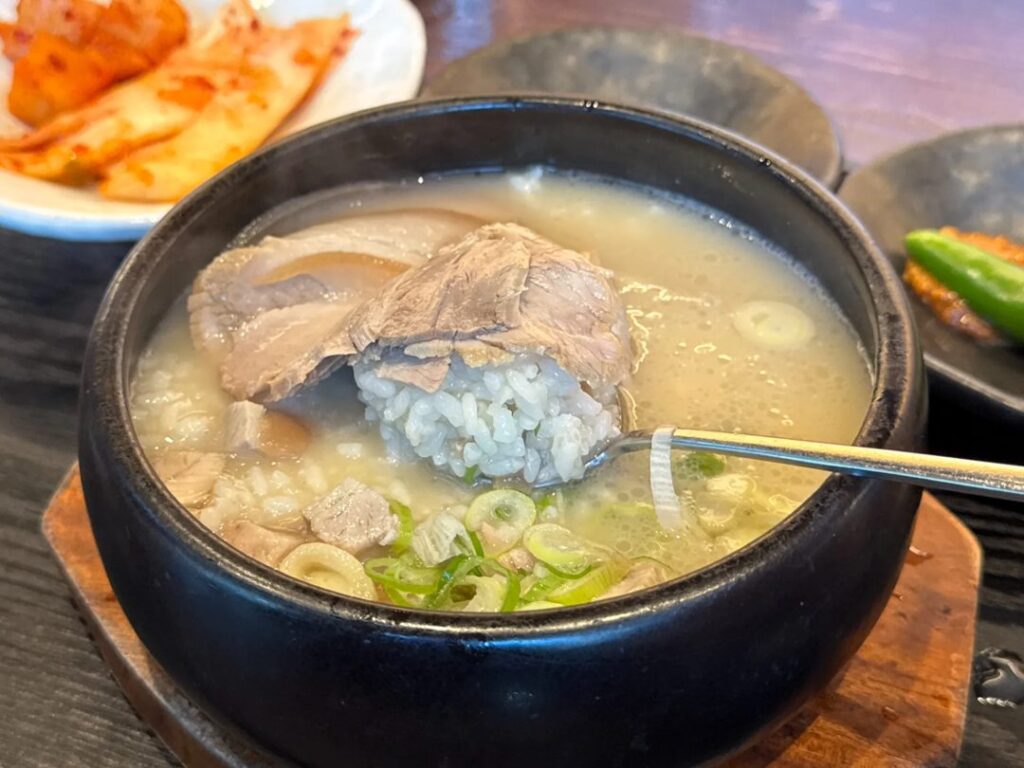
Area: 8-16 Namcheon-dong, Suyeong-gu (부산 수영구 남천동 8-16). Close to Gwangalli Beach. Naver Map · Original review on Revitguide
Haeundae Wonjo Halmae Gukbap (해운대원조할매국밥), Haeundae
The broth and boiled pork both stay within familiar Busan-style gukbap. No single ingredient or flavor jumps out. It is less a strong impression and more an easy, comfortable meal. You probably would not travel for it, but it comes to mind naturally when you need a bowl of gukbap nearby.
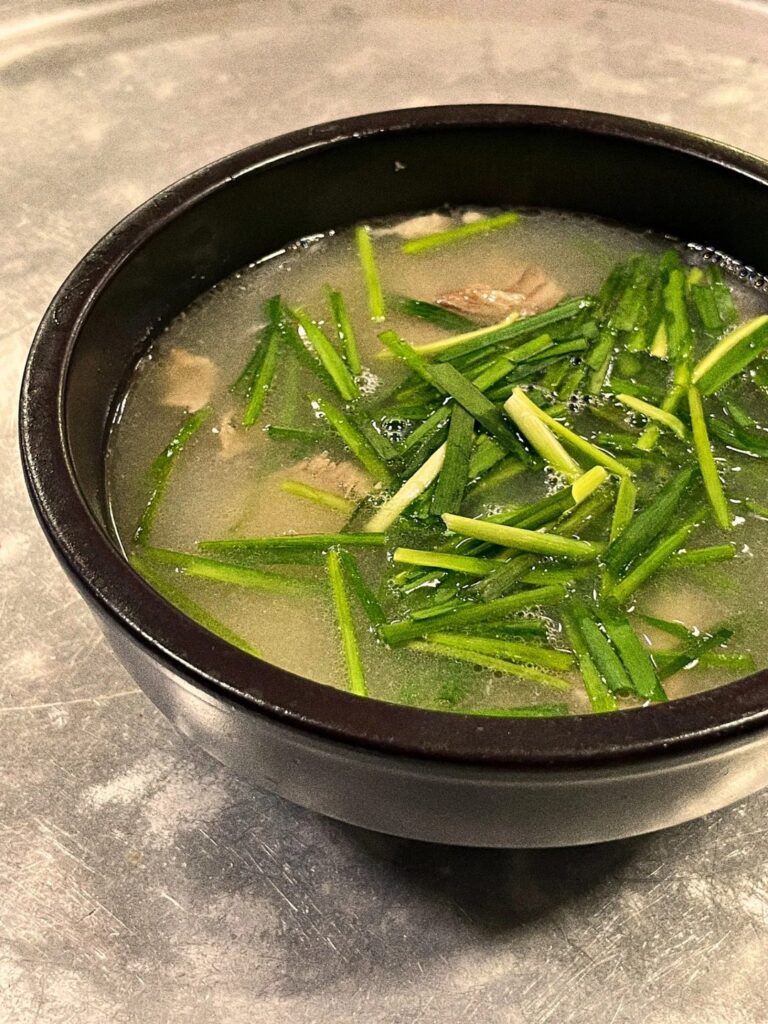
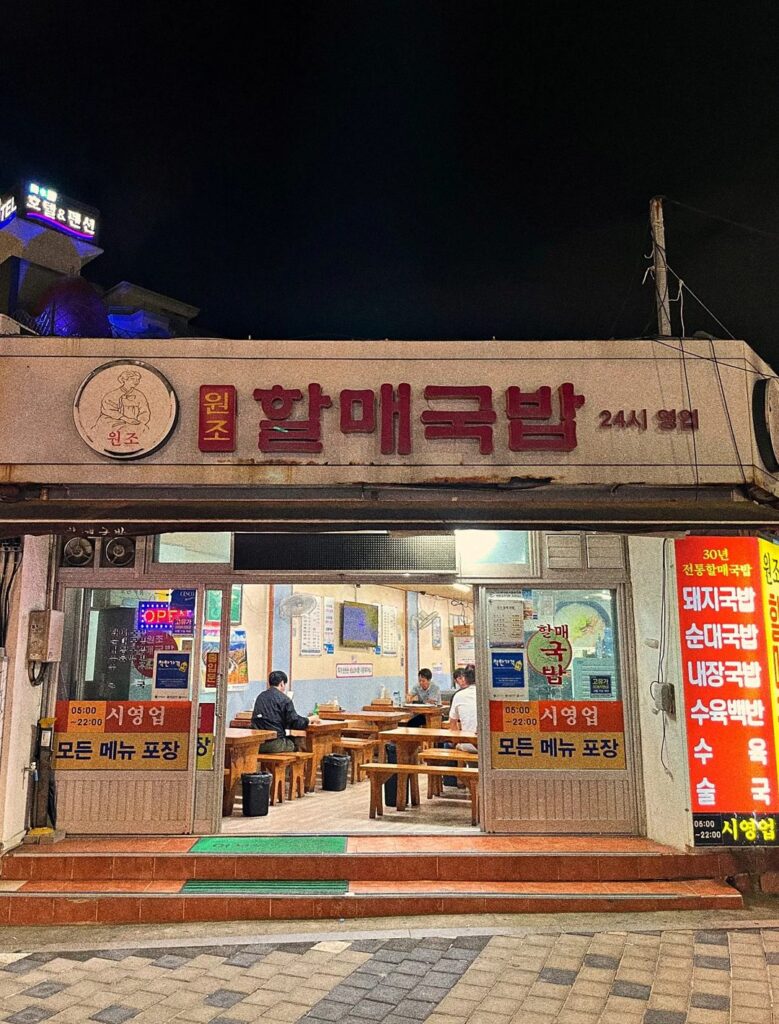
Area: 40 Jung-dong 1-ro, Haeundae-gu (부산 해운대구 중동1로 40). More nearby in our Haeundae restaurants guide. Naver Map · Original review on Revitguide
Beef Soup Alternatives: Gomtang in Busan
Gomtang is a beef bone and brisket soup. It is not dwaeji gukbap, but it makes a good change of pace if you are eating your way through Busan soups. Both picks below were also rated 3.5 out of 5.
Hanwolgwan (한월관), Gwangalli
Since it has been introduced by the MICHELIN Guide, expectations rise naturally, yet both the food and the room are surprisingly calm. The milky gomtang is presented in a tidy, modern way. It aims for a clean, well-organized bowl rather than a strong personality, so if you want bold flavors it may feel quiet. The location near Gwangalli Beach and the old-style brass tableware add to the experience. Come here when you want a neat meal rather than a flashy one.
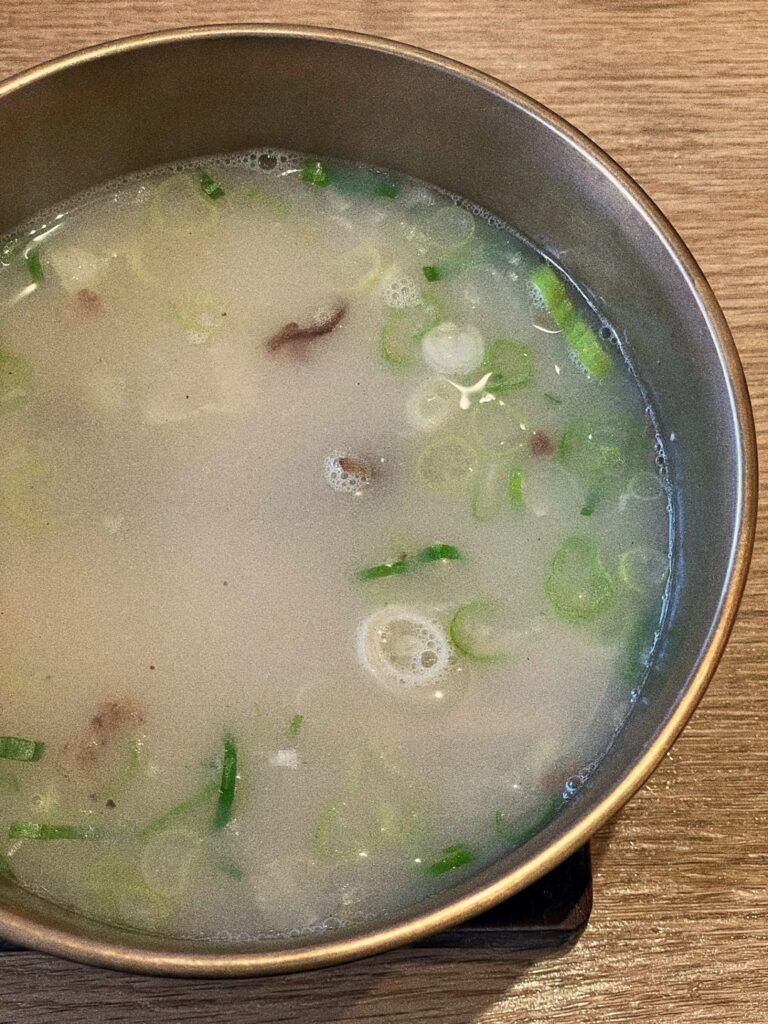
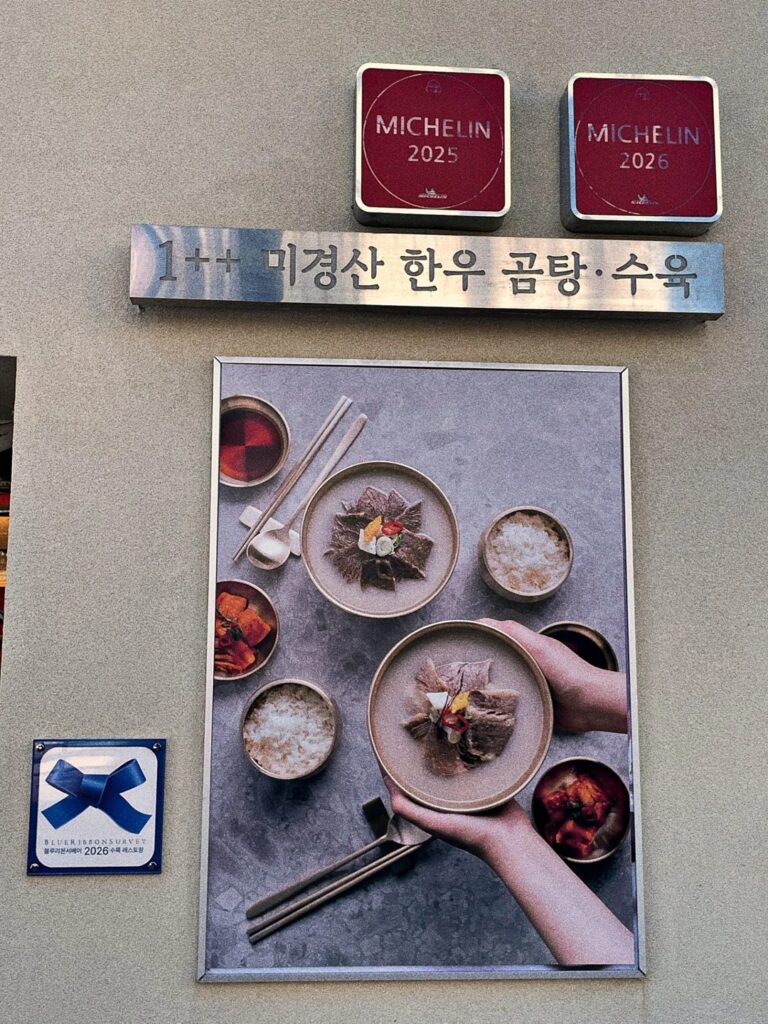
Area: Gwangan-ro 62beon-gil, Suyeong-gu (부산 수영구 광안로62번길). Naver Map · Original review on Revitguide
Geodae Gomtang (거대곰탕), Haeundae
I went early and walked straight in, though I heard lunch waits can run two hours or more, which made me curious whether it was worth that. For a bowl of gomtang, the price felt steep. The sides were kimchi, myeongran (salted pollock roe) and minced garlic; roe at a gomtang shop was unusual. The kimchi was well fermented and cut through the rich soup nicely. As the name suggests, the broth is very rich and there was plenty of meat, and the first few spoonfuls tasted of concentrated beef. Before long, though, fat started to set on the surface. I prefer clean, light gomtang, so it felt more greasy than rich to me by the halfway point. If you love thick, heavy gomtang, you will probably be happy here.
Area: 163 Haeundaehaebyeon-ro, Haeundae-gu (부산 해운대구 해운대해변로 163). Naver Map · Original review on Revitguide
For more Busan bowls, see our guides to milmyeon, Nampo-dong and Yeongdo and Korean sundae.
FAQ
What is the difference between Busan-style and Miryang-style dwaeji gukbap?
Busan-style broth is usually clear and light, made mainly from meat. Miryang-style broth is milky and richer, because it comes from pork bones boiled for a long time. Eomyongbaek serves both styles.
How much does dwaeji gukbap cost at Eomyongbaek?
Each gukbap cost ₩14,000 at the Suyeong branch as of October 2026. Suyuk platters start at ₩18,000.
Can I reserve a table?
The Suyeong branch mainly runs a waiting list. Join the queue on the Tabling app, either remotely or on site, and check the app for any other options.
Which Eomyongbaek branch should I visit?
The Suyeong main branch is close to Suyeong Station and Gwangalli. The Haeundae branch is near Haeundae Beach, opens earlier and has parking. Both serve clear and rich gukbap.
How should I eat dwaeji gukbap?
Taste the broth first, then add salted shrimp, chives and a little chili paste to your liking. Eat the rice in the soup or on the side.
Where else can I eat dwaeji gukbap in Busan?
Yeongdo has a cluster of old shops, including Gamasot (open 24 hours), Jaegi inside a market and Hwamokjeong. For a budget bowl near Busan Station, try Jeil Dwaeji Gukbap. Near Gwangalli, Anmok serves clear broth with dadaegi on the side.
We checked prices and hours in November 2026, and they can change. Check Naver Map before you go.